

Are dental X-rays safe for children?
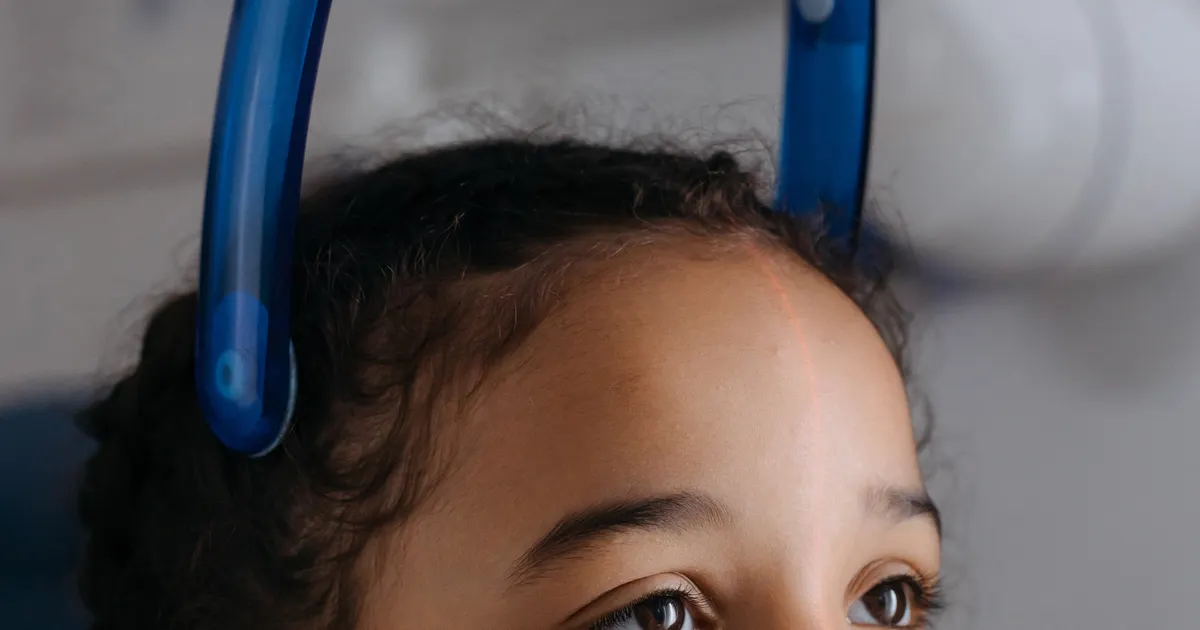
Dental X-rays in children use ionising radiation, and children's tissues are more sensitive than those of adults — so it is not accurate to say they are «completely safe»; the correct way to put it is this: when an X-ray is taken for a clinical indication, with a protocol matched to the child's age and size, and with the smallest possible field, its benefit outweighs its risk. The 2020 guideline of the European Academy of Paediatric Dentistry (EAPD) recommends that X-rays be prescribed individually, based on examination and caries risk, rather than on a «routine age schedule»; CBCT in children is taken only when 2D imaging cannot answer the question, and for a specific clinical question (DIMITRA position statement). Before every exposure, the alternatives (clinical examination, existing images) are reviewed.
The question parents ask most often is this: "Is it worth taking a dental X-ray of my child?" The answer is not a single sentence — because the clinical indication, age, type of device and protocol all play a role. In this article I explain, in practical terms, the safety of dental X-rays in paediatric dentistry.
For context: Are dental X-rays dangerous? (the dose table and ALARA are explained there).
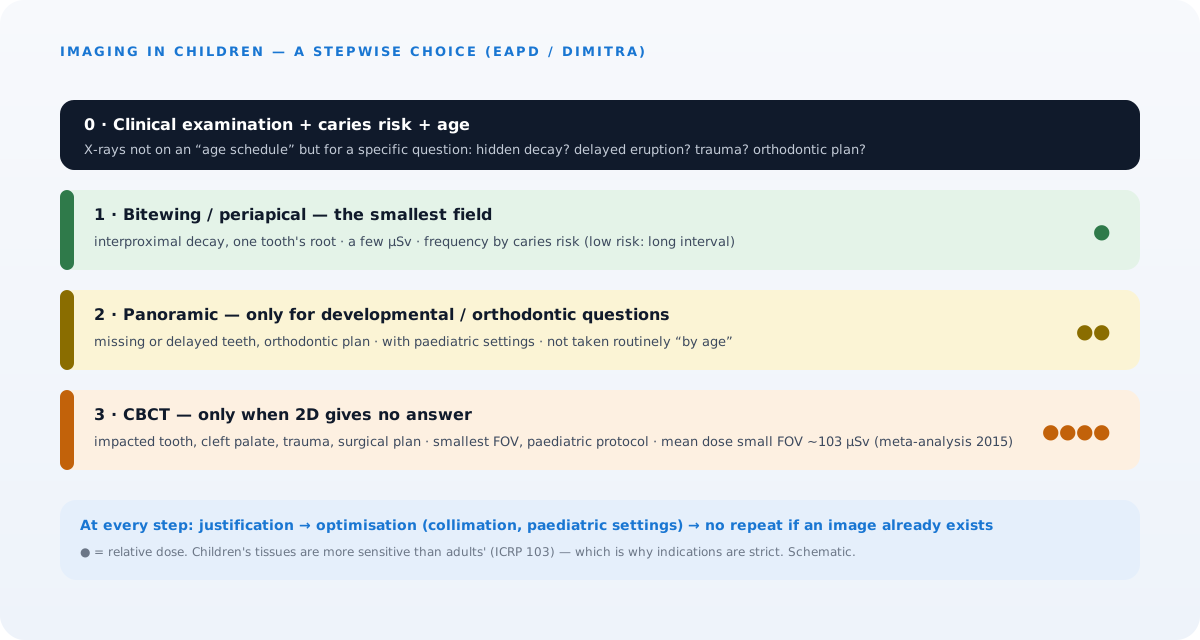 Imaging in children is chosen step by step: if the method with the lowest dose answers the question, that is the one selected. The diagram is schematic.
Why are children more sensitive to radiation?
A child's body is biologically more sensitive to radiation than an adult's. The reasons are:
- Rapidly dividing cells — developing tissues have a high rate of cell division; ionising radiation can affect DNA more during division.
- A lifetime risk window — because a child will live more years, the window in which radiation-induced harm can appear clinically is wider.
- Smaller body size — the same radiation dose produces a relatively higher effective dose in a smaller body.
- Sensitivity of the thyroid gland — ICRP Publication 103 notes that the risk of thyroid cancer from exposure in childhood decreases with age and is higher in children; for this reason the neck area is kept outside the beam field.
These factors are exactly why special protocols are applied in paediatric dentistry.
What is the paediatric protocol?
Standard measures for children in modern dental clinics:
- Lower exposure parameters — mA and kVp are reduced according to the child's age and size.
- Short exposure time — as few seconds as possible.
- A device programme designed for children — selectable on many modern digital units.
- Small FOV (for CBCT) — only the necessary area is imaged.
- Collimation and correct alignment — the beam goes only to the required area; the neck stays outside the field.
- Apron and thyroid collar — standard for many years; according to the ADA's 2024 recommendations, routine use is no longer considered necessary with properly collimated digital devices, and it may be used on request for intraoral exposures (if it does not interfere with the image).
- On clinical indication — a preventive "once a year" routine is not recommended in children.
- Digital detector — a considerably lower dose than analogue film.
When this protocol is applied correctly, the dose in a child is lower than with an adult protocol; with CBCT the difference is large — according to a 2015 meta-analysis, the mean effective dose in children with a standard protocol was ~103 µSv for a small FOV and ~175 µSv for a medium/large FOV (with a wide range between devices). In other words, CBCT gives a child a far higher dose than a panoramic X-ray, and for that reason it is justified separately.
In which cases does a child need a dental X-ray?
The clinical indications are as follows:
1. Suspected tooth decay
For forms of tooth decay that are not clinically visible (between the teeth, hidden decay), a bitewing X-ray may be required. Usually from the age of 5 upwards, in higher-risk groups.
2. Monitoring the transition from baby teeth to permanent teeth
- Is the number of permanent teeth normal?
- Are the roots of the baby teeth resorbing normally?
- Are there any impacted permanent teeth?
- When will a particular baby tooth come out?
A panoramic X-ray is used for these questions — but the EAPD does not recommend a routine panoramic X-ray «by age»: it is taken when there is a specific clinical question (delayed eruption, suspected missing tooth, orthodontic plan).
3. Preparation for orthodontic treatment
- Before orthodontic treatment, a panoramic X-ray + a lateral cephalometric X-ray is standard.
- In complex orthodontic cases (impacted canine, wisdom tooth problem), a small-FOV CBCT is added.
4. Oral surgery
- Surgical extraction of a baby tooth.
- Surgical exposure of an impacted permanent tooth for orthodontic treatment.
- Palatal developmental anomalies.
5. Trauma
- Suspected root fracture or jaw fracture after an injury to the mouth.
- Usually a periapical or panoramic X-ray; CBCT in severe trauma.
6. Specific anomalies and syndromes
- Cleft palate.
- Syndromic developmental anomalies.
- Anomalies in the number of teeth (hypodontia, hyperdontia).
In each of these indications the X-ray is taken purposefully — for a specific clinical question.
What is the dose of a dental X-ray in a child?
With a paediatric protocol, intraoral (periapical, bitewing) and cephalometric exposures give a few microsieverts, a panoramic X-ray gives less than the adult dose (10–24 µSv), and CBCT gives tens to hundreds of microsieverts depending on the FOV (meta-analysis: small FOV ~103 µSv on average). For comparison: the daily natural background is ~6–8 µSv. These figures depend on the device and the protocol; the dose table and comparisons are in the article are dental X-rays dangerous. What matters is not the absolute number but the question: «will this image change the decision?»
A "routine annual X-ray" is not recommended in children
Many parents ask, "do we need a general check-up X-ray every year?" The answer: no, it is not needed if there is no clinical indication.
- A preventive annual panoramic X-ray in a healthy child is not officially recommended.
- According to the EAPD, the frequency of bitewings is chosen according to caries risk: with low risk the interval is long (several years), with high risk it is shorter; the risk is reassessed each time.
- A panoramic X-ray is taken not on an «age schedule» but when there is a specific developmental or orthodontic question (what is a bitewing).
This is the concrete expression of the ALARA principle in paediatric dentistry.
CBCT in children — a special issue
The dose of CBCT is higher than that of a panoramic X-ray, so in children it is taken only on a strong clinical indication. Typical indications:
- Surgical planning for an impacted canine or incisor.
- The surgical plan for a cleft palate.
- Complex jaw trauma.
- A 3D anatomical plan for orthodontic surgery.
The DIMITRA position statement recommends CBCT in children only for a specific clinical question that a conventional X-ray cannot answer, with a small FOV suited to the child and a low-dose protocol; a CBCT taken «just in case» is not justified in a child. In detail: Is CBCT radiation high?.
How is a dental X-ray taken in a child?
- Preparation: the procedure can look frightening to a child. The clinic gives a special explanation, and the parent can be present.
- An apron/thyroid collar is put on if requested (not routinely necessary).
- The device is activated — the exposure lasts 15–20 seconds.
- The result appears on the screen immediately.
The parent's role: to reassure the child, to remind them to stay still, and not to hesitate to ask, «what is this X-ray for?»
Can a parent stay in the room while a child has an X-ray?
In many clinics the parent is also given a lead apron so that they can stand beside the child. But this is not standard in every clinic — the device is often operated remotely and no one stays in the room. For younger children (aged 3–6), having the parent inside the clinic can have a calming effect.
Official recommendations (paediatric dentistry)
- EAPD (2020): X-rays only after a clinical examination, on an individual indication and according to caries risk; there is no routine age schedule; the dose is optimised for every exposure.
- DIMITRA (2018, Pediatric Radiology): CBCT in children only in justified cases, with a FOV and protocol suited to the child.
- ADA (2024, JADA): justification and optimisation; an apron/thyroid collar is not a routine requirement with collimated digital devices.
- ICRP (103): the radiation risk in children is higher than in adults — which is precisely why justification is stricter.
Practical advice for parents
- Ask the clinic: is the device digital? Is a paediatric protocol (lower parameters, small field) applied? Which question will this image answer?
- Keep your previous X-ray results and give them to the clinic (this can avoid a repeat exposure).
- Do not accept the "let's take one anyway" logic without the child's age and a clinical indication being taken into account.
- Orthodontists often ask for their own X-rays — if a panoramic X-ray has been taken within the last 6 months, another one may not be needed.
- If the child's sister or mother who is of childbearing age is present, they too are advised not to be in the X-ray room.
The answer: is it safe?
When an X-ray is taken on a clinical indication and with a paediatric protocol, its benefit outweighs its risk — this does not mean «the risk is zero», it means «the risk is very small and it is justified». An exposure taken without a reason, on the other hand, is unacceptable in a child. These two sentences should be read together — this is the ALARA principle.
Choosing a clinic for a child in Baku
- Experience in paediatric dentistry.
- A digital device and a paediatric protocol.
- Dose optimisation (paediatric parameters, collimation, small FOV).
- Archiving in DICOM format — so that the results can be used later.
Our clinic's dental radiology services work with modern protocols for children.
Frequently asked questions (FAQ)
When is a dental X-ray taken in a child?
In cases of suspected tooth decay, preparation for orthodontic treatment, monitoring of baby and permanent teeth, trauma and complex dental treatment.
Are children more sensitive to radiation?
Yes — developing tissues are more sensitive to radiation. That is why a paediatric protocol (lower dose, special protection) is applied in the clinic.
At what age can a child have their first dental X-ray?
There is no specific age limit — clinical need is the main factor. Usually the first X-rays are taken at 5–7 years of age for orthodontic and developmental purposes.
When is CBCT taken in a child?
Only when there is a strong clinical indication — an impacted tooth, preparation for orthodontic surgery, trauma. Usually with Low Dose and a small FOV.
Are a lead apron and thyroid collar used in children?
They can be used on request, but according to the ADA's 2024 recommendations they are not routinely necessary with properly collimated digital devices; the main protection is keeping the beam away from the neck area and avoiding unnecessary exposures.
About the author
This article was prepared by the paediatric dentist of the Smile by Dr. Bakhtiyar clinic; the author's details are at the top of the page.
This article is for general information and does not replace individual medical advice. For a specific decision about your child, consult a specialist dentist.
Book an appointment
For a modern, safe dental X-ray for your child in Baku, you are welcome to contact our clinic. Book an appointment online or get in touch with us.
Sources
- Best clinical practice guidance for prescribing dental radiographs in children and adolescents: an EAPD policy document — European Archives of Paediatric Dentistry, 2020
- Cone-beam CT in paediatric dentistry: DIMITRA project position statement — Pediatric Radiology, 2018
- Optimizing radiation safety in dentistry: Clinical recommendations and regulatory considerations — Journal of the American Dental Association, 2024
- Effective dose of dental CBCT — a meta analysis of published data and additional data for nine CBCT units — Dentomaxillofacial Radiology, 2015
- ICRP Publication 103: The 2007 Recommendations of the International Commission on Radiological Protection — International Commission on Radiological Protection, 2007
This article is for general information only and does not replace an individual diagnosis, examination or treatment. Consult a doctor for a decision about your case.