

Is Teeth Whitening Safe? Methods and Expectations
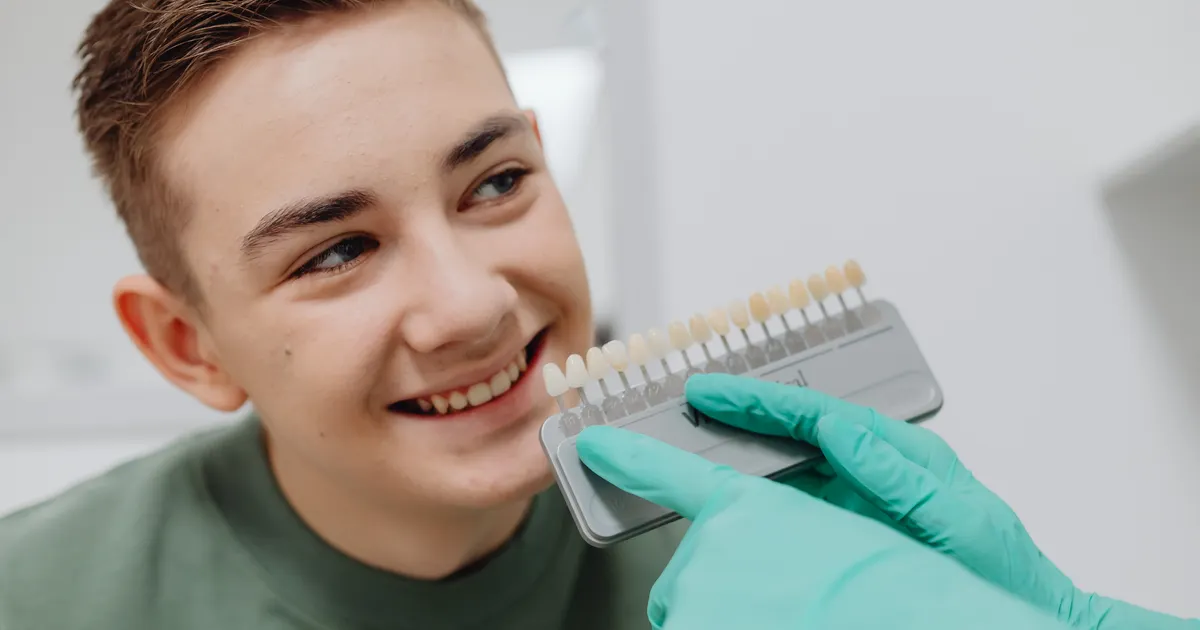
Teeth whitening is an aesthetic procedure that is generally considered safe for tooth enamel when it is carried out correctly and after a dental examination; the most common side effects are temporary tooth sensitivity and gum irritation. Safety depends on the concentration of the product used, the way it is applied and the examination carried out beforehand. Unsupervised, overly strong products, on the other hand, can damage the enamel and the gums.
What does the research say? According to the ADA, peroxide-based whitening is an effective method when it is carried out on healthy teeth under a dentist's supervision; the most common side effects are temporary tooth sensitivity and gum irritation, and these increase with the concentration of the product and the length of application. Reviews show that permanent structural damage to the enamel is not expected with correct use, but that instead of the phrase «completely safe» it is more accurate to say «the risk is low with supervised use»; light/laser activation does not significantly improve the result and may increase sensitivity. Related: Teeth whitening service · Tooth discolouration and stains · Tooth sensitivity.
How does teeth whitening work?
Whitening agents (usually based on carbamide peroxide or hydrogen peroxide) lighten the colour of the tooth by breaking down the stain molecules within the enamel. This does not mean ‘stripping away’ the enamel layer from the tooth — it means lightening the stains chemically. That is why whitening produces a result within the range of the tooth's own natural shades.
The difference between the methods
| Method | Where it is carried out | Characteristics |
|---|---|---|
| In-clinic (professional) whitening | At the clinic, under the dentist's supervision | Stronger product, short duration, supervised |
| Custom home tray | At home, in a tray made from a mould prepared by the dentist | Weaker product, spread over several days |
| Over-the-counter shop products | At home, unsupervised | Variable results, risk of incorrect use |
Whitening carried out at the clinic or with a custom tray prepared by the dentist is supervised, so it is usually more predictable. Universal shop-bought products, on the other hand, do not adapt to the gums and may therefore increase the risk of irritation.
Who is it not suitable for?
Whitening does not give the same result for everyone, and in some cases it is postponed:
- If there is untreated tooth decay or gum inflammation, these must be resolved first.
- Veneers, crowns or fillings do not lighten — they may look different from the rest of the tooth.
- During pregnancy and breastfeeding it is usually advised to postpone it.
- When teeth are very sensitive, the approach is individualised.
That is why an examination before whitening is important — only the dentist can determine whether it is suitable.
Realistic expectations
- The result varies depending on the initial colour of the tooth and the type of stain; not everyone reaches the same ‘white’ shade.
- The effect is not permanent — factors such as coffee, tea and smoking can bring the colour back over time.
- Temporary sensitivity is normal and usually passes within a few days.
- Guaranteed promises such as ‘a Hollywood smile in a single session’ are not realistic; the result is individual.
Points to keep in mind
- Whitening is carried out on healthy teeth; if there is a hidden problem, it must be resolved first.
- Using strong products without supervision can damage the enamel and the gums.
- How long the result lasts depends on hygiene and dietary habits.
- In no aesthetic procedure is an exact shade or duration guaranteed.
Questions and Answers (FAQ)
Does teeth whitening damage the enamel? When it is carried out under a dentist's supervision at a suitable concentration, whitening is generally considered a procedure that does not damage the enamel. The risk comes mostly from the incorrect use of unsupervised, overly strong products. That is why an examination and the correct method are important.
Is tooth sensitivity after whitening normal? Yes, temporary sensitivity is a common and usually short-lived side effect. It normally decreases within a few days. If the sensitivity continues or is severe, you should see your dentist.
How long does the result of whitening last? How long it lasts is individual and depends on factors such as diet, smoking and hygiene. It is not possible to guarantee an exact length of time; habits are important for prolonging the effect.
Do veneers and fillings lighten as well? No. Artificial materials (veneers, crowns, fillings) do not respond to whitening agents. For this reason, when they are present the approach is planned individually.
Clinical note: This article is for general information and does not replace individual advice from your dentist. To discuss whether teeth whitening is suitable for you, book an appointment.
Sources: Peer-reviewed dental literature on aesthetic dentistry. The clinical content is based on Dr. Nuran's dentistry practice.
Sources
- Whitening — ADA Oral Health Topics — American Dental Association
- Tooth whitening: what we now know — Journal of Evidence-Based Dental Practice, 2014
- Review of the Mechanism of Tooth Whitening — Journal of Esthetic and Restorative Dentistry, 2015
- Do Laser and Light Activation Improve In-Office Dental Bleaching Outcomes? An Umbrella Review of Efficacy, Tooth Sensitivity and Colour Stability — Journal of Esthetic and Restorative Dentistry, 2026
This article is for general information only and does not replace an individual diagnosis, examination or treatment. Consult a doctor for a decision about your case.