

What is a veneer and when are veneers placed on teeth?
A veneer is a thin ceramic or composite layer bonded to the front (visible) surface of a tooth. It does not cover the whole tooth: it wraps only the front surface and sometimes the incisal edge. Veneers are used for aesthetic concerns such as colour, shape, small chips and cracks, and gaps between teeth. The tooth itself stays healthy — only a very small amount of enamel is removed. For this reason, veneers are considered one of the more tooth-preserving options among aesthetic restoration methods.
Key points
- A veneer is not a crown: it covers only the front surface of the tooth, not the entire tooth.
- There are two main types: ceramic (made in a laboratory) and composite (most often shaped directly in the mouth).
- The best results are achieved when the veneer is bonded to enamel — which is why it is important to have enough healthy enamel on the tooth.
- Bruxism (clenching and grinding), a deep bite and untreated tooth decay are factors that argue against veneers.
- The process usually involves consultation, planning, preparation, impressions and bonding.
Which part of the tooth does a veneer cover?
The surface you see when you look at a front tooth in the mirror is the vestibular (facial) surface. This is exactly where the veneer is bonded. Imagine a thin, tooth-coloured shell placed over the front of the tooth. The thickness is often around half a millimetre; some veneers placed with minimal preparation are even thinner.
The tooth stays intact: the back surface, the side surfaces and the root are left untouched. Here is the difference: while a crown covers the tooth from every side, a veneer bonds to just one side. Veneer or crown is a separate topic — the article comparing veneers and crowns explains how the choice is made according to the condition of the tooth.
Keeping a veneer on the tooth is the job of the bonding (adhesive) system. The same point is repeated in patient materials from the American Dental Association (ADA) and in peer-reviewed literature: bonding to enamel is more reliable than bonding to dentin (the layer beneath the enamel). That is why the dentist pays close attention during planning to how much enamel is left on the tooth.
Types of veneers: ceramic or composite?
Ceramic veneers. These are made in a dental laboratory or with a CAD/CAM system (designed on a computer and milled automatically). The material may be feldspathic ceramic, lithium disilicate (the glass ceramic known as E-max) or, in rare cases, zirconia. Ceramic transmits light in a way that resembles a natural tooth, holds its colour for years and resists staining. Fabrication usually requires 2 or more visits.
Composite veneers. These are made from tooth-coloured composite, similar to filling material. They are either built up layer by layer directly in the mouth (also called bonding), or made in a laboratory and then bonded. The advantages: they can be completed in a single visit, less tooth material is removed, and repairs are easy afterwards. The drawback: over time they tend to change colour and lose their surface polish, and they wear more quickly than ceramic.
Which material should you choose? That depends on the scale of the problem, the budget and your expectations. For a small chip or a shape correction on a single tooth, composite may be enough. When colour and shape need changing across several front teeth and a stable long-term result is wanted, ceramic veneers are more often chosen. The differences between the types of ceramic are the subject of a separate article.
Which problems are veneers suitable for?
Veneers are not a fix-everything method, but they work very well in several typical situations:
- Discolouration. Stains that do not respond to whitening — for example, dark bands left by certain antibiotics taken in childhood, fluorosis (white-yellow marks in the enamel), or a single tooth that has darkened after root canal treatment.
- Shape and size concerns. Very small lateral incisors (peg laterals), teeth shortened by wear, teeth with uneven edges.
- Small chips and cracks. A fracture at the incisal edge, cracks in the enamel, old and discoloured small fillings.
- Gaps between teeth (diastema). Particularly for closing the space between the two front teeth.
- Slight crookedness. When orthodontic treatment is not wanted, a minor difference in tooth position can be corrected visually with veneers. But this is not a substitute for orthodontics: if the crookedness is significant, moving the teeth first is the better route.
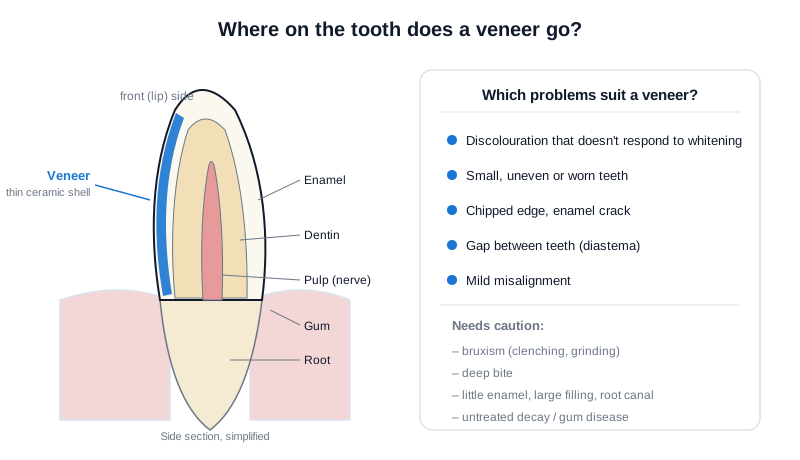 Left: a thin veneer layer bonded to the front surface of the tooth (in cross-section). Right: typical indications for veneers.
Who are veneers not recommended for?
Here it is important to be honest. Along with looking beautiful, it also matters that a veneer stays in place for a long time. ADA materials and clinical reviews list the following as situations that require caution or are considered contraindications:
- Bruxism — clenching or grinding the teeth at night. Thin ceramic is vulnerable to constant heavy loading; for such patients either a night guard is planned, or another method is chosen.
- Deep bite — when the lower teeth contact the back of the upper teeth too heavily, the back edge of the veneer takes the impact.
- Insufficient enamel — bonding is weaker on teeth with large fillings, heavy wear or previous preparation.
- Untreated tooth decay and gum disease — these have to be resolved first; placing a veneer on an unhealthy tooth hides the problem rather than solving it.
- Habits such as biting nails or chewing pens — these increase the risk of the veneer fracturing.
After a veneer is placed, tooth decay can still develop — especially at the edges of the veneer. That is why daily hygiene and regular check-ups have a direct effect on how long a veneer lasts; this is discussed in detail in the article on how long veneers last.
How does the process work?
Although there are small differences between clinics, the general course is as follows:
- Consultation and examination. Your concerns are listened to, and the teeth, gums and bite are checked. X-rays are taken if needed. At this stage it becomes clear whether veneers are suitable at all.
- Planning. The design of your future smile is prepared on the basis of photographs, video and a digital scan. In many cases a temporary mock-up (trial model) is placed in the mouth so that you can see the result in advance. This step is explained in the article on digital smile design.
- Preparation. Enamel is removed from the front surface of the tooth to the thickness of the veneer — sometimes very little, sometimes none at all. How much is prepared and the no-prep option are discussed in the article on tooth preparation for veneers.
- Impressions. An accurate copy of the teeth is taken with an intraoral scanner or traditional impression material. Temporary veneers may be placed until the laboratory has made the veneers.
- Try-in and bonding. The veneers are first tried in: colour, shape and the fit of the margins are checked. The tooth surface and the inner surface of the veneer are then specially treated and bonded with adhesive cement. This stage is decisive for the lifespan of the veneer — a 2023 review shows that many technical details during bonding (isolation, treatment of the ceramic, cement thickness, light curing) affect the outcome.
- Follow-up. A few weeks later the bite and gums are checked.
With composite veneers these stages are simplified and often fit into a single visit.
How reliable are veneers?
In the scientific literature, ceramic veneers are a well-studied method. A systematic review and meta-analysis published in 2025 calculated the overall survival of ceramic veneers (the veneer remaining in place) at around 96% over follow-up of 7 years and longer (mean 10.4 years). In an older review from 2012, 5-year survival for feldspathic ceramic veneers was around 96%, while the 10-year figure varied between studies from 64% to 95% — meaning that the outcome depends heavily on the conditions of the study, and especially on how much enamel remains on the tooth.
These figures do not mean that every veneer lasts 10 years. What they show is that in a well-selected patient and with correct bonding, a veneer can be a long-term solution. The individual outcome depends on the condition of the tooth, the bite, habits and care.
Frequently asked questions
Does a tooth with a veneer hurt? The preparation is carried out with local anaesthesia. In the following days there may be brief sensitivity to cold; this usually passes. Persistent pain is not normal and should be reported to your dentist.
Can a veneer be removed? Once a ceramic veneer has been bonded, it is firmly attached to the tooth and taking it off and putting it back is not possible. Because enamel has been removed, this treatment is considered irreversible — and this is exactly what the ADA emphasises. If necessary, the veneer is cut off and replaced with a new one.
What can you not eat with veneers? Everyday foods are not a problem. The things to be careful with are: nut shells, ice, hard sweets, and biting nails or pens. With composite veneers, staining drinks such as tea, coffee and red wine also call for care.
Can a veneer be placed on a single tooth, or does it have to be all of them? Both are possible. On a single tooth the veneer is matched to the colour of the neighbouring teeth — this is technically the more demanding job. When veneers are placed on several teeth, the overall smile design is planned.
Can you whiten your teeth after having veneers? Whitening agents do not change the colour of ceramic; if the natural teeth become lighter, the veneer stays as it is. So if whitening is planned, it is done before the veneers.
Conclusion
Veneers are a method for correcting the colour, shape and small imperfections of the front teeth with minimal tooth preparation. There are ceramic and composite types; ceramic is the long-lasting, colour-stable option, while composite is quick and easy to repair. For a veneer to work well, the tooth needs enough enamel, healthy gums and a manageable bite. To find out whether veneers are suitable for your teeth, an individual assessment and consultation within veneer treatment is needed.
Sources
- Veneers — American Dental Association, MouthHealthy
- Risk Factors with Porcelain Laminate Veneers Experienced during Cementation: A Review — Materials (Basel), 2023
- Survival and Complication Rates of Feldspathic, Leucite-Reinforced, Lithium Disilicate and Zirconia Ceramic Laminate Veneers: A Systematic Review and Meta-Analysis — Journal of Esthetic and Restorative Dentistry, 2025
- A systematic review and meta-analysis of the survival of feldspathic porcelain veneers over 5 and 10 years — International Journal of Prosthodontics, 2012 (NCBI DARE xülasəsi)
This article is for general information only and does not replace an individual diagnosis, examination or treatment. Consult a doctor for a decision about your case.