

How long do veneers last? Factors affecting their lifespan and when they need replacing
When properly planned and bonded to enamel, ceramic veneers serve for many years: according to a systematic review of clinical studies, around 95% of ceramic veneers were still in place at 10 years of follow-up (veneer survival; Alenezi et al., 2021). This does not mean they have to be replaced after 10 years — most last longer. The factors that shorten their lifespan the most are clenching (bruxism), bonding the veneer to dentin, and loading that leads to fracture or debonding.
Key points
- The most common problem is veneer fracture, followed by debonding; both occur mainly in the first few years.
- A veneer bonded to enamel (the hard outer layer of the tooth) lasts longer than one bonded to dentin (the softer layer underneath).
- Bruxism — clenching and grinding the teeth — noticeably increases the risk of a veneer fracturing; a night guard reduces this load.
- There are differences between materials: lithium disilicate (E-max type) veneers have shown fewer long-term technical complications than feldspathic ceramic.
- Veneers are usually replaced not because they have failed as such, but because of colour changes at the margin, a small chip or gum recession.
What figures do the studies show?
The most honest answer to the question of lifespan comes from long-term clinical studies. A systematic review published in 2021 pooled studies covering more than 6,500 ceramic veneers: at 10 years of follow-up, around 95.5% of the veneers were still in place (veneer survival). The same review calculated the causes of failure separately — when only losses due to fracture were counted, survival at 10 years was around 96%, and when only debonding was counted, around 99%. In other words, the main enemy of veneers is not debonding but fracture.
The difference between materials is shown by a meta-analysis published in 2025 (29 studies, more than 7,700 veneers): at follow-up of 7 years or longer, around 96% of feldspathic ceramic veneers, around 97% of lithium disilicate veneers and around 94% of leucite-reinforced glass-ceramic veneers were still in place (survival). Although survival rates are close, the same work recorded considerably fewer long-term technical complications (small chips, marginal problems) with lithium disilicate.
When reading these figures, keep two things in mind. First, survival means that the veneer is still in the mouth — a chip that only needs polishing still counts as survival. Second, the patients in these studies are selected patients who are kept under review; the outcome varies according to the individual situation.
What shortens the lifespan of a veneer?
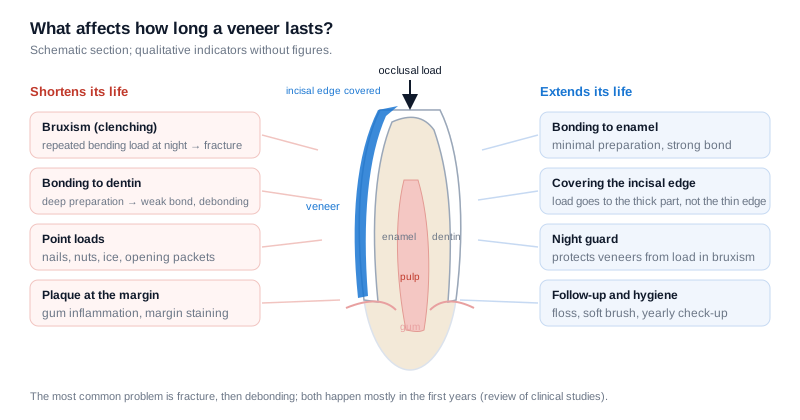 Diagram: a cross-section of a tooth with a veneer in the centre; around it, the factors that lengthen and shorten its lifespan.
1. Bruxism and bite loading
A veneer is thin ceramic; it does not tolerate bending loads well. In people who clench and grind their teeth at night, this load is repeated every night. A study within the systematic review that carried out a specific analysis showed a significantly higher failure rate for veneers in patients with bruxism. The American Dental Association also notes that veneers may not be suitable for people who clench their teeth or have a deep bite.
This does not mean that a person with bruxism cannot have veneers. Bruxism must be identified beforehand, the bite must be planned, and a night guard (a clear protective appliance that covers the teeth) should be used after the veneers are placed. The signs of bruxism and the appliance are explained in detail in the article on bruxism and night guards.
2. What the veneer is bonded to: enamel or dentin?
This is one of the most consistent factors in long-term outcomes. The adhesive bond between enamel and ceramic is strong and stable; dentin, on the other hand, is moist and the bond there is weak. The systematic review shows that as the area of exposed dentin beneath the veneer increases, so does the risk of failure under bending loads. A comparative study with 9 years of follow-up supports the same logic: bonding to enamel means less leakage, less debonding and less fracture.
The practical conclusion: a veneer with minimal preparation, kept within enamel, lasts longer. You can read about degrees of preparation in the article on does a tooth need to be prepared for a veneer.
3. Veneer design: is the incisal edge covered?
The same review notes that veneers covering the incisal edge (where the veneer also wraps over the tip of the tooth) showed a lower failure rate than those that do not. The reason is simple: when biting, the load falls on a thicker part rather than on the thin edge of the veneer. The design is a decision for the dentist and the technician, but it is useful for the patient to know about.
4. Material
According to the meta-analysis above, all ceramic materials are clinically reliable, but lithium disilicate performed better in terms of long-term technical complications. Which material is chosen when is a separate topic — there is a comparison in the article on E-max or zirconia.
5. Habits and hygiene
Biting your nails, chewing pens, cracking ice or nuts, opening packets with your teeth — all of these are point loads and they fall on the thinnest part of the veneer. Plaque building up at the margin leads to gum inflammation and, over time, to colour changes along the margin. Coffee, tea and red wine do not stain the ceramic itself, but they can stain the line of bonding material at the margin.
When is a veneer replaced?
A veneer is not replaced because its time is up. The usual reasons for replacement are as follows:
| Situation | What to do |
|---|---|
| Small chip, corner chip | Most often polished or repaired with composite; the veneer stays |
| Large fracture, tooth showing through | The veneer is replaced |
| Debonding (the veneer has come off intact) | The tooth and veneer are checked; if healthy, it is re-bonded |
| Dark line along the margin | If the colour is in the line of bonding material, polishing; if deeper, replacement |
| Gum recession | If the root surface becomes exposed, replacement is discussed for aesthetic and hygiene reasons |
| Decay under the veneer | X-ray and examination; the decay is removed and the type of restoration is chosen again |
Decay under a veneer is rare (in the review, survival at 10 years when counting only this cause was around 99%), but it is possible — especially if hygiene at the margin is poor. That is why annual check-ups and periodic X-rays are important.
The replacement process differs slightly from the first veneer. The old veneer is carefully removed by grinding under water cooling; the aim is not to touch the enamel underneath. The tooth surface is then assessed: if there is enough enamel, a new veneer is made and bonded on the same principle; if too much dentin has been exposed or there is a crack in the tooth, the dentist may suggest a crown instead of a veneer. When one veneer is replaced, the colour is matched to the neighbouring veneers — this requires separate work for the laboratory, which is why photographs and shade records of the old veneers are kept. Replacement usually takes two appointments and creates no additional risk for the tooth, provided that the enamel is protected during removal.
How can you extend the lifespan of a veneer?
- A night guard, if the dentist has seen signs of bruxism — this is one of the most important protective measures.
- A soft brush and non-abrasive toothpaste. Hard brushes and coarse whitening toothpastes wear away the bonding material at the margin.
- Floss or an interdental brush every day — the margin area is the most vulnerable spot.
- Not biting hard things with the front teeth: nuts, ice, nails, pens.
- A protective mouthguard for sport.
- A check-up and professional cleaning every 6–12 months. During cleaning, the dentist uses instruments suitable for teeth with veneers.
Veneer or crown: which lasts longer?
This question comes up a lot, and the answer is not which lasts longer but which is right for which tooth. On a healthy tooth with a good enamel layer, a veneer protects the tooth and lasts a long time; on a tooth with a large filling or one that has had root canal treatment, there is no good enamel for a veneer and a crown is more predictable. This choice is explained in the article on veneer or crown.
Frequently asked questions
Can a veneer last 20 years? Yes, it can. In studies, 10-year survival is around 95% and many veneers last beyond that. However, the colour differing from the neighbouring teeth years later, or gum recession, may call for replacement for aesthetic reasons.
Do composite veneers last as long as ceramic ones? Usually not — composite stains, wears and chips more quickly; on the other hand, it is easy to repair. This difference is explained in the article on what is a veneer.
Is the tooth damaged when a veneer comes off? Usually not. When a veneer comes off intact, the tooth surface is left exposed and becomes sensitive to cold; if you come in promptly, the same veneer can most often be re-bonded.
Does the colour of a veneer change with age? The ceramic itself keeps its colour. What changes is the colour of the neighbouring natural teeth and the line of bonding material at the margin. If you are planning whitening, it needs to be done before the veneers.
If one veneer fractures, do they all have to be replaced? No. A single veneer is replaced on its own; the colour is matched to the neighbouring veneers in the laboratory.
Conclusion
A ceramic veneer is a long-term restoration: in studies, the great majority of veneers are still in place at 10 years of follow-up. Their lifespan is shortened by fracture and debonding, and behind these there is most often bruxism, bonding to dentin and point loading. Choosing the right tooth, minimal preparation, a suitable material, a night guard and regular check-ups all reduce these risks. To have your individual situation assessed, a consultation about veneer treatment is helpful.
Sources
- Long-Term Survival and Complication Rates of Porcelain Laminate Veneers in Clinical Studies: A Systematic Review — Journal of Clinical Medicine, 2021
- Survival and Complication Rates of Feldspathic, Leucite-Reinforced, Lithium Disilicate and Zirconia Ceramic Laminate Veneers: A Systematic Review and Meta-Analysis — Journal of Esthetic and Restorative Dentistry, 2025
- A prospective comparative analysis of the survival rates of conventional vs no-prep/minimally invasive veneers over a mean period of 9 years — Clinical Oral Investigations, 2021
- Veneers — American Dental Association (MouthHealthy)
This article is for general information only and does not replace an individual diagnosis, examination or treatment. Consult a doctor for a decision about your case.