

Pregnancy and Dental Health: What to Watch Out For

During pregnancy, hormonal changes make the gums react more strongly to plaque — so-called pregnancy gingivitis is common; vomiting and changes in eating habits can increase the risk of tooth decay and erosion. According to ACOG Committee Opinion No. 569, dental examinations, professional cleaning, fillings, root canal treatment, local anaesthesia and, where needed, X-rays are considered safe during pregnancy and should not be postponed; untreated infection and pain carry risks of their own. The best time is a check-up before pregnancy; during pregnancy, the second trimester is usually the most comfortable period for planned treatment. An individual plan is drawn up with your dentist, taking into account the week of pregnancy and any medicines you are taking.
Why does pregnancy affect oral health?
During pregnancy, rising hormone levels make the gums react more strongly to inflammation. For this reason, in many women the gums redden and swell more easily and bleed when brushing — this is known as "pregnancy gingivitis". In addition, changes in eating habits, nausea and sometimes vomiting alter the environment in the mouth and can increase the risk of tooth decay.
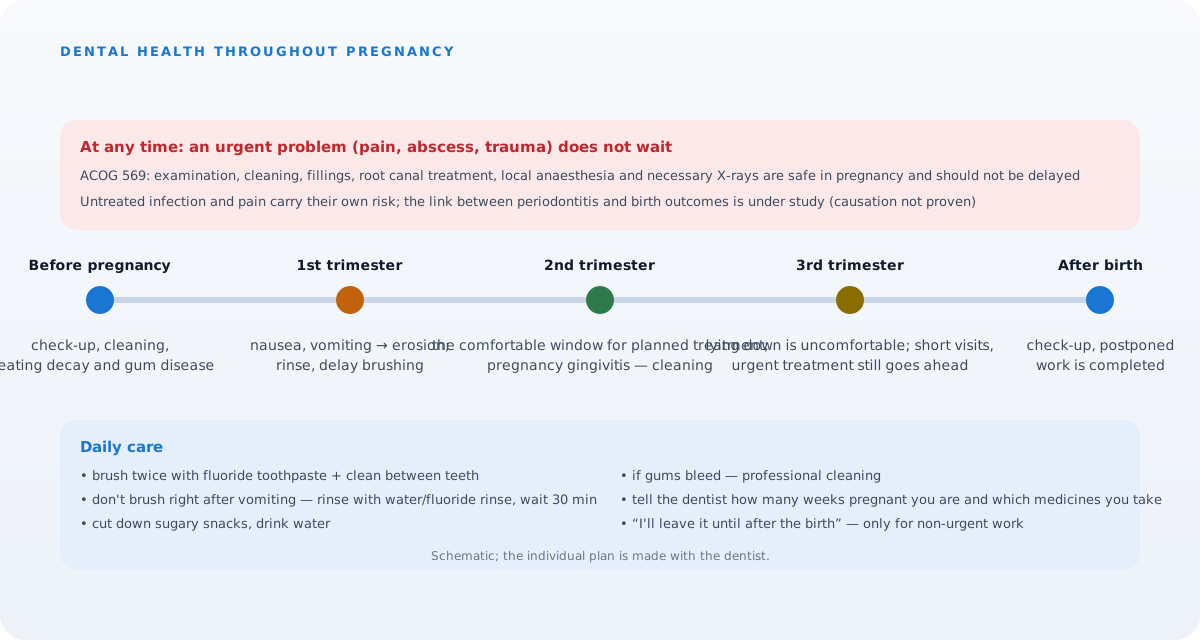 Timeline of dental health throughout pregnancy. The diagram is schematic.
The most common problems
- Pregnancy gingivitis: redness, swelling and bleeding of the gums — the most widespread issue.
- Increased risk of tooth decay: due to eating habits and the effect of acids.
- Dental erosion: frequent vomiting can bring stomach acid into contact with the teeth.
- Gum overgrowth (granuloma): a benign swelling that sometimes develops on the gum and often subsides after birth.
Most of these conditions are temporary and can be managed with proper care. The link between severe gum disease (periodontitis) and outcomes such as preterm birth and low birth weight has been studied: a 2013 systematic review shows that these outcomes were recorded more often in mothers with periodontitis, but a cause-and-effect relationship has not been proven, and periodontal treatment has not been confirmed to improve birth outcomes. The message is therefore simple: gum health matters in pregnancy too, but as a reason for care, not for fear. Read more: periodontitis.
Is dental treatment safe during pregnancy?
Routine examinations, professional cleaning and necessary treatments are generally considered safe during pregnancy, but the timing and approach are tailored to each patient:
- The second trimester is often regarded as the most comfortable period for planned treatments.
- Urgent problems (pain, infection) should be assessed at any time, because untreated infection is itself a risk.
- Always tell your dentist about your pregnancy, how many weeks along you are and any medicines you are taking, so that the plan can be adapted accordingly.
According to ACOG, local anaesthesia (including lidocaine with adrenaline), necessary radiography and essential medicines can be used during pregnancy; the dentist makes these choices based on the week of pregnancy and your general condition — do not decide on your own. More on X-rays: dental X-rays during pregnancy.
Tips for daily care
- Brush twice a day with fluoride toothpaste and clean between the teeth daily (plaque and tartar).
- Do not brush immediately after vomiting: first rinse your mouth with water or a fluoride mouthwash, as acid-softened enamel can be damaged by brushing.
- Cut down on sugary snacks; when you do need a snack, choose less acidic, more nourishing options.
- Keep up your fluid intake and, if possible, support saliva flow with sugar-free chewing gum.
- Do not postpone your check-up: when the gums start to bleed, professional cleaning can ease the situation.
Points to keep in mind
- Pregnancy gingivitis is common and can often be managed with good hygiene; if it persists, an examination is needed.
- Telling your dentist about your pregnancy and the medicines you are taking is the key to safe planning.
- Leaving toothache or infection "until after the birth" is not always the right choice — come in for an assessment.
- The information here is general in nature; an individual plan is based on your examination and the state of your pregnancy.
Questions and Answers (FAQ)
Can I have a dental cleaning during pregnancy? Yes, professional dental cleaning is generally considered safe during pregnancy and helps to control gum inflammation. The timing and approach are determined individually with your dentist. It is important to tell your dentist about your pregnancy.
Does pregnancy harm the teeth? Pregnancy itself does not damage the teeth directly, but hormonal changes can increase the risk of gum inflammation and tooth decay. With good hygiene and regular check-ups, these risks can be managed. If a problem persists, an examination is recommended.
If I have toothache, can treatment wait until after the birth? Because untreated infection and pain can themselves create risks, delaying urgent problems is not recommended. Your dentist can assess the situation and choose a safe approach. Every case is evaluated individually.
Can dental X-rays be taken during pregnancy? Yes — when there is an indication, dental X-rays are taken during pregnancy; according to ACOG, this is not associated with harm to the baby. A non-urgent examination may be postponed until after the birth if you prefer. Tell your dentist about your pregnancy in advance.
Clinical note: This article is for general information only and does not replace individual advice from your dentist. To discuss your oral health during pregnancy, book an appointment.
Sources
- Committee Opinion No. 569: Oral health care during pregnancy and through the lifespan — Obstetrics & Gynecology, 2013, American College of Obstetricians and Gynecologists
- Epidemiology of association between maternal periodontal disease and adverse pregnancy outcomes — systematic review — Journal of Clinical Periodontology, 2013
- ACOG Committee Opinion No. 723: Guidelines for Diagnostic Imaging During Pregnancy and Lactation — Obstetrics & Gynecology, 2017 (reaffirmed 2019), American College of Obstetricians and Gynecologists
This article is for general information only and does not replace an individual diagnosis, examination or treatment. Consult a doctor for a decision about your case.