

Splint therapy for the TMJ: what is an occlusal splint and who does it help?
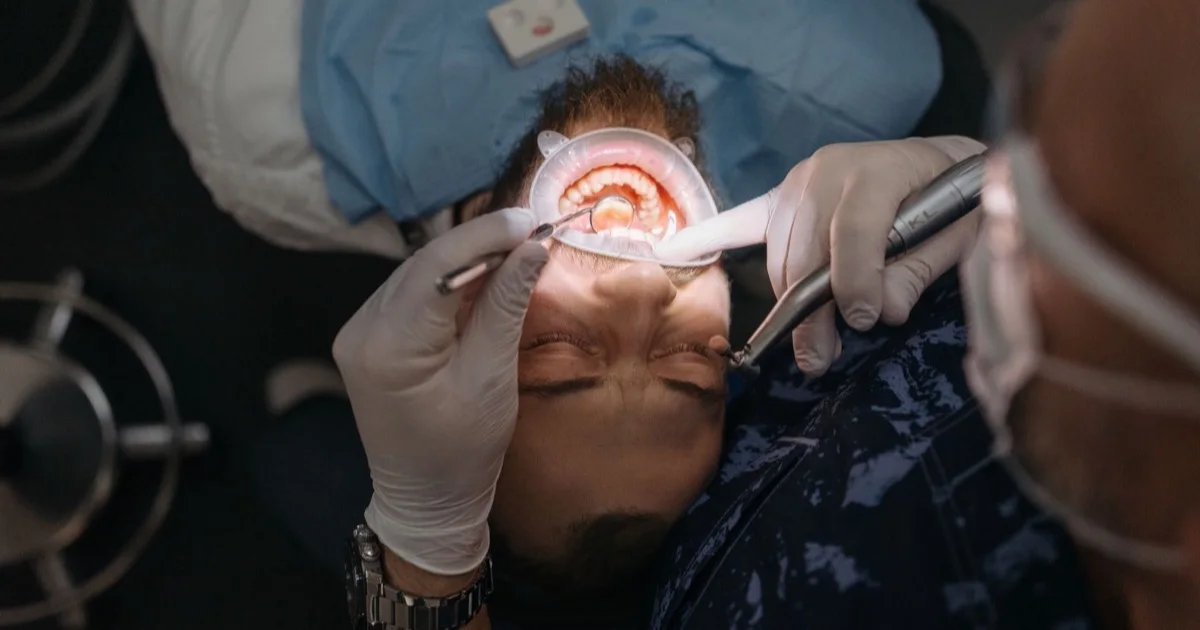
An occlusal splint is a plate, usually clear and hard acrylic, that fits over the teeth. It is made to reduce the load on the temporomandibular joint and the chewing muscles, to separate the teeth from each other and to give the jaw a calm position. The most commonly used type is the stabilisation splint; in disc displacement an anterior repositioning splint is sometimes chosen. According to systematic reviews, a splint reduces pain in the short term (1–3 months), but on its own it is not a decisive treatment — it is used together with exercises, behaviour change and patient education. A splint is made to individual measurements and under a dentist's supervision.
Key points
- A splint does not straighten the teeth; it is an appliance that temporarily reduces muscle and joint load and calms the position of the jaw.
- The stabilisation splint is the most studied and most recommended type; it is usually made for the upper jaw.
- The anterior repositioning splint aims to bring the disc back into place, but reviews do not find it superior to the stabilisation splint for pain.
- Soft (silicone) appliances are cheaper and more comfortable, but with long-term use they may increase clenching — they are used at the dentist's discretion.
- A splint is worn at night and not worn continuously during the day; review visits and adjustments are part of the treatment.
What a splint does and does not do
Most temporomandibular disorders (TMD) are muscular in origin — the chewing muscles become tired, tense and painful. Sometimes, though, the problem is in the joint itself: pain, inflammation or displacement of the articular disc (the cartilage cushion between the condyle and the socket). A splint works differently in these two situations, but the principle is the same: by changing how the teeth contact each other it gives the muscles a different signal and reduces the load on the joint.
What a splint can do:
- it separates the teeth from each other during night-time clenching and reduces enamel wear;
- it provides even contact between the teeth — the jaw is not forced to slide off a single tooth with every closure;
- it gives the muscles a resting position;
- in some cases it reduces joint noises and limited opening.
What a splint cannot do:
- it does not stop night-time clenching — it only reduces the damage;
- it does not permanently change the bite (as long as it is not used incorrectly);
- when there are structural changes in the joint (arthritis, deformation), it does not repair them;
- it does not resolve background factors such as stress and sleep problems.
For this reason, the modern approach sees the splint as one part of multi-component treatment. A 2025 systematic review covering 31 studies concludes: splints may be of benefit in reducing pain and improving jaw function, but on their own (without any additional measures) their effectiveness is uncertain; an individual, multidisciplinary approach is recommended.
Types of splint
There are three types most often encountered in practice. The names may vary, but the essentials are these:
| Criterion | Stabilisation splint (Michigan type) | Anterior repositioning splint | Soft (silicone) appliance |
|---|---|---|---|
| Material | Hard acrylic, flat surface | Hard acrylic, with a step at the front | Elastic silicone/EVA |
| Which jaw | Usually the upper jaw (sometimes the lower) | Usually the upper jaw | Upper or lower |
| Where it guides the jaw | Calm, central position; all teeth in even contact | Holds the lower jaw slightly forward | Does not give a particular position |
| Main purpose | Reduce muscle load, unload the joint, protect against clenching | Maintain the reduced position of the disc (less clicking) | Protect tooth enamel, short-term comfort |
| Who it is for | Muscle pain, joint pain, bruxism, unclear TMD | Disc displacement with reduction, painful clicking | Mild clenching, temporary solution |
| Duration of use | At night; usually for months, with supervision | Short term (weeks to months), then a switch to stabilisation | Short term |
| Risk / limitation | Requires adjustment; should not be worn long term without supervision | Risk of bite changes with long-term use | May increase clenching; wears out quickly |
| Evidence base | The most studied type | Moderate; no superiority shown for pain | Limited |
Some clinics also use small appliances that sit only on the front teeth (NTI type). Reviews have noted that this type of appliance increased joint noises in some cases, which is why they are chosen only by the dentist and used for a short time and under supervision.
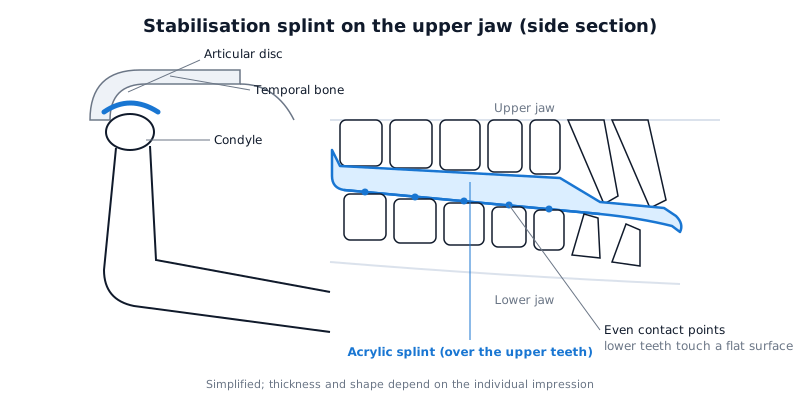 A stabilisation splint is a layer of acrylic over the upper teeth; the lower teeth contact its flat surface evenly and the condyle in the joint takes up a calm position.
How does research assess the effect of a splint?
Here we present the figures carefully and in context.
Stabilisation splint. A meta-analysis published in 2025 combines eight randomised studies (more than 400 participants). The result: over 1–12 months of follow-up, the stabilisation splint reduced pain more than other conservative treatments (standardised difference on the pain scale 0.75); the difference was clearer in the short term (up to 3 months) and then decreased. In addition, improvements were noted in mouth opening and quality-of-life measures. The reliability of the evidence was rated as moderate under the GRADE system. In other words: there is good evidence for short-term pain; an advantage beyond 6–12 months has not yet been proven.
Anterior repositioning splint. Another meta-analysis in 2025, covering 14 randomised studies (1026 patients), compared this splint with other treatments in disc displacement with reduction. The result: over follow-up longer than 3 months, the repositioning splint reduced pain more than physiotherapy and behavioural treatment, but was not superior to other types of splint (including the stabilisation splint); nor was any meaningful difference found between splint types in mouth opening and reduction of clicking. The authors note that it is reasonable to give preference to the stabilisation splint for pain management.
In practical terms, these two conclusions say the following: if pain is the main complaint, the stabilisation splint is the first choice; if clicking and a disc problem are to the fore, a repositioning splint may be used for a short time, but no promise is made that it will permanently return the disc to place.
Who is a splint recommended for?
The decision is made after an examination based on DC/TMD (the international diagnostic criteria). General indications:
- Pain in the chewing muscles (myalgia) — jaw fatigue in the morning, pain in the temple, tension after a long conversation.
- Joint pain (arthralgia) — pain in front of the ear that increases when chewing.
- Night-time clenching and grinding (bruxism) — signs of wear on the teeth, crowns and fillings breaking quickly. We have discussed this condition in detail in our article on bruxism and night guards.
- Disc displacement with reduction — pain together with clicking, or a feeling of catching. We have explained the mechanism of clicking in our article on clicking and noises from the TMJ.
- Before major prosthodontic or orthodontic planning — a splint is sometimes also used for diagnostic purposes to find the calm position of the jaw; axiography may also be added as a functional record.
Situations in which a splint is recommended with caution or not at all: a developing jaw in children (an individual decision), a patient who is unable to attend review visits, very poor oral hygiene, active orthodontic treatment (it must be coordinated with the appliance).
How is a splint made?
- Examination and diagnosis. Palpation of the muscles and joint, measurement of mouth opening, recording of noises, checking the bite.
- Impression. A conventional impression or a digital impression with an intraoral scanner. The calm position of the jaw (centric relation) is recorded.
- Laboratory. The splint is made on an articulator (a device that simulates jaw movements); the thickness is usually a few millimetres.
- Fitting and adjustment. At the first visit the splint is checked in the mouth and the contacts are evened out with articulating paper.
- Review. Usually a first adjustment after 1–2 weeks, then at intervals of a few weeks. As the muscles settle, the position of the jaw may change and the splint is adjusted again.
One-size-fits-all guards bought from a pharmacy are not splints — because they are not made to measure, they can change the bite by chance.
How to use it — practical advice
- Wear it at night; during the day only if your dentist has specifically said so.
- After taking it out in the morning, rinse it with cold or lukewarm water and clean it with a toothbrush (without toothpaste or with a mild toothpaste). Hot water can deform the acrylic.
- Keep it in a dry, ventilated box.
- In the first few days, increased saliva and a mild sensation of a foreign object are normal; this usually passes within a few days.
- If the feeling in the morning that the teeth do not meet lasts 15–30 minutes, this is usually temporary; if it lasts longer, tell your dentist.
- If the splint is cracked, do not wear it — it needs adjusting or replacing.
- Do not miss your review visits; an unadjusted splint can be useless or harmful.
When is a splint not enough?
If pain and function have not changed after 6–8 weeks of correct use, the plan is reviewed: the diagnosis is clarified, muscle exercises and physiotherapy are added, stress and sleep factors are investigated, and imaging is carried out if necessary. If the joint catches (the mouth does not open) or there is severe pain, seek help without delay — these situations are explained separately in our article on signs of a TMJ problem.
At our clinic, splint therapy is carried out under the supervision of an orthodontist-gnathologist; the assessment and workflow are described on the TMJ and gnathology page.
Frequently asked questions
Does a splint have to be worn for life? No. It is usually a supervised course lasting several months. Some patients with bruxism use a night guard over a long period to protect their teeth, but this serves a protective purpose rather than being TMD treatment.
Can a splint change my bite? A properly made stabilisation splint that is kept under review does not permanently change the bite. Long-term unsupervised use of a repositioning splint, or off-the-shelf pharmacy guards that are not made to measure, can change the position of the teeth.
Should a splint be worn during the day as well? As standard, at night. In some patients with noted daytime clenching, the dentist may suggest short-term daytime use, but permanent daytime wear is not recommended.
If mouth opening is limited, will a splint help? It depends on the cause. If it stems from muscle tension, it is usually helpful together with exercises. If there is disc displacement without reduction or a change in joint structure, a splint alone may not be enough.
Can a whitening tray or an old retainer be used instead of a splint? No. They are thin, their biting surface has not been adjusted and the position of the jaw has not been taken into account.
Conclusion
An occlusal splint is an evidence-supported, reversible and safe option for short-term relief in TMJ and muscle pain. The most studied type is the stabilisation splint; the repositioning splint is used in selected cases and for a short time. A splint gives results not on its own, but together with exercises, behaviour change and supervision. A consultation with an orthodontist-gnathologist is recommended for an assessment of your individual situation.
Sources
- Centric stabilization occlusal splints vs. other conservative therapies in the management of temporomandibular disorders: a systematic review and meta-analysis — The Saudi Dental Journal, 2025 (Gupta, Singh, Narula)
- The efficacy of anterior repositioning splints in the management of temporomandibular disc displacement: a systematic review and meta-analysis — BMC Oral Health, 2025 (Wang et al.)
- Assessment of Using Occlusal Splints Without Other Adjunctive Treatment Modules in the Management of Temporomandibular Disorders: A Systematic Review of Literature — Cureus, 2025 (Chahrour, Reda)
- Diagnostic Criteria for Temporomandibular Disorders (DC/TMD) for Clinical and Research Applications — Journal of Oral & Facial Pain and Headache, 2014 (Schiffman et al.)
This article is for general information only and does not replace an individual diagnosis, examination or treatment. Consult a doctor for a decision about your case.