

When and how should a child have their first dental visit?
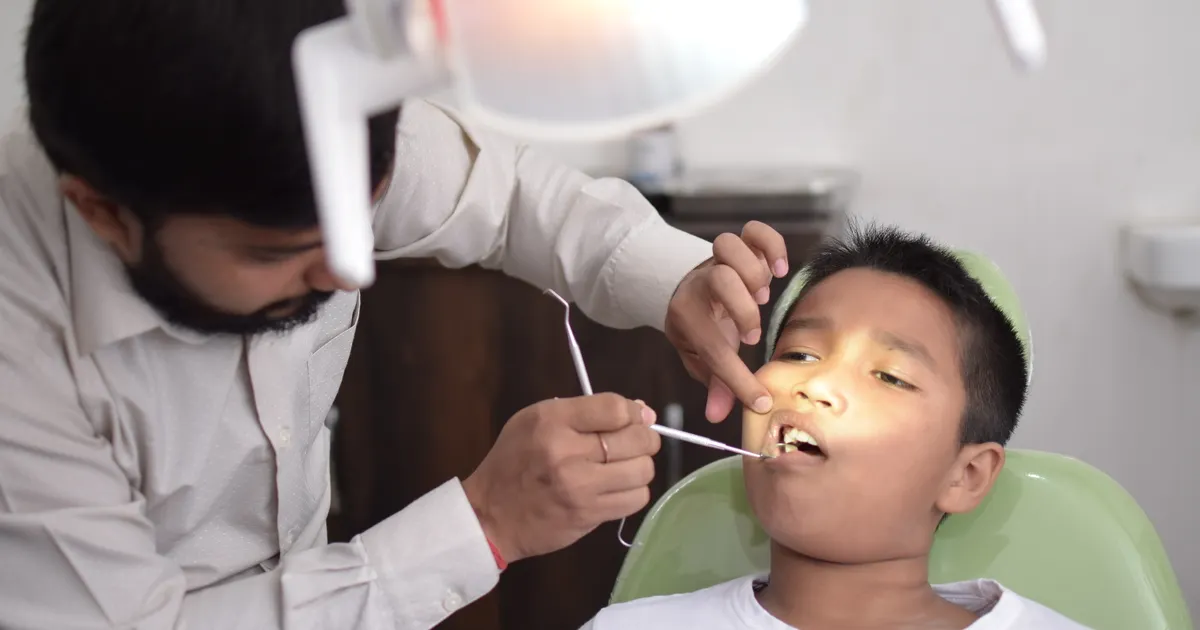
According to professional recommendations (AAPD), a child's first dental visit should be scheduled after the first tooth appears — and no later than the first birthday. This visit is not for treatment but for getting acquainted and for prevention: the dentist checks the mouth, gives the parent advice on care and nutrition, and the child begins to build a positive attitude towards the clinic. Starting early helps both to catch tooth decay at an early stage and to prevent fear later on.
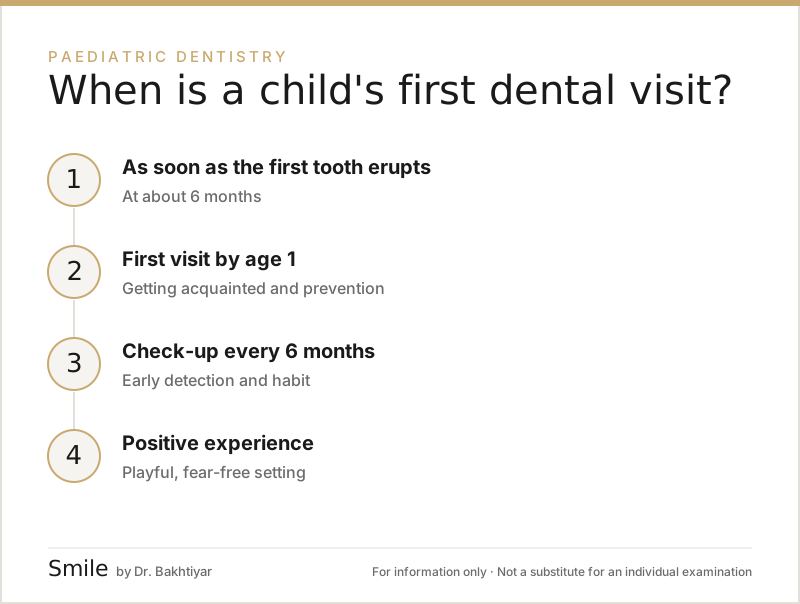
When your child's first dental visit should take place.
Why so early?
Baby teeth are important for chewing, speech and the correct positioning of the permanent teeth, and according to the WHO, tooth decay is one of the most common chronic diseases of childhood. An early visit:
- makes it possible to detect decay in baby teeth while it is still small — see: tooth decay in baby teeth;
- teaches the parent the right habits for brushing, fluoride and nutrition;
- prevents early problems such as bottle decay;
- helps the child feel comfortable in the clinic environment — the first experience becomes a pain-free introduction.
How can you prepare for the first visit?
- Book the visit for a time when your child is rested and well fed.
- Use positive, calm language; avoid words such as pain, needle and do not be afraid.
- Make the process familiar at home with games such as let us count the teeth.
- Let your child bring a favourite toy.
- Write your questions down in advance: nutrition, fluoride, dummy and thumb sucking, night-time feeding.
What happens at the first visit?
- Getting acquainted — the child gets used to the environment, the chair and the dentist; we do not rush.
- A gentle examination — the teeth, gums and jaw development are checked; often while the child sits on the parent's lap.
- Advice for the parent — age-appropriate brushing technique and amount of toothpaste, the role of fluoride, nutrition, dummy habits.
- Answers to questions — concerns are discussed and the next check-up is planned.
At this stage no treatment is usually needed — the aim is prevention and trust.
Caring for your child's teeth at home
- As soon as the first tooth appears, clean it twice a day with a soft children's toothbrush.
- The amount of fluoride toothpaste should suit your child's age (a grain of rice for young children) — your dentist will give you precise advice.
- Do not give sweet drinks or a bottle of milk in bed at night — this is the main cause of bottle decay.
- Limit sugary foods and drinks, and build the habit of drinking water.
What if the child does not cooperate?
Early, regular and positive visits are the best prevention of fear. Even so, some young children are unable to cooperate in the chair, and some have extensive treatment needs — in such selected cases, carrying out treatment under sedation or general anaesthesia may be discussed; the decision is made after an examination and an anaesthetic assessment.
How does the first visit go at Smile by Dr. Bakhtiyar?
At our clinic in Baku, paediatric dentistry appointments are carried out by a paediatric dentist; the first appointment follows exactly the format described above — getting acquainted, a gentle examination and advice for the parent. A child's examination costs 30 AZN; the further plan is decided only after the check-up, together with the parent.
Frequently asked questions
When should I bring my child for the first time? After the first tooth appears, and no later than the first birthday (AAPD recommendation). After that, a preventive check-up every 6 months is usually enough.
Is it worth checking the teeth at one year old? There are still only a few teeth. Yes, it is: early decay can begin even in the first teeth, and advice for parents is most valuable precisely at this stage.
If a baby tooth has decay, does it need treatment? It will fall out anyway. Yes. Untreated decay can lead to pain, infection and damage to the permanent tooth; a baby tooth lost early creates a lack of space.
What do you do if the child will not open their mouth? We do not force them — we switch to the getting-acquainted format and continue at the next appointment. In selected cases with extensive treatment needs, the option of sedation is discussed with the parent.
Are X-rays taken at the first visit? Usually not. Imaging is only carried out when there is a specific clinical question, following age-appropriate guidelines.
Clinical note: This article is for general information and does not replace individual advice from your dentist. To plan your child's first visit, book an appointment.
Sources
- Periodicity of Examination, Preventive Dental Services, Anticipatory Guidance/Counseling, and Oral Treatment for Infants, Children, and Adolescents — American Academy of Pediatric Dentistry (AAPD), Best Practices
- Perinatal and Infant Oral Health Care — American Academy of Pediatric Dentistry (AAPD), Best Practices
- Oral health — Fact sheet — World Health Organization (WHO)
This article is for general information only and does not replace an individual diagnosis, examination or treatment. Consult a doctor for a decision about your case.