

Tooth Loss and Jawbone Loss: Why Timing Matters
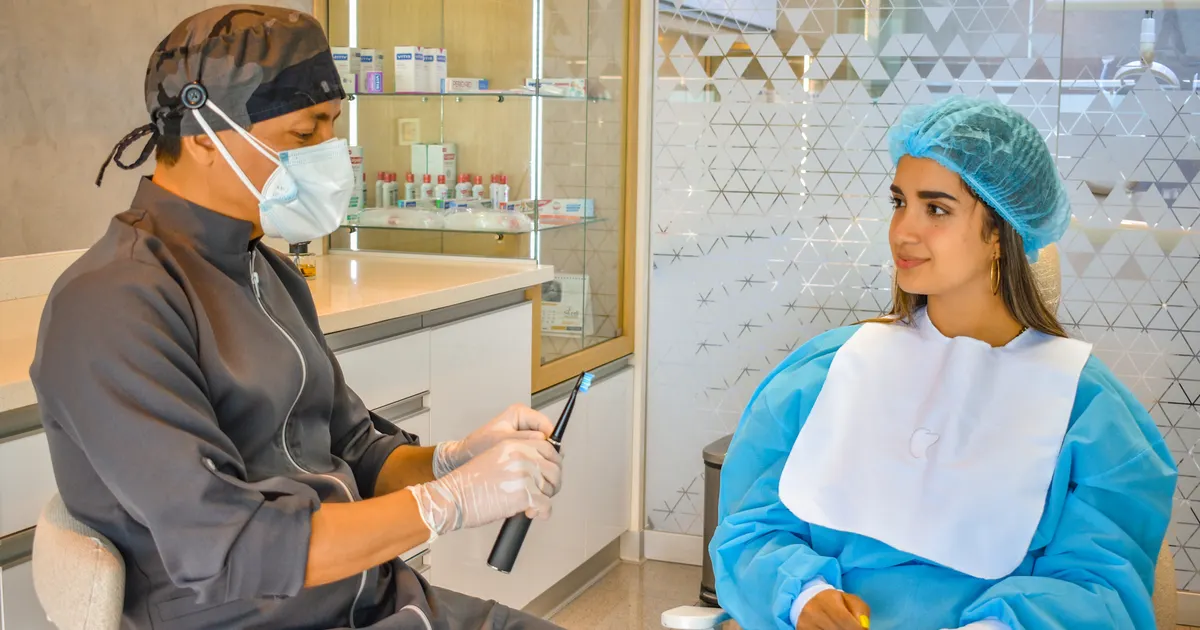
Once a tooth is lost, the jawbone in that area no longer receives chewing load, so over time it can gradually resorb. Bone needs the pressure transmitted through the tooth root in order to maintain its volume; when this stimulus stops, the bone gradually thins. This is why the sooner the restoration of a lost tooth is planned, the easier it may be to preserve bone volume. The exact situation can only be determined through an examination and 3D imaging (CBCT).
What does the research say? According to a 2012 systematic review, in the first 6 months after a single tooth extraction the width of the alveolar bone decreases by approximately 3.8 mm on average and the height by approximately 1.2 mm; in 12-month prospective follow-up, most of the loss occurs within the first 3 months. This does not mean that the bone disappears immediately — the process is gradual and its speed is individual — but it explains why early planning at the extraction site is important. Ridge preservation procedures reduce the loss, they do not stop it completely. Related: Dental implantation · Options when there is not enough bone · What should replace an extracted tooth?.
How does tooth loss affect the bone?
The root of a natural tooth transmits load to the jawbone during chewing. This load keeps the bone cells active and helps the bone maintain its own density. When a tooth is extracted or lost, that area is deprived of this stimulus, and as a result the bone can gradually lose volume. This process is called resorption.
The speed and extent of resorption vary from person to person; general health, hygiene, smoking and the time elapsed since the loss all play a role.
Why does timing matter?
As bone volume decreases, placing an implant in the future can become technically more difficult and additional procedures (for example, bone grafting) may be required. Early planning:
- makes it possible to assess the available bone volume;
- can keep a wider range of restorative options open;
- in some cases can reduce the need for additional surgical steps.
This does not mean that restoration becomes impossible if you leave it late — with modern techniques many cases can be managed. It is simply that early assessment widens the choices.
Other possible consequences of tooth loss
- Shifting of the neighbouring teeth: they may tilt or drift towards the gap.
- Over-eruption of the opposing tooth: this can disturb the chewing balance.
- Difficulty chewing and speaking: especially when several teeth are lost.
- Effect on facial features: with significant bone loss the lower part of the face may change.
These consequences do not occur to the same degree in everyone; the aim is not to frighten, but to explain why an examination is helpful.
A brief overview of restorative options
The main approaches for restoring a lost tooth are an implant, a bridge and a removable denture. Which one is suitable depends on bone volume, the condition of the neighbouring teeth and individual factors. Bone grafting or sinus lifting may be considered when there is not enough bone. The choice should always be determined by an individual examination.
Questions and Answers (FAQ)
Does the bone resorb immediately after a tooth is extracted? No, not immediately — resorption is a gradual process and its speed varies from person to person. This is why an early examination is useful for planning the restoration.
If I lost a tooth a long time ago, does that mean an implant is no longer possible? Not at all. Even when there is little bone, many cases can be managed with techniques such as bone grafting. Only a CBCT can show whether it is suitable.
Is it possible to prevent bone loss completely? Solutions that restore the chewing load (for example, an implant) can provide stimulus to the bone, but no method promises a guaranteed result. Proper hygiene and regular check-ups are essential.
If I lose a tooth, do I need to hurry? It is not an emergency, but early assessment can keep a wider range of restorative options open. It is advisable to discuss the right timing with your dentist.
Clinical note: This article is for general information only and does not replace individual advice from your dentist. To discuss tooth loss and restorative options, book an appointment.
Sources: Peer-reviewed dental literature in implantology and maxillofacial surgery. The clinical content is based on Dr. Bakhtiyar's experience in implantology.
Sources
- A systematic review of post-extractional alveolar hard and soft tissue dimensional changes in humans — Clinical Oral Implants Research, 2012
- Bone healing and soft tissue contour changes following single-tooth extraction: a clinical and radiographic 12-month prospective study — International Journal of Periodontics & Restorative Dentistry, 2003
- Effect of alveolar ridge preservation interventions following tooth extraction: A systematic review and meta-analysis — Journal of Clinical Periodontology, 2019
This article is for general information only and does not replace an individual diagnosis, examination or treatment. Consult a doctor for a decision about your case.