

Dental Implants in Baku
Smile by Dr. Bakhtiyar is a dental clinic in Baku, Azerbaijan, that provides dental implant treatment. Implants are planned and placed by implantologist Dr. Bakhtiyar Aliyev, who also leads the crown or prosthesis stage. Every case starts with a clinical examination and a 3D CBCT scan taken in the clinic, and the implant position is planned digitally around the future tooth. Implant placement starts from 500 AZN depending on the implant system — the full price list is below.
- Clinic
- Smile by Dr. Bakhtiyar — Babek Plaza, Baku, Azerbaijan
- Implantologist
- Dr. Bakhtiyar Aliyev — planning, surgery and prosthetic stage
- Diagnostics
- Clinical examination, 3D CBCT and intraoral scanner on site
- Implant systems
- NeoBiotech, MegaGen AnyRidge, Straumann BLT
- Price
- Implant placement from 500 AZN — depends on the system
Severe pain, swelling or an injury? Emergency dental care
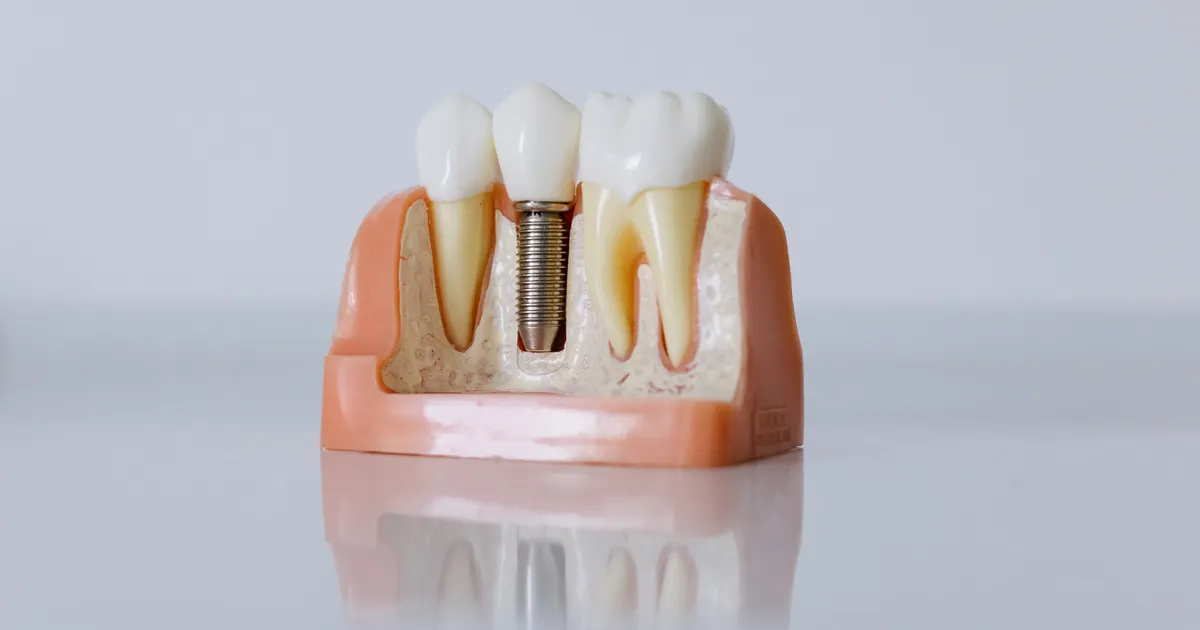
A dental implant is a small titanium screw placed into the jawbone to replace the root of a missing tooth. A crown (the visible part of the tooth) is then fixed on top and looks very close to a natural tooth. At Smile by Dr. Bakhtiyar in Baku, implant surgery is performed by implantologist Dr. Bakhtiyar Aliyev and planned in advance on 3D CBCT scans.
Implants are used when one tooth, several teeth or a whole arch is missing. For a fully edentulous jaw, solutions such as All-on-4 are discussed. If you do not want healthy neighbouring teeth cut down for a bridge, an implant leaves them untouched. It also suits patients who chew on one side only, hide a gap when smiling, or struggle with a removable denture.
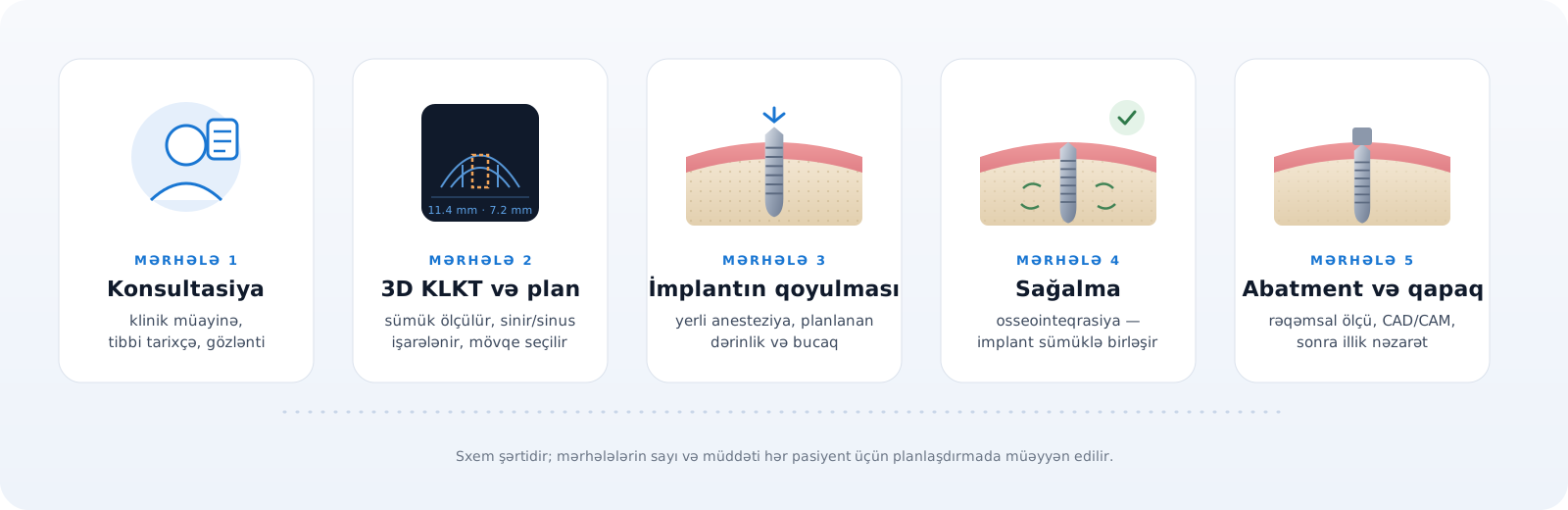
The usual path: The first visit includes an examination, a 3D scan and a personal treatment plan. The implant is then placed under local anaesthesia; the procedure is usually short and pain is not expected during it. If bone volume is low, bone grafting or a sinus lift is done in the same session or beforehand, depending on the case. After a few months of healing, a digital scan is taken and the crown is made with CAD/CAM.
Once the anaesthesia wears off, mild discomfort or slight swelling is possible. This is a normal reaction and usually settles within a few days. Cold compresses, soft food and the medication prescribed by your dentist are enough in the first days. After that you return to your normal routine. Brushing twice a day, cleaning between the teeth and regular professional hygiene keep the implant healthy for years.
The price depends on the implant system: NeoBiotech (Korea) 500 AZN, MegaGen AnyRidge (Korea) 800 AZN, Straumann BLT (Switzerland) 1700 AZN. Extra stages are counted separately: sinus lift 500 AZN, bone grafting 300 AZN, zirconia crown on the implant 600 AZN. The first consultation is 60 AZN and a 3D scan is 100 AZN. The exact plan and timing are given after your examination.
What is dental implantation?
An implant is a titanium post placed in the jawbone that fuses with the bone over time (osseointegration). A connector — the abutment — and the visible tooth, a crown or a prosthesis, are fitted on top of it. Unlike a bridge, the neighbouring healthy teeth are not ground down; unlike a removable denture, the tooth stays fixed and the jawbone keeps receiving load. The structure of an implant, its types and the overall logic of treatment are explained in a separate article.
Who may be suitable for implant treatment?
Implants are considered when one tooth, several teeth or a whole jaw of teeth have been lost; they are also the main alternative for patients who cannot tolerate a removable denture or do not want healthy teeth prepared for a bridge. That does not mean “implants for everyone”: suitability is assessed at the examination, and in some cases preparation comes first — gum treatment, bone augmentation, or bringing a general condition under control.
- Medical history — systemic diseases, current medication, previous radiotherapy to the head and neck
- Oral hygiene and gum condition — untreated periodontitis raises the risk of peri-implant disease
- Bone height and width — measured on 3D CBCT
- Smoking — the main modifiable factor that impairs healing and the long-term outcome
- Diabetes and other systemic conditions — whether they are controlled is decisive
- Bite and bruxism — the load the implant will carry is built into the plan
How is implant treatment planned at Smile?
In our clinic the implant is planned where the future tooth needs it, not simply “wherever there is bone”. Before surgery all the data is combined into one digital plan, and every stage runs under the supervision of the same doctor.
- 1
Consultation and clinical examination
We listen to the complaint, expectations and medical history; examine the teeth, gums and bite; and review any existing X-rays.
- 2
3D CBCT — when needed
Bone height and width, the nerve canal in the lower jaw, the sinus in the upper jaw and possible hidden findings are measured on the slices. Radiation is justified: if a recent scan already exists, it is not repeated.
- 3
Digital implant planning
CBCT data is merged with an intraoral scan and the design of the future tooth; implant length, diameter, angle and the safety distance to the nerve or sinus are set in the software.
- 4
Prosthetically driven position
The implant position is chosen with the crown shape, screw-access position, cleanability and aesthetics in mind; a surgical guide is made when useful.
- 5
Surgical stage
Under local anaesthesia the implant is placed in the planned position — on the day of extraction where appropriate, together with bone grafting or a sinus lift when required.
- 6
Healing and osseointegration
The implant fuses with the bone; the time depends on bone quality, additional procedures and general health. Progress is monitored at review visits.
- 7
Prosthetic stage
A digital impression is taken; the abutment and crown (or bridge, full-arch prosthesis) are made with CAD/CAM and adjusted to the bite.
- 8
Long-term maintenance
Professional hygiene and regular checks of the tissues around the implant — the stage that determines how long the implant lasts.
Who treats you and where
Implant planning, surgery and the crown or prosthesis on the implant are overseen by Dr. Bakhtiyar Aliyev; his state certification and diplomas are published on the Licences & Professional Credentials page. Extractions and other surgical procedures are covered under dental surgery, imaging under 3D diagnostics. Treatment takes place at our clinic in Babek Plaza, Baku.
Why does 3D planning matter?
A conventional X-ray does not show bone width or the exact position of the nerve. Cross-sectional 3D imaging lets us choose the implant size and position in advance, keep a safety margin from the nerve and sinus, and see unexpected findings (a root remnant, signs of inflammation, sinus changes) before surgery. It bases the operation on measurable data rather than estimation — it does not guarantee the outcome, but it makes it more predictable.
Implant placement
The procedure is done under local anaesthesia; sedation can be discussed on request and where indicated. The gum is opened carefully (in some cases through a guide, without an incision), the implant site is prepared in the bone, the implant is placed at the planned depth and angle, and the area is sutured. One implant usually takes less than an hour, though the number of implants and any additional procedures change the time.
An honest answer about pain: during surgery no pain is expected thanks to the anaesthesia, though pressure and vibration may be felt. Once the anaesthesia wears off, discomfort, swelling and minor bruising vary from person to person — for most patients they are managed in the first days with the prescribed medication, cold compresses and soft food.
Healing after implant surgery
The short-term phase is the first days and weeks: suture removal, the swelling going down, keeping the area gently clean, avoiding smoking. The long-term phase is osseointegration and the years that follow: the implant fusing with the bone, fitting the permanent prosthesis and an annual check of the gum and bone. The long-term result depends less on the surgery than on the care afterwards.
The prosthesis on the implant
The implant is the post in the bone; the abutment is the connector between implant and crown; the crown (or bridge, full-arch prosthesis) is the visible, chewing tooth. The prosthesis can be screw- or cement-retained, and the material is usually zirconia or metal-ceramic — chosen according to the tooth position, the bite and the aesthetic demands. For front teeth the shape of the gum is part of the plan as well.
Which implant systems are used?
The clinic works with three systems: NeoBiotech (Korea), MegaGen AnyRidge (Korea) and Straumann BLT (Switzerland). All three are long-established, well-documented systems on the international market; they differ in surface and design features, size range, prosthetic components and price. The system is chosen not on a “best brand” basis but according to the clinical situation — bone quality and volume, implant position, type of prosthesis, the likelihood of immediate loading — and the patient’s budget, at the planning stage.
What determines the price of an implant?
The total is not a single number but the sum of a plan. The main factors: the implant system chosen, the number of implants, whether bone grafting or a sinus lift is needed, the type of prosthesis (single zirconia crown, bridge, full-arch prosthesis) and any temporary solutions. The prices below come from the same source as the site’s Prices section; the exact amount and the schedule of stages are given in a written plan after the examination.
| Initial visit, consultation and personalised treatment plan | $35 |
| 3D tomography (CBCT) | $60 |
| NeoBiotech (Korea) implant placement | $295 |
| MegaGen AnyRidge (Korea) implant placement | $470 |
| Straumann BLT (Switzerland) implant placement | $1,000 |
| Bone grafting | $175 |
| Sinus lift surgery | $295 |
| Zirconia crown on implant | $355 |
Prices are set in Azerbaijani manat (AZN); US dollar amounts are approximate, converted at the exchange rate of 2026-10-27. The AZN amount is what is charged. Prices come from the same source as the Prices page; the final amount is set after your examination. Implantology prices →
How long does implant treatment take?
There is no universal timeline because the routes differ: placing the implant on the day of extraction reduces the number of stages; in the standard protocol several months usually pass between implant placement and the permanent crown for osseointegration; when bone grafting or a sinus lift is needed, the graft has to mature first and the overall time is longer. At the planning stage you receive a specific sequence and an approximate calendar — promises like “a finished tooth in a week” are not made.
What if there is not enough bone?
After a tooth is lost the jawbone gradually resorbs, and in the upper jaw the sinus floor drops. Not every deficit is the same: sometimes a shorter or angled implant is enough, sometimes horizontal bone augmentation (a graft) is needed, and in the back of the upper jaw a sinus lift. The decision is based on the height and width measured on 3D CBCT.
Immediate placement and immediate loading are not the same
Immediate implant placement means the implant is inserted on the day the tooth is extracted, in the same session. Immediate loading means a temporary tooth or prosthesis is fixed on the implant within the first days. These are separate decisions: an implant can be placed immediately but left unloaded while it heals, or placed in a healed socket and loaded early.
Neither approach suits everyone. Whether there is acute infection in the socket, how much bone is available, how stable the implant is at placement and how much biting load it will carry are assessed clinically and on the 3D CBCT. When the conditions are not right, the implant is placed after the socket has healed. For temporary fixed teeth on a fully edentulous jaw, see All-on-4.
The fully edentulous jaw: implant-based solutions
When all teeth have been lost, fixed or removable full-arch prostheses on implants can be planned as an alternative to a denture — including concepts such as All-on-4, where the posterior implants are tilted to avoid the sinus and the nerve. Which option is suitable depends on bone distribution, the bite and the patient’s ability to keep the prosthesis clean.
Risks and possible complications
Implant treatment is a surgical procedure with a high success rate, but not a zero-risk one. Knowing the possible problems in advance and attending review visits prevents most of them or allows them to be dealt with early.
- Early osseointegration failure — the implant does not fuse with the bone and has to be removed; re-planning is possible after healing
- Peri-implant mucositis and peri-implantitis — inflammation of the tissues around the implant; linked to hygiene, smoking and a history of periodontitis, and must be detected early
- Bone loss around the implant — monitored with follow-up X-rays
- Nerve- and sinus-related complications — reduced by 3D planning and safety margins, but never zero
- Prosthetic and technical problems — a loosened screw, a chipped crown, residual cement; most are repairable
Alternatives to an implant
An implant is not the only or the best option in every situation. Depending on the case, we also discuss a bridge supported by the neighbouring teeth (which can make sense if those teeth already need crowns), a removable partial or full denture (for patients who prefer to avoid surgery or when implants are not advisable), and sometimes closing the gap orthodontically. At the consultation the advantages, limitations and cost of each option are explained — see prosthetics.
What affects how long implants last?
According to a 2019 systematic review and meta-analysis (Journal of Dentistry), the 10-year survival of modern implants in the included studies was above 96% — in other words, the great majority of implants are still in place after ten years. The individual outcome is influenced by daily hygiene, regular professional cleaning and check-ups, smoking, control of systemic diseases and occlusal load (bruxism). Read more: how long implants last.
Why do the doctor and the plan matter?
In implant treatment the outcome is determined not by the implant brand but by the plan and the doctor who carries it out. In our clinic implant treatment is performed by Dr. Bakhtiyar Aliyev — implantologist and founder of the clinic; diagnostics, 3D CBCT-based digital planning, surgery and the prosthetic stage take place under one doctor, in one clinic. This reduces information loss between stages and makes responsibility clear. About the doctor’s specialisation and way of working: Dr. Bakhtiyar Aliyev.
Sources
- Long-term (10-year) dental implant survival: A systematic review and sensitivity meta-analysis — Journal of Dentistry, 2019
- Peri-implant diseases and conditions: Consensus report of workgroup 4 of the 2017 World Workshop on the Classification of Periodontal and Peri-Implant Diseases and Conditions — Journal of Periodontology / Journal of Clinical Periodontology, 2018 (AAP / EFP)
- Smoking and dental implants: A systematic review and meta-analysis — Journal of Dentistry, 2015
- Dental implants and diabetes mellitus — a systematic review — International Journal of Implant Dentistry, 2016
- E.A.O. guidelines for the use of diagnostic imaging in implant dentistry 2011. A consensus workshop organized by the European Association for Osseointegration — Clinical Oral Implants Research, 2012
If this sounds familiar
If you have one of these complaints, this service may be right for you:
- “my tooth was extracted and there is a gap”
- “I chew only on one side, teeth are missing there”
- “a gap shows when I smile and I feel shy”
- “my denture moves and I cannot eat comfortably”
- “I don't want my healthy teeth cut down for a bridge”
- “my tooth broke at the root and cannot be saved”
- “several teeth are missing and I want them back”
- “I was told the bone shrinks where the tooth was removed”
Other implant-related procedures
Key facts and common questions for each are on Dr. Bakhtiyar Aliyev’s site, implantoloq.az.
Bone grafting (augmentation)
When the jawbone is not enough to hold an implant, bone graft material is placed where bone is missing. It can be done in the same session as the implant or as a separate stage beforehand.
Learn moreSinus lift
In the back of the upper jaw, the sinus lining is gently lifted and bone graft material is placed beneath it. The aim is to restore the bone height an implant needs.
Learn moreGuided implant surgery
A custom surgical guide is made from the patient's 3D CBCT and the design of the future tooth. It helps keep the implant's position, angle and depth close to the plan.
Learn morePeri-implantitis treatment
Peri-implantitis is inflammation of the gum around an implant with loss of the bone that holds it. Treatment is staged: removing the cause, professional cleaning and, if needed, a surgical phase.
Learn moreImplant removal
An implant that has failed to integrate, broken or become inflamed is removed under local anaesthesia while preserving as much surrounding bone as possible. It is the start of a new plan, not the end of treatment.
Learn moreSoft tissue grafting around implants
Thin or receded gum around an implant is rebuilt in volume, thickness and contour. Thicker gum is easier to clean and better withstands mechanical irritation.
Learn moreImplant-supported bridge
When several neighbouring teeth are missing, a bridge on fewer implants can be used instead of one implant per tooth. Healthy neighbouring teeth are not ground down, and the load is shared between the implants.
Learn moreFrequently asked questions
How much does a dental implant cost in Baku?
Implant placement costs 500 AZN (NeoBiotech), 800 AZN (MegaGen AnyRidge) or 1700 AZN (Straumann BLT). The crown on the implant, bone grafting or a sinus lift are priced separately. The total depends on the number of implants, the bone and the type of prosthesis and is confirmed after the examination and 3D CBCT. The initial visit with a treatment plan costs 60 AZN; all prices are on the price list.
Who performs dental implant treatment?
Implants are planned and placed by implantologist Dr. Bakhtiyar Aliyev, the founder of the clinic; he also oversees the crown or prosthesis on the implant. His state certification and diplomas are published on the Licences & Professional Credentials page.
Do I need a CBCT scan before an implant?
In almost all cases, yes. A 3D CBCT scan shows the height, width and density of the bone and the position of the nerve and sinus in three dimensions, which a panoramic X-ray cannot. The scan is taken in the clinic.
Is implant placement painful?
The surgery is done under local anaesthesia, so pain is not expected during the procedure; you may feel pressure or vibration. Discomfort after the anaesthesia wears off varies from person to person and is usually managed for a few days with the medication prescribed.
When can I chew with the new tooth?
The implant needs time to fuse with the bone (osseointegration), usually a few months. A temporary solution can be offered in visible areas. In suitable cases with enough primary stability, early loading is possible — the dentist decides based on measurements.
Can I have an implant if I do not have enough bone?
Often yes. The 3D CBCT shows the exact bone volume. Depending on the deficiency, a shorter or angled implant, bone grafting or, in the upper jaw, a sinus lift may be used — sometimes in the same session as the implant, sometimes beforehand.
Which implant system should I choose?
The clinic works with NeoBiotech (Korea), MegaGen AnyRidge (Korea) and Straumann BLT (Switzerland). The choice depends on your bone, the position of the tooth and your budget; Dr. Bakhtiyar Aliyev explains the suitable option after the examination. Not every patient receives the same system.
Can an implant be placed immediately after extraction?
In some cases, yes — on the day of extraction (immediate implantation), if there is no acute infection and the implant can be placed with good primary stability. In other cases the socket is left to heal for 2–3 months first. The dentist decides after a clinical and 3D examination.
What is the difference between immediate placement and immediate loading?
Immediate placement means inserting the implant on the day of extraction; immediate loading means fixing a temporary tooth on the implant within the first days. They are separate decisions, and each is possible only when the clinical and radiographic conditions allow it.
How long does implant treatment take?
There is no single timeline. Placing one implant usually takes 30–60 minutes; osseointegration then takes a few months before the final crown. Bone grafting or a sinus lift extends the timeline. Your schedule is set during planning.
How long does an implant last?
In long-term clinical studies the large majority of implants are still in place after 10 years, but no implant can be guaranteed for life. Longevity depends on oral hygiene, regular check-ups, smoking, general health and biting forces.
How do I take care of an implant?
Much like a natural tooth: brushing twice a day and cleaning between the teeth, plus regular professional hygiene and check-ups so that problems around the implant are spotted early.
Do diabetes or smoking interfere with implant treatment?
Well-controlled diabetes allows implant treatment with a prognosis close to that of healthy patients; poorly controlled diabetes impairs healing. Smoking increases the risk of implant and bone loss, so stopping around the surgery is strongly advised. Your individual risk is assessed at the consultation.
Implant or bridge — which is better?
Neither is better in every case. An implant replaces the tooth without involving the neighbouring teeth and helps preserve bone where it sits; a bridge requires the adjacent teeth to be prepared, which can make sense if they already need crowns. Cost, bone condition, general health and your preferences all matter, and both options are explained at the consultation.
What is All-on-4?
All-on-4 is a fixed full-arch prosthesis supported by four implants for a jaw with no teeth or with teeth that cannot be saved. In many cases it can be done without bone grafting. Suitability is decided after a 3D examination.
Can international patients have implants in Baku?
Yes. You can send existing X-rays or a CBCT in advance for a preliminary plan; the final plan is confirmed after the examination in Baku. Because of healing time, implant treatment usually takes two trips. Dr. Bakhtiyar Aliyev speaks English and Russian.
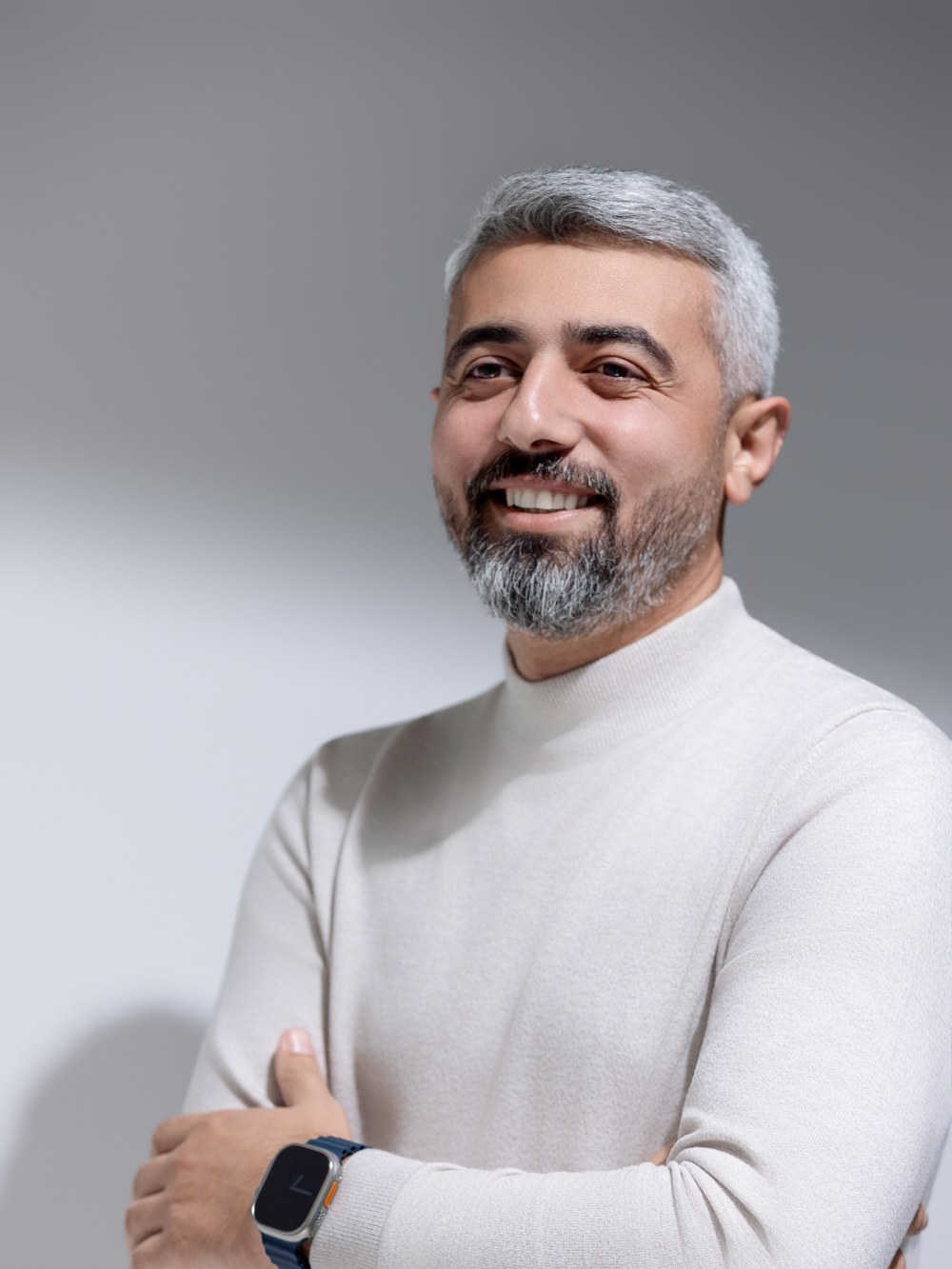
Doctor performing this treatment
Implantologist · Digital Dentistry · Founder of the clinic
Read more on this topic
- What is a dental implant and how is implant treatment carried out?
- How long does a dental implant last, and what determines its lifespan?
- Is dental implant placement painful, and what should you expect after surgery?
- Implant placement in the front tooth area: what matters most in the aesthetic zone?
- Are immediate implant and immediate loading the same thing?
- The 3D position of an implant: what does restoration-driven planning mean?