

All-on-4 Implant Treatment
All-on-4 is a fixed full-arch prosthesis supported by four implants in an edentulous jaw. It is not automatically right for everyone: bone distribution, bite, aesthetics and the prosthetic plan are assessed together; the decision follows a clinical exam and 3D CBCT.
Part of: Dental implants
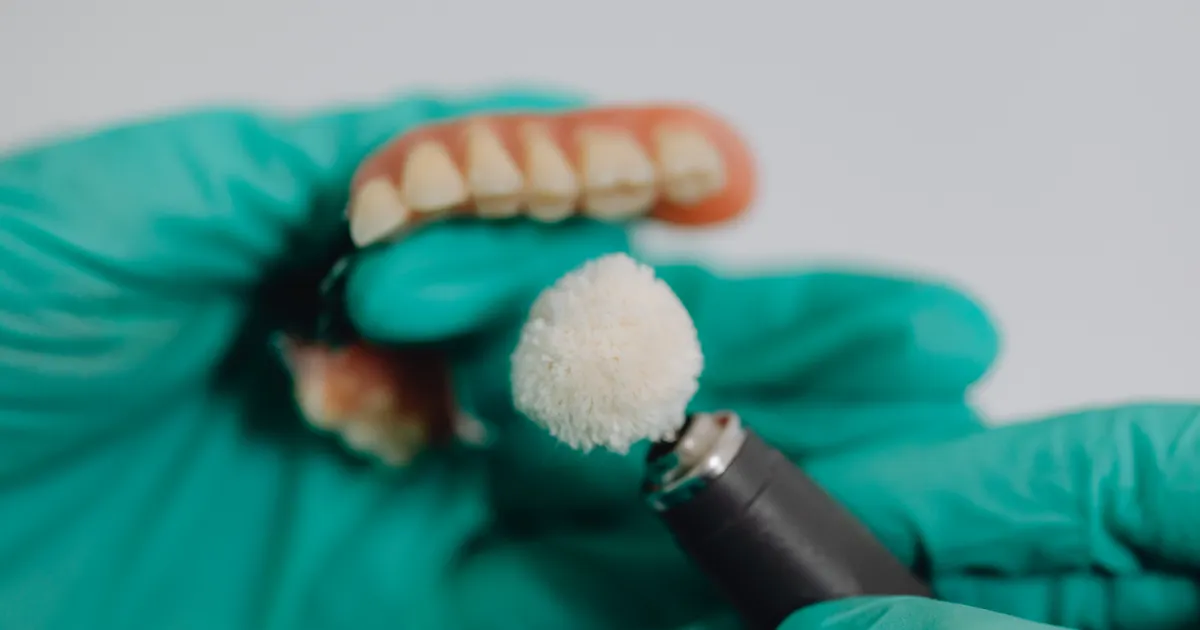
All-on-4 is a fixed full-arch prosthesis supported by four implants — two straight anterior and two tilted posterior. It is an alternative to a removable denture, but not automatically suitable for everyone: bone volume and distribution, bite, aesthetics, sinus and nerve anatomy and the prosthesis material are planned together. The final decision follows a clinical exam and 3D CBCT. All-on-4 is the full-arch part of our dental implant service.
Planning covers consultation, clinical examination, 3D CBCT, prosthetically driven digital planning, implant placement, provisional and final restoration and long-term maintenance. The price depends on the implant system, any additional procedures and the prosthesis material.
What is All-on-4?
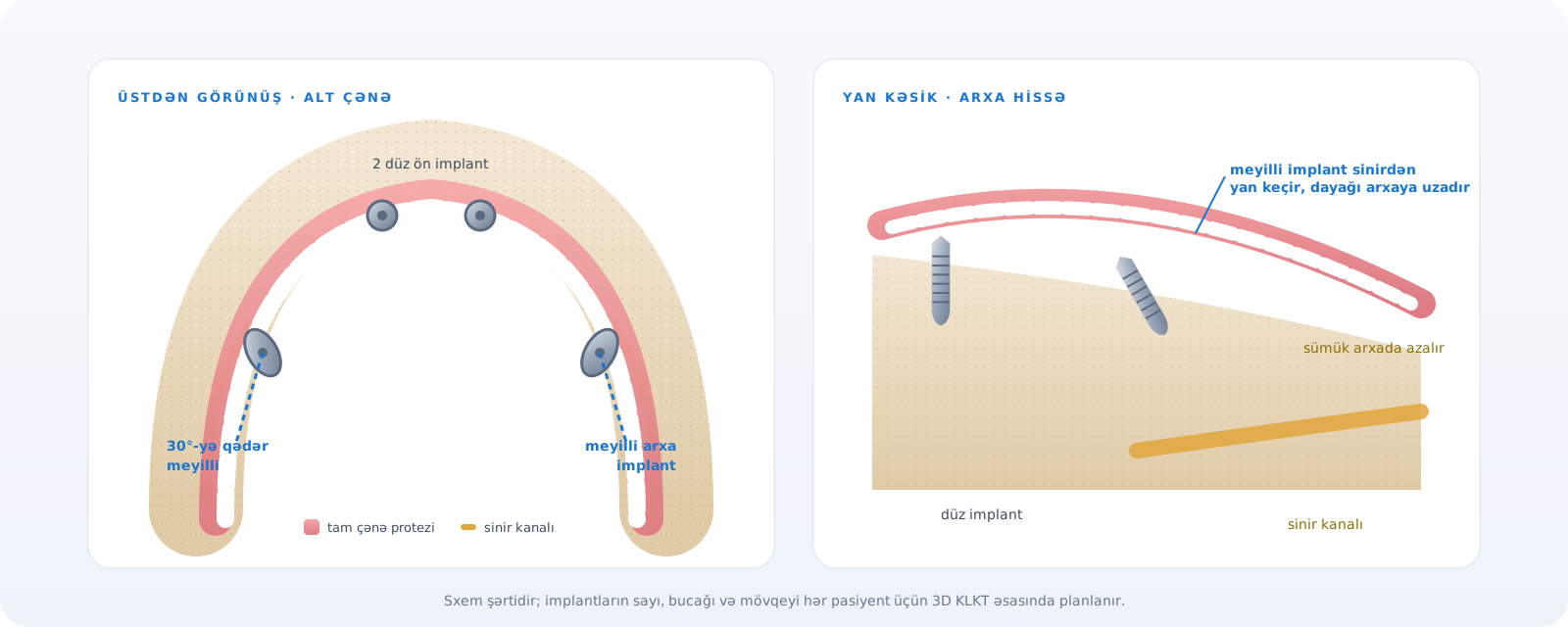
All-on-4 is a concept in which the prosthesis replacing all the teeth of a fully edentulous jaw is fixed on just four implants. The two front implants are placed upright, the two back ones are tilted by up to 30° — this avoids the sinus in the upper jaw and the nerve canal in the lower jaw, and extends the support of the prosthesis backwards. The prosthesis is screwed to the implants: the patient does not remove it, but the dentist can take it off for cleaning or repair when necessary. The history, advantages and limitations of the concept are explained in a separate article.
Who may be suitable?
All-on-4 is considered in three situations: all teeth have been lost; the remaining teeth cannot be kept because of periodontitis, decay or root problems and their extraction is planned; the patient lives with a denture but wants fixed teeth. General health must allow surgery. The equation “edentulous jaw = All-on-4” is not correct: for some patients six implants are the better choice, for others an implant-retained removable prosthesis, and for some a preparatory stage comes first.
Who needs additional assessment?
- Bone volume and distribution — if bone is lacking in the front, tilted implants do not solve the problem
- Sinus and nerve anatomy — whether the back implants can be tilted is measured in 3D
- Smoking — raises the risk of implant and bone loss; stopping around surgery is recommended
- Diabetes and other systemic diseases — their control determines healing and the long-term result
- Ability to clean — a full-arch prosthesis needs daily cleaning underneath; if this is not possible, a removable option is discussed
- Parafunction (bruxism, clenching) — the load on a prosthesis carried by four implants increases; a protective splint and prosthesis design are planned
- The opposing jaw — natural teeth, a denture or implants change the occlusal plan
How is All-on-4 planned?
In full-arch rehabilitation the biggest risk is not the implant but the lack of a plan: implant positions must be chosen according to the teeth of the future prosthesis, lip support and the bite. This is how the process runs in our clinic.
- 1
Consultation
Expectations, medical history, smoking, previous denture experience; if a denture exists, its fit is assessed.
- 2
Clinical examination
Whether the remaining teeth can be kept, the gums, lip line and smile, the bite, the jaw joint and mouth opening.
- 3
3D CBCT
Bone height, width and distribution, the sinus floor, the nerve canal, the mental foramen — the basis for the number and position of implants.
- 4
Prosthetically driven digital plan
CBCT is merged with an intraoral scan and the design of the future teeth; implant angle and depth and the cantilever of the prosthesis are planned; a surgical guide is made when needed.
- 5
Implant placement
Under local anaesthesia (sedation can be discussed on request); remaining teeth are extracted, the bone level is corrected, four (or six) implants are placed in the planned positions; primary stability is measured.
- 6
Provisional and definitive prosthesis strategy
If stability is sufficient, a fixed provisional prosthesis is fitted within a short time; if not, healing takes place with a temporary removable denture. After osseointegration the definitive prosthesis is made.
- 7
Review and maintenance
Checking the screws and the bite, professional cleaning, a control X-ray — the stage that determines the lifespan of the prosthesis.
Why is 3D planning decisive in full-arch rehabilitation?
With a single implant a mistake affects one tooth; in full-arch rehabilitation all the implants are joined by one prosthesis, and one positional error changes the shape of the prosthesis, its cleanability and the load distribution. 3D imaging shows in advance where the bone can be used and whether a tilted implant will clear the sinus and the nerve; the digital plan chooses the implant position according to the future tooth, not the bone.
All-on-4 versus All-on-6
Both are fixed full-arch prostheses on implants; the difference is the number of supports and the bone they require. Six implants spread the load over more points, and if one implant is lost the prosthesis is easier to keep, but enough bone is needed in the back as well. Four implants, thanks to tilted placement, bypass the back region where bone is scarce, and the procedure and cost are more compact — but each implant carries more load and the cantilever of the prosthesis is limited.
- Number of supports: 4 ↔ 6
- Bone requirement: less in the back ↔ sufficient in the back as well
- Load distribution: more per implant ↔ more even
- If one implant is lost: the prosthesis is usually re-planned ↔ can often be kept
- Prosthesis length (cantilever): limited ↔ longer possible
- Typical choice: bone has resorbed in the back ↔ bone is well distributed or the load is high (bruxism, natural teeth in the opposing jaw)
Is bone grafting never needed with All-on-4?
The main advantage of the concept is that tilting the back implants often makes it possible to avoid a sinus lift or major bone grafting. But that does not mean “bone grafting is never needed”: if the bone in the front is very thin, the jaw is severely resorbed or the bone level is uneven, bone correction, an additional implant or a different concept (for example long tilted implants or an implant-retained removable prosthesis) may be discussed. A 2015 meta-analysis (44 studies, more than 10,000 implants) found similar overall failure rates for tilted and axial implants; in every case the decision rests on 3D measurements.
Immediate loading — teeth on the same day?
All-on-4 and “teeth in a day” (immediate loading) are not the same thing. All-on-4 is about the number and position of the implants; immediate loading is about when the prosthesis is attached to them. When the four implants show sufficient primary stability (the surgeon measures this during the operation), a fixed provisional prosthesis can be attached within a short time; if stability is insufficient, the prosthesis is fitted after healing. ITI consensus statements recommend immediate full-arch loading only under specific conditions — adequate stability, a correct bite and a soft-food regime.
Prosthesis materials
The provisional prosthesis is usually titanium- or reinforced-acrylic-based — light, adjustable and load-reducing during healing. For the definitive prosthesis the main options are acrylic or composite teeth on a titanium framework (light, repairable, prone to wear) and zirconia on a titanium framework or monolithic zirconia (wear-resistant, aesthetic, stiffer and more expensive). The material is chosen according to occlusal load, the opposing jaw, aesthetic demands and budget; every material may need maintenance over the years.
Risks and limitations
- Implant failure — early (no osseointegration) or late; in a four-support system the loss of one implant may require re-planning the whole prosthesis
- Peri-implant disease — hygiene under the prosthesis is difficult, so the risk of mucositis and peri-implantitis is higher; regular cleaning and review are required
- Biomechanical risk — load on few implants, a long cantilever, bruxism; managed by prosthesis design and a protective splint
- Prosthetic and technical problems — chipped or worn teeth, loosened screws, a cracked framework; most are repairable but cost time and money
- Speech and adaptation — changes in speech and saliva are possible in the first weeks and usually settle
- Nerve- and sinus-related complications — reduced by 3D planning and safety margins, never zero
How long does treatment take?
There is no universal answer. If stability allows, a fixed provisional prosthesis is fitted within a short time and the patient goes through healing with fixed teeth; the definitive prosthesis is made after osseointegration — usually months later. Extractions, bone correction, treating both jaws together or individual healing can extend the calendar. The specific sequence and approximate timeline are given in writing at the planning stage.
What determines the price?
The price of full-arch rehabilitation is not one number but the sum of a plan: the implant system and number of implants (4 or 6), extraction of the remaining teeth and bone correction, the provisional prosthesis, the material of the definitive prosthesis (acrylic-titanium, composite, zirconia), treatment of one or both jaws, the surgical guide and diagnostics. The diagnostic and implant prices below come from the same source as the site’s Prices section; the cost of the full-arch prosthesis is calculated individually by material and design and given in a written plan after the examination.
| Initial visit, consultation and personalised treatment plan | $35 |
| 3D tomography (CBCT) | $60 |
| NeoBiotech (Korea) implant placement | $295 |
| MegaGen AnyRidge (Korea) implant placement | $470 |
| Straumann BLT (Switzerland) implant placement | $1,000 |
Prices are set in Azerbaijani manat (AZN); US dollar amounts are approximate, converted at the exchange rate of 2026-10-27. The AZN amount is what is charged. Prices come from the same source as the Prices page; the final amount is set after your examination. Implantology prices →
Care after All-on-4
The lifespan of a fixed full-arch prosthesis depends less on the surgery than on the care afterwards. Daily: the space under the prosthesis and the implant necks are cleaned with a special brush, superfloss and a water flosser. Professionally: at least once or twice a year a review, professional cleaning, a check of the screws and the bite and a control X-ray; some prostheses are removed and cleaned on a schedule. In bruxism a night guard protects the prosthesis.
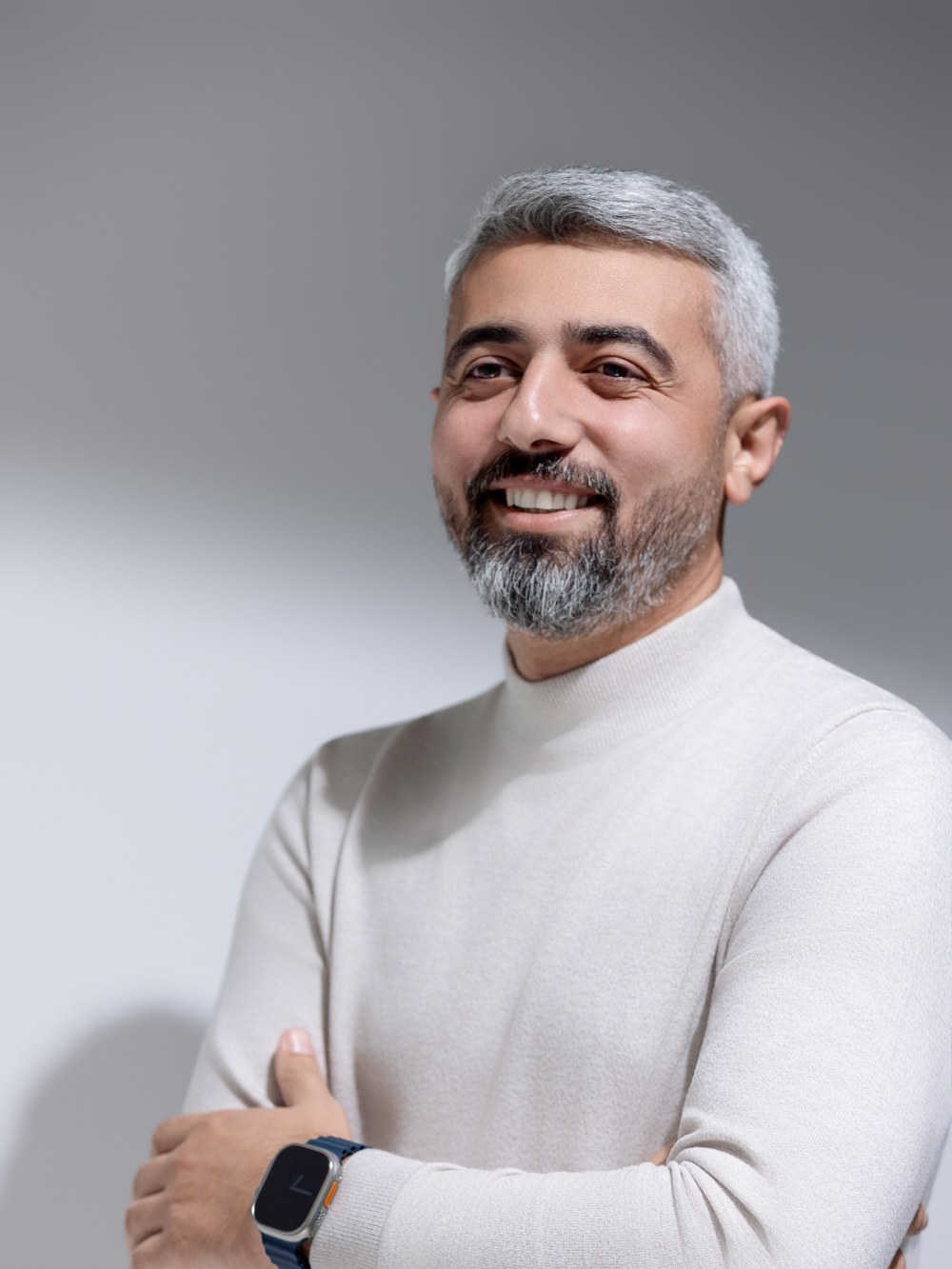
Dr. Bakhtiyar and planning
In our clinic full-arch implant rehabilitation is planned and performed by Dr. Bakhtiyar Aliyev — implantologist and founder of the clinic: diagnostics, the 3D CBCT-based digital plan, surgery and the prosthetic stage run under one doctor, in one clinic. Full-arch rehabilitation is the implant treatment with the most stages; keeping the information in one pair of hands between stages directly affects the result. About the doctor: Dr. Bakhtiyar Aliyev; the aesthetic and functional side of full-mouth rehabilitation: full-mouth rehabilitation.
Sources
- The all-on-four treatment concept: Systematic review — Journal of Clinical and Experimental Dentistry, 2017
- Tilted versus axially placed dental implants: a meta-analysis — Journal of Dentistry, 2015
- Group 2 ITI Consensus Report: Prosthodontics and implant dentistry — Clinical Oral Implants Research, 2018 (ITI)
- Immediate full-arch mandibular rehabilitation supported by four implants: A retrospective study with 20 to 25 years of follow-up — Journal of Dentistry, 2026
- Peri-implant diseases and conditions: Consensus report of workgroup 4 of the 2017 World Workshop on the Classification of Periodontal and Peri-Implant Diseases and Conditions — Journal of Periodontology / Journal of Clinical Periodontology, 2018 (AAP / EFP)
If this sounds familiar
If you have one of these complaints, this service may be right for you:
- “I have no teeth and my denture does not hold”
- “My remaining teeth are loose”
- “I want fixed teeth but was told I have little bone”
Frequently asked questions
Who is All-on-4 suitable for?
Patients with a fully edentulous jaw or hopeless remaining teeth whose general health allows surgery. Suitability is assessed individually after examination and 3D CBCT.
All-on-4 vs All-on-6?
The difference is the number of implants supporting the prosthesis. The choice depends on bone volume, bite and prosthesis span.
What determines the price?
The implant system and number, additional procedures, the provisional prosthesis and the final prosthesis material. The exact amount follows the examination.
Doctor performing this treatment
Implantologist · Digital Dentistry · Founder of the clinic