

Implant-supported prosthesis: zirconia, metal-ceramic or temporary PMMA? Screw-retained vs cement-retained
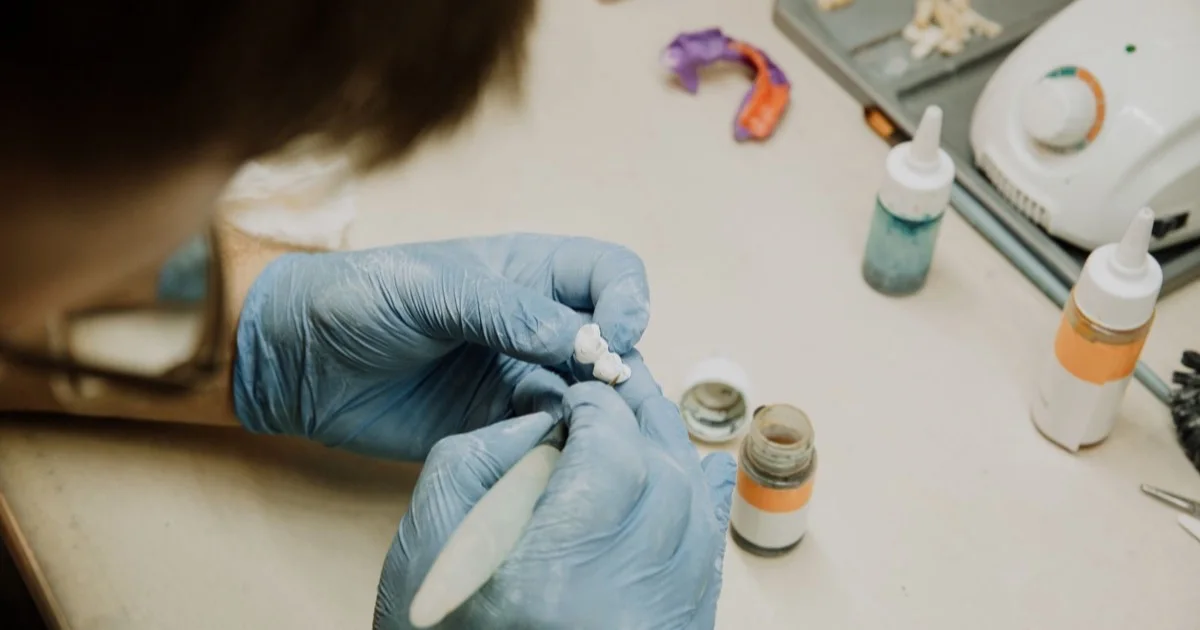
The crown or bridge placed on an implant is made from one of four main materials: monolithic zirconia (a solid ceramic block), metal-ceramic (ceramic layered over a metal framework), temporary PMMA (acrylic plastic) and, for a full arch, a hybrid (zirconia or acrylic over a titanium framework). In addition, the prosthesis is attached to the implant either with a screw or with cement. The choice depends on the position of the tooth (front/back), any clenching habit, gum thickness and whether the prosthesis needs to be removable in the future.
Key points
- An implant-supported prosthesis consists of three parts: the implant (in the bone), the abutment (the connecting post) and the crown on top.
- Monolithic zirconia is more resistant to ceramic chipping; metal-ceramic is the classic material with many years of follow-up behind it.
- A screw-retained prosthesis can easily be removed and repaired by the dentist; a cement-retained prosthesis offers more aesthetic flexibility, but excess cement can cause gum inflammation.
- PMMA is only for the temporary phase — until the gums have shaped and the bite has been checked.
- There is no single best material; a combination is chosen for each mouth.
What does an implant-supported prosthesis consist of?
In a natural tooth, the root and the crown are one whole. With an implant, these are three separate parts. The titanium screw inside the bone is the implant (fixture). The small post screwed onto it is the abutment; it passes through the gum and supports the crown. At the very top is the tooth you see — the crown, or a bridge replacing several teeth.
When we talk about materials, we are mainly talking about this upper part. The abutment is most often made of titanium, and in the front teeth of zirconia or a titanium-based zirconia hybrid, so that the gum does not look greyish. The implant itself and its lifespan are a separate topic: how long does a dental implant last.
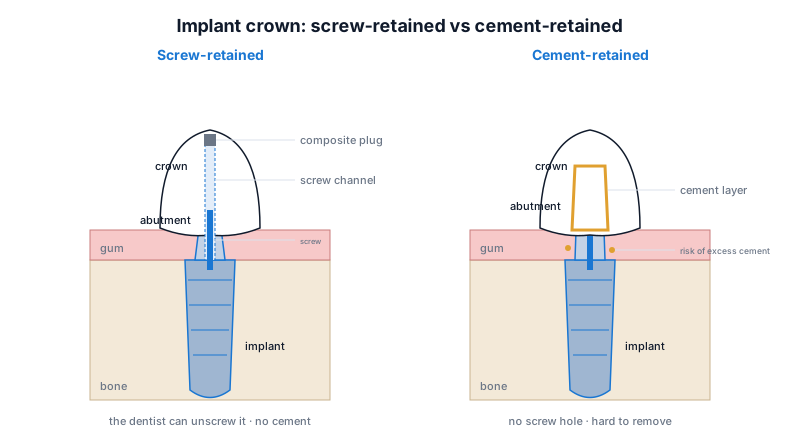 On the left, the screw channel passes through the crown and is sealed with composite; on the right, the crown is cemented to the abutment, and excess cement can remain under the gum.
The materials one by one
Monolithic zirconia
Zirconia (zirconium dioxide) is a white, very strong ceramic. Monolithic means that the crown is milled from a solid block (CAD/CAM), with no separate ceramic layer applied on top. That is why there is no layer that can chip off. It is stained and polished for aesthetics; modern multilayer zirconia also provides enough translucency for the front teeth, although it is not the most translucent ceramic — we have compared this separately: E-max or zirconia.
What does the evidence say? A review published in 2025 in the journal Evidence-Based Dentistry comments on a meta-analysis of randomised trials: over two years of follow-up, neither monolithic zirconia nor metal-ceramic single implant crowns lost a single implant or crown within those two years (implant and prosthesis survival); the difference appeared in complications — ceramic chipping and screw loosening were more frequent with metal-ceramic, while zirconia was rated lower for colour match. The authors treat this result with caution: two years is a short period, and follow-up longer than 7 years is required.
Who it suits: back teeth, patients who clench (bruxism), full-arch bridges, patients tired of ceramic chipping.
Metal-ceramic
The classic option, used for decades: a metal framework containing cobalt-chromium or gold, with ceramic applied on top in layers. The metal framework resists bending; its weak point is that the ceramic on top can chip over time.
The 2018 systematic review by Sailer and colleagues (Clinical Oral Implants Research) compared multi-unit bridges: at 5 years of follow-up, survival was approximately 98.7% for metal-ceramic bridges and 93.0% for zirconia bridges with a ceramic veneer; ceramic chipping was recorded in 11.6% of metal-ceramic cases at 5 years. The authors still consider metal-ceramic the main standard for multi-unit implant bridges, but note that this comparison relates to veneered zirconia; at that time there was little long-term data on monolithic zirconia.
Who it suits: long bridges, cases where metal will not show at gum level, back areas with moderate aesthetic demands.
PMMA — the temporary prosthesis
PMMA (polymethyl methacrylate) is a strong acrylic milled with CAD/CAM. It is used after implant placement until the permanent prosthesis, usually for 3–6 months, and sometimes up to a year in a full arch. Its job is to shape the gum to the form of the future crown, to check the bite and speech, and to give the patient a chance to try out the appearance. It wears down and changes colour — which is why it is not permanent. We have written about how this technology works in the article a CAD/CAM crown in a single day.
Hybrid — for a full arch
In fixed full-arch prostheses (All-on-4 and similar), a titanium framework is usually milled, with either monolithic zirconia or acrylic teeth placed on top. The titanium framework gives the prosthesis its integrity, while the upper material determines the aesthetics and how easy repairs are. Read about the structure of these prostheses here: All-on-4 full-arch implants.
Comparison table
| Criterion | Monolithic zirconia | Metal-ceramic | PMMA (temporary) | Hybrid (titanium + zirconia/acrylic) |
|---|---|---|---|---|
| Purpose | Permanent crown/bridge | Permanent crown/bridge | Temporary for 3–12 months | Fixed full-arch prosthesis |
| Ceramic chipping | Low (no layer) | Yes (11.6% at 5 years, in bridges) | — | Depends on the upper material |
| Aesthetics | Good; not the most translucent | Good; metal may show at the edge | Adequate (temporary) | Good |
| Effect on the opposing tooth | Low on a polished surface | The ceramic layer may wear the opposing tooth | Soft, does not wear the tooth | Depends on the material |
| Repair | Difficult; often remade | Small chips are repaired with composite | Easy | Acrylic top easy, zirconia difficult |
| Long-term follow-up | Moderate (10+ years of data accumulating) | Extensive (decades) | — | Moderate |
| Typical use | Back teeth, bruxism, full arch | Long bridges, classic cases | Healing period | All-on-4/6 |
Screw-retained or cement-retained?
This is a separate decision from the material, but just as important.
Screw-retained. The crown is screwed directly onto the implant or the abutment through a channel running through it; the channel is then sealed with composite. The main advantage: the dentist can open it up at any time to clean it, repair it or tighten the screw. There is no cement — which means there is no problem with cement residue under the gum. The drawback: if the implant has been placed at an angle, the screw channel may emerge on the visible surface of the tooth (modern angulated screw channel solutions have greatly reduced this); and the screw can loosen over time.
Cement-retained. The crown is cemented to the abutment with dental cement — just like a crown on a natural tooth. As there is no screw hole, aesthetics and the integrity of the ceramic are easier to manage, and the abutment compensates for minor angulation problems. The main risk: excess cement left under the gum during cementation can cause inflammation and then bone loss around the implant. The second issue is that when the prosthesis needs to be removed, it usually has to be cut off.
The evidence complements itself. A meta-analysis published in 2018 in the Journal of the Indian Prosthodontic Society compared loss of retention (the prosthesis loosening or coming off) in partially edentulous mouths: with follow-up of up to 5 years, this figure ranged from 0–15.7% for cement-retained prostheses and 0–46.7% for screw-retained prostheses, meaning that screw loosening occurs more often with screw-retained prostheses. On the other hand, the 2026 Global Consensus favours the screw-retained design for fixed full-arch prostheses — precisely because it can be removed and there is no cement risk. Put simply: screw loosening is a minor problem solved by opening it up and retightening, whereas inflammation under cement is a major problem that damages the bone.
Practical rule: for full-arch prostheses and back teeth, the screw-retained option is the first choice; if the implant angle in a front tooth brings the screw channel out onto the visible surface, a cement-retained or angulated screw channel solution is considered.
What determines the choice?
- The position of the tooth. In a back molar, resistance to force comes first; in a front tooth, colour and translucency.
- Clenching / bruxism. In a patient who grinds their teeth at night, a prosthesis with a ceramic layer chips sooner; monolithic options and a night guard are considered.
- The opposing teeth. If there is a natural tooth opposite, a hard, rough surface can wear it down; polishing is essential.
- Gum thickness. With a thin gum, a grey titanium abutment can show through — a zirconia abutment or a zirconia crown is chosen.
- How many teeth are being replaced. With a single crown the choice is wide; in a long bridge, framework strength comes before everything else.
- Future servicing. If repairs will be needed years later, a removable screw-retained prosthesis is preferable.
This choice is made in the clinic together with digital impressions (intraoral scanner) and CAD/CAM design; you can read about the general types of crowns here: types of dental crowns. For more on the prosthetic stage: prosthodontic treatment and dental implantation.
Frequently asked questions
Can a zirconia crown on an implant fracture? Monolithic zirconia fractures rarely; the risk is mostly when it is made very thin or with heavy clenching. In such cases, thickness and a night guard are planned.
Is the composite plug over the screw visible? In the back teeth it is practically invisible. In a front tooth, if the channel emerges on the palatal side, it is again invisible; if it emerges on the front surface, the dentist chooses a cement-retained or angulated channel solution.
Is metal-ceramic outdated technology? No. It is the material with the most extensive long-term evidence base; it is simply that the risk of ceramic chipping is higher than with monolithic zirconia, and it has aesthetic limitations.
How long can you wear a temporary PMMA tooth? Usually a few months; in a full arch sometimes up to a year. With longer use, wear and colour change begin.
Can the material be changed after the permanent prosthesis has been made? With a screw-retained prosthesis, yes — the crown is removed and remade in a new material. With a cement-retained prosthesis, the old crown has to be cut off.
Conclusion
Choosing an implant-supported prosthesis comes down to two questions: which material and which type of connection. Monolithic zirconia resists chipping, metal-ceramic has long-term follow-up behind it, PMMA is temporary, and the hybrid is the solution for a full arch. The screw-retained connection stands out for being removable and cement-free, the cement-retained one for its aesthetic flexibility. To assess your individual situation, the position of the tooth, the bite and the gums are all reviewed together at a consultation.
Sources
- A systematic review of the survival and complication rates of zirconia-ceramic and metal-ceramic multiple-unit fixed dental prostheses — Clinical Oral Implants Research, 2018
- Monolithic zirconia outperforms metal-ceramic in mechanical reliability for single implant crowns but lacks long-term validation — Evidence-Based Dentistry, 2025
- Retention failures in cement- and screw-retained fixed restorations on dental implants in partially edentulous arches: A systematic review with meta-analysis — The Journal of the Indian Prosthodontic Society, 2018
- Consensus Report of Group 4 of the 1st Global Consensus for Clinical Guidelines for the Rehabilitation of the Edentulous Maxilla — Clinical Oral Implants Research, 2026
This article is for general information only and does not replace an individual diagnosis, examination or treatment. Consult a doctor for a decision about your case.