

All-on-4 or All-on-6: are four implants enough, or do you need six?
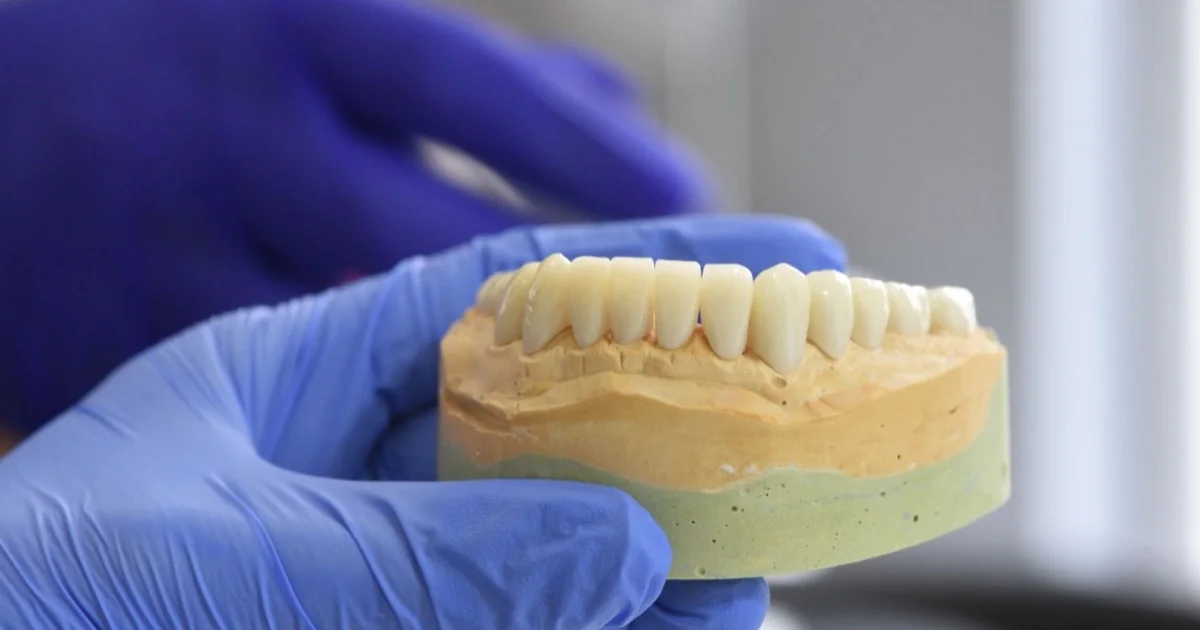
All-on-4 restores a fully edentulous jaw with a fixed bridge on four implants, while All-on-6 does so on six. The difference is not only the number of implants: six implants require sufficient bone in the posterior region (sometimes with bone grafting), but in return they spread the load over more supports and provide a reserve that can keep the prosthesis in place if one implant is lost. In recent meta-analyses, implant survival is similar for the two approaches; the difference lies mainly in bone loss figures and in the specific anatomy of the jaw. The choice is made on the basis of 3D imaging.
The planning and stages of both concepts are carried out at the clinic as part of the All-on-4 implant treatment service.
Key points
- Four implants — a concept that works with little bone and usually without grafting; six implants — an option that spreads the load more widely where bone is available.
- In meta-analyses (follow-up of 5 years and longer), no statistical difference in implant survival has been found between the two groups.
- In the upper jaw, less bone loss around the implants has been measured in the six-implant group; this is a real difference, although its clinical significance is debated.
- Six implants do not automatically mean better: every additional implant means additional surgery, cost and another surface to keep clean.
- The decision is determined by bone volume, the jaw involved (upper/lower), the teeth in the opposing jaw, bruxism and hygiene habits.
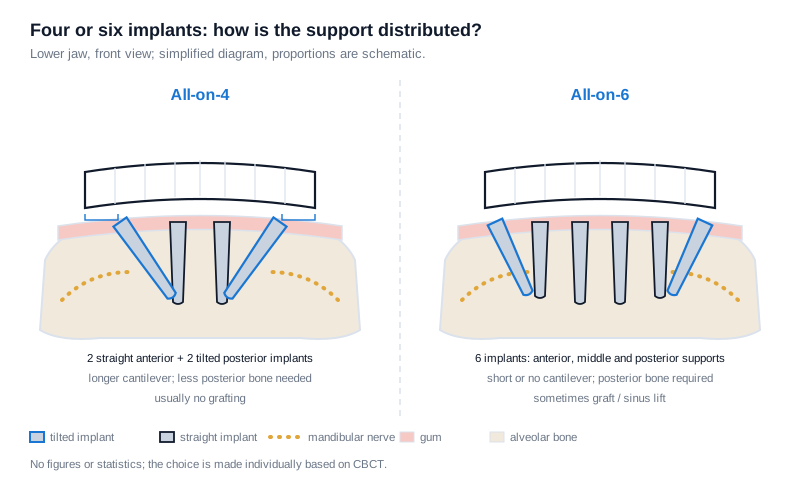 In the diagram on the right, the posterior support of the bridge is further back and there is almost no cantilever; on the left, the angled implant aims to achieve the same goal with fewer implants.
What makes the two concepts different?
All-on-4 — two straight anterior implants and two posterior implants angled at 30–45°. Thanks to the angle, the posterior implant bypasses the sinus in the upper jaw and the mandibular nerve in the lower jaw. The essence of the concept, its stages and the question of the temporary prosthesis are explained separately in the article All-on-4 full-arch dental implants; we will not repeat them here.
All-on-6 — the same principle, but with six implants: usually two anterior, two middle (premolar area) and two posterior. The posterior implants are sometimes placed straight and sometimes, again, at an angle. Six supports hold the bridge at more evenly distributed points, and the cantilever (the unsupported tail of the bridge) is either very short or absent altogether.
The main practical difference is this: All-on-4 is the concept of use the bone wherever it is; All-on-6 is the approach of there is posterior bone (or it can be created), so let us use that too.
Comparison table
| Criterion | All-on-4 | All-on-6 |
|---|---|---|
| Number of implants | 4 (2 straight + 2 angled) | 6 (angled or straight posterior implants) |
| Posterior bone requirement | Lower — the angled implant bypasses the sinus/nerve | Higher — bone is needed in the posterior area, sometimes a graft/sinus lift |
| Need for bone grafting | Usually none | More often required in the upper jaw |
| Load distribution | 4 supports, longer cantilever | 6 supports, short cantilever or none |
| If one implant is lost | The prosthesis usually has to be re-planned | The remaining 5 implants often keep the prosthesis in place |
| Surgical extent and time | Less | More (additional implants, sometimes a graft) |
| Hygiene | 4 implant necks to clean | 6 implant necks — more surface, more attention |
| Prosthesis type | Fixed screw-retained bridge (acrylic → metal/zirconia framework) | The same; can sometimes be divided into two segments |
| Implant survival (meta-analysis, ≥5 years) | 98.14% | 97.50% — the difference is not statistically significant |
| Bone loss around the implant (upper jaw, mean 3.8 years) | 1.02 mm | 0.46 mm — lower in the 6-implant group |
| Typical indication | Atrophic jaw, a quick solution without grafting | Sufficient bone, heavy chewing load, long dental arch |
The figures in the table come from the studies below and do not automatically apply to your situation.
What difference do the studies show?
All jaws, 55 studies (Shao et al., International Journal of Oral and Maxillofacial Surgery, 2026): with follow-up of 5 years and longer, implant survival was 98.14% for All-on-4 and 97.50% for All-on-6 — the difference is not statistically significant. Bone loss around the implants at 5 years was measured at 1.28 mm for All-on-4 and 0.94 mm for All-on-6. The authors write that both methods give similar results, but that the studies differ greatly from one another (heterogeneity) and the findings should be read with caution.
Upper jaw only, 53 studies (Sharaf et al., Heliyon, 2024; mean follow-up 3.8 years): implant survival was 98.5% in the 4-implant group and 97.0% in the 6-implant group (the difference is not statistically significant); prosthesis survival was 99.8% and 99.6% respectively. Bone loss around the implants was 1.02 mm in the 4-implant group and 0.46 mm in the 6-implant group — this difference is statistically significant. Technical complications (screw loosening, ceramic/acrylic fracture) amounted to 20.7 and 17.9 events per 100 prostheses — no difference. The authors note that in the six-implant group the CAD/CAM framework and the wide anterior–posterior distribution of the implants had a positive effect on survival.
Straight and angled implants (Gaonkar et al., 2021; 25 studies): within the All-on-4 concept, over 72–132 months of follow-up no difference was found in the survival of straight and angled implants; the most common complication is fracture of the acrylic prosthesis. In other words, the idea that angled implants are weak, so six are needed is not confirmed by the research.
The simple conclusion from these figures: in terms of the implant staying in place, the two concepts are similar; slightly less bone loss is measured in the six-implant group; fractures and screw problems are common to both.
When four, and when six?
Cases where four implants have the advantage
- The posterior bone has resorbed, the sinus has dropped down, or the nerve canal is close to the surface — an angled implant makes it possible to manage without grafting.
- The patient wants a single surgical stage and a fixed prosthesis quickly.
- General health or age makes a long, multi-stage plan inadvisable.
- The lower jaw: the bone here is denser, and the 2017 consensus document considers four correctly placed implants sufficient and does not routinely recommend an additional implant.
Cases where six implants have the advantage
- There is bone in the posterior area, or it can easily be obtained with bone grafting.
- The upper jaw, soft bone: the risk of early implant loss is higher, so a reserve support makes sense.
- There are natural teeth or a fixed implant-supported prosthesis in the opposing jaw — the chewing force is high.
- Severe bruxism (night-time clenching).
- A long, wide dental arch — the cantilever needs to be shortened for a 12-tooth bridge.
- The patient wants to keep the option of dividing the prosthesis into two segments in the future.
We have compared all the available options for a jaw with little bone in the article not enough bone for an implant.
Is there a difference in terms of the prosthesis?
In both concepts the prosthesis is a screw-retained fixed bridge: first a strong acrylic temporary, then a permanent one with a metal or zirconia framework. The difference lies in the length of the framework and the support points — with six implants the framework is held at more points, so it flexes less. The choice of material (zirconia, metal-ceramic, hybrid) is a separate topic: materials for implant-supported prostheses.
How is the decision made?
The sequence is as follows: the width and height of the bone and the position of the sinus and the nerve are measured with CBCT; the opposing jaw and the bite are assessed; risks such as bruxism and smoking are asked about; then the number and position of the implants are set out in a digital plan. Sometimes the plan changes on the day of surgery — for example, six implants are planned, but if the two posterior implants do not seat with sufficient stability, a temporary bridge is placed on four implants and the rest are left to heal. This is exactly why it helps to see the two concepts as two ends of the same planning logic. The full steps of planning are covered in the article implant planning for a fully edentulous jaw, and the role of imaging in the article why CBCT matters for implants. At the clinic, the full-arch plan is built on the basis of 3D CBCT; details are on the dental implantation page.
Frequently asked questions
Does six implants mean twice as strong as four? No. Strength depends less on the number of implants than on how the implants sit in the bone and on the length of the bridge cantilever. Meta-analyses show no difference in survival.
If I choose All-on-4, can implants be added later? Technically it is possible, but there must be bone for the new implant and the prosthesis has to be remade. That is why the question of a reserve implant is planned from the outset.
Are six implants always necessary in the upper jaw? No. If there is enough bone, four implants are also widely used in the upper jaw; it is simply that, because the upper bone is soft, the dentist may lean towards six more readily here.
How do six implants affect the price? Each implant means a separate component and surgical time, and sometimes bone grafting is added as well. A specific figure is given once the plan has been seen.
Can one jaw have All-on-4 and the other All-on-6? Yes, this happens often: in the lower jaw the bone is dense and four are enough, while in the upper jaw six may be chosen.
Conclusion
All-on-4 and All-on-6 are not rivals but two variants of the same logic: angled four implants where there is little bone, and six more widely distributed implants where there is bone. The research shows no difference in the implants staying in place; slightly less bone loss is measured with six implants, while with four the surgical extent is smaller. Which one suits your jaw is determined by a CBCT-based consultation.
Sources
- All-on-4 and All-on-6 implant-supported fixed prostheses for the edentulous jaw: a systematic review and meta-analysis — International Journal of Oral and Maxillofacial Surgery, 2026
- Outcomes that may affect implant and prosthesis survival and complications in maxillary fixed prosthesis supported by four or six implants: A systematic review and meta-analysis — Heliyon, 2024
- Consensus statements and clinical recommendations on treatment indications, surgical procedures, prosthetic protocols and complications following All-On-4 standard treatment — Journal of Clinical and Experimental Dentistry, 2017
- Survival rates of axial and tilted implants in the rehabilitation of edentulous jaws using the All-on-four concept: A systematic review — Journal of Indian Prosthodontic Society, 2021
This article is for general information only and does not replace an individual diagnosis, examination or treatment. Consult a doctor for a decision about your case.