

Is dental implant placement painful, and what should you expect after surgery?
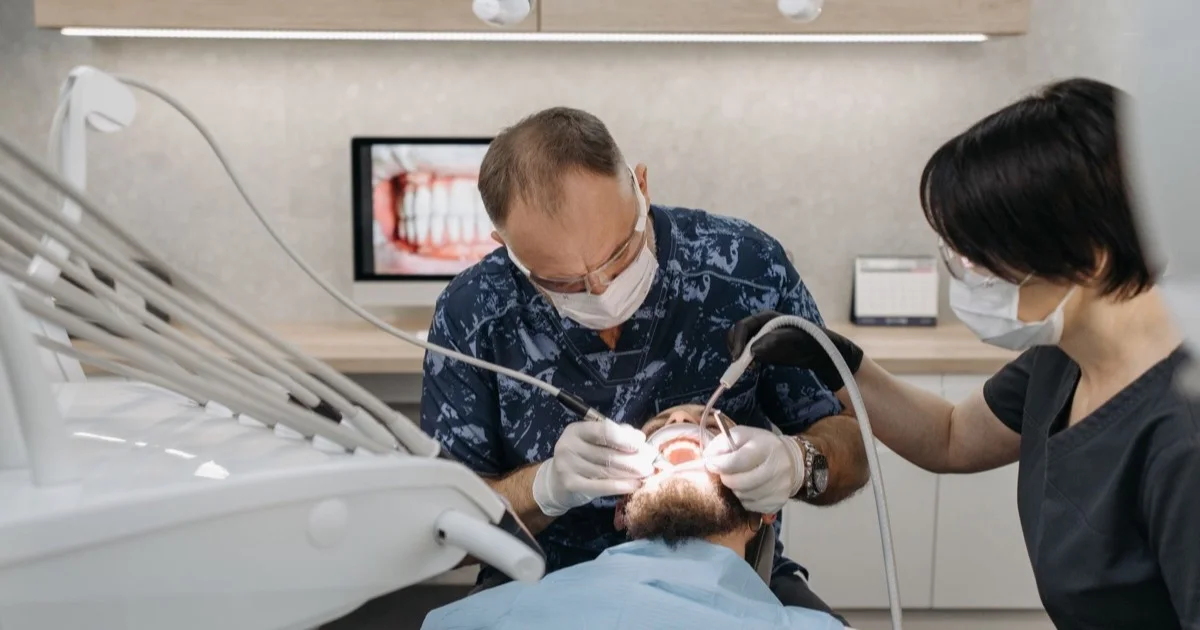
Implant surgery is usually carried out under local anaesthesia (numbing of that area only). That is why no pain is expected during the procedure — you may feel pressure, vibration and the sound of the instruments. Once the numbness wears off, there may be aching, swelling and sometimes bruising. These complaints usually settle with ordinary painkillers and can last up to a week. How much discomfort you have depends on the extent of the procedure and on your own sensitivity. Pain that becomes stronger instead of easing, however, must always be checked.
Key points
- When the anaesthesia works properly, there is no pain during surgery — only a sensation of pressure and movement.
- Discomfort is greatest in the first few days. Some people are back to normal life within a few days, while in others the swelling lasts longer.
- Taking the painkiller on time and applying a cold compress in the first few hours are the two things that help most. Only your dentist can decide on the medication regimen.
- The direction of the pain matters more than its intensity: if it eases day by day, that is normal; if it increases or starts late, that is a warning sign.
- Everyone is different: bone grafting, several implants in the same session, anxiety levels and general health all change what to expect.
What does it feel like during surgery?
Dental implantation is a surgical procedure, but it is not the kind of major operation many people imagine. In most cases it is carried out at the clinic, in the chair, under local anaesthesia. Once the area is numb, the nerve fibres that transmit pain are temporarily blocked. The sensations of touch, pressure and vibration, however, do not disappear completely. That is why patients often say: I felt no pain, but I could feel the pushing and the vibration.
The procedure itself involves several steps: the gum is lifted, a site for the implant is prepared in the bone, the implant is placed, and then the tissue is sutured. According to patient information from university clinics, placing a single implant usually takes around half an hour; the more implants there are, the longer it takes. We have written in detail about the structure of an implant and how it bonds with the bone in our article on how an implant works.
If the anaesthesia is not enough
Sometimes the numbness is incomplete because of inflamed tissue, individual anatomy or strong anxiety. This happens, and the solution is simple: if you feel anything sharp during the procedure, tell your dentist straight away. More anaesthetic can be added or the technique can be changed. Staying silent and thinking I will put up with it makes the procedure more stressful and creates fear of future visits.
When is sedation considered?
In cases of strong dental fear, or during long or multi-stage procedures, sedation (light medicated sleep) can be added to local anaesthesia. This makes you more comfortable, but you need time to recover: you are monitored at the clinic for a while, and you must not drive or make important decisions that day. After ordinary local anaesthesia, on the other hand, you can leave the clinic as soon as you feel well.
After the numbness wears off: the first few hours
The numbness usually wears off within a few hours. This is exactly when the first discomfort is felt. Patient guidance from NHS clinics recommends taking a painkiller before the numbness has fully worn off and continuing it regularly for the first two days. The reason is simple: it is always harder to chase away pain that has already started. Which medicine, at which dose and at which intervals — this must be decided by your dentist based on your health condition.
Swelling cannot be prevented entirely, but applying a cold compress wrapped in cloth to the face in the first few hours reduces the discomfort. Avoid hot drinks and hard food until the numbness has worn off: because there is no sensation, biting your lip or tongue is a very common problem.
What is normal in the first few days, and what is not?
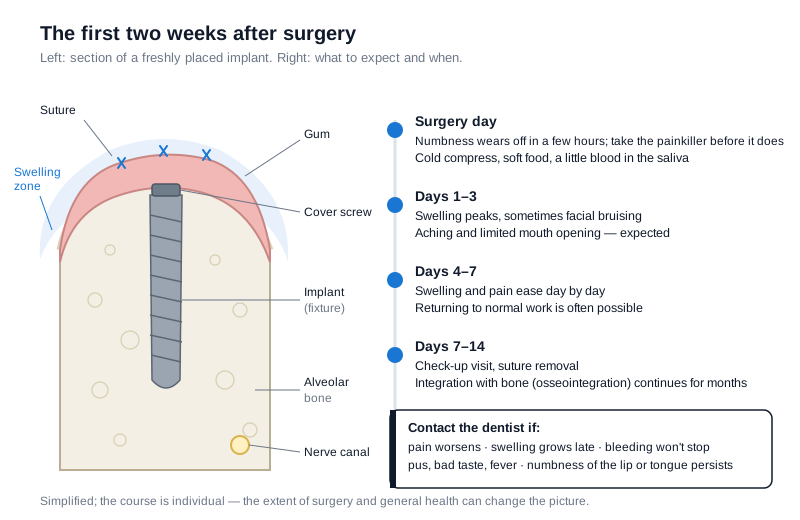 Diagram: the area of swelling around a newly placed implant and the expected course day by day. Blue — normal healing, dark — signs that require contacting your dentist.
The expected complaints are as follows: aching and sensitivity, swelling at the surgical site, sometimes bruising of the facial skin, small traces of blood in the saliva, and temporary difficulty opening the mouth and chewing. According to NHS materials, this discomfort usually settles with ordinary painkillers and can last up to a week.
In small studies where patients recorded their own sensations daily (Medicina, 2021), complaints during the first week after surgery were seen to peak in the first few days and then gradually decrease; the longest-lasting complaints were usually swelling and difficulty eating. In the same study, the number of implants placed in a single session had no significant effect on how recovery felt. These are average patterns — your own course may be different.
The main principle is this: the direction of the pain tells you more than its intensity. Discomfort that fades day by day is normal healing. Pain that returns after a few days of improvement, or that becomes progressively stronger, needs to be checked.
Factors that can increase pain and swelling
Not every procedure is the same. It is reasonable to expect a little more discomfort in the following situations:
- The extent of the procedure: several implants in the same session, a wide gum incision or an additional surgical step.
- Bone grafting or a sinus lift: extra work on the tissue can increase swelling.
- An implant placed together with a tooth extraction: we have written about this in our article on an implant on the day of extraction.
- Individual pain sensitivity and anxiety: strong anxiety makes pain feel sharper.
- General health and habits: smoking, uncontrolled blood sugar and certain medicines slow down healing.
Most of these can be discussed in advance. At your consultation, ask: roughly how extensive will the procedure be, and how will recovery go? — that way there are no unexpected surprises.
Practical rules for coping with pain
In the first few days, the aim is to protect the tissue and not to increase the pain unnecessarily. The general approach is as follows:
- Take the painkiller in the regimen your dentist has advised; do not wait for the pain to get worse.
- Apply a cold compress in the first few hours; on the following days, cold is less helpful.
- Choose soft food, avoid very hot meals and chew on the other side.
- Do not brush the surgical site directly; rinse gently with the solution your dentist recommends or with salt water.
- Stay away from smoking and alcohol — both have a bad effect on wound healing.
- Postpone heavy physical work for a few days.
There is usually a follow-up visit within one or two weeks to remove the sutures and check the wound. Once healing is complete, how long the implant lasts depends on daily hygiene and regular check-ups — we have discussed this in detail in our article on long-term care after a dental implant.
When should you contact your dentist?
In these situations, do not wait — call the clinic:
- The pain increases instead of easing, or the prescribed painkiller does not control it.
- The swelling does not decrease after the first few days but grows instead, or it interferes with swallowing and breathing.
- The bleeding does not stop even when you apply pressure.
- There is pus, a persistent bad taste or an odour in the mouth.
- Your temperature rises and your general condition worsens.
- Numbness in the lip, chin or tongue persists even after the anaesthesia has worn off. Nerves run close to the surgical site in the lower jaw; irritating them can cause numbness or tingling. In such cases sensation usually returns over a period of months and permanent numbness is rare, but the situation must always be recorded by your dentist.
Pain that appears months or years later is an entirely different matter — in that case the implant itself is examined. You can read about the signs in our article on signs of implant failure.
How to deal with the fear of pain
Dental fear is one of the most common reasons for putting off treatment, and it often stems from a bad experience in the past. The practical steps are simple: learn about all the stages in advance at the consultation, agree a stop signal with your dentist, book a morning appointment, and ask whether sedation would be suitable for you. Knowing what is going to happen also makes the pain feel less intense.
Frequently asked questions
Is it possible to be asleep during implant placement? The standard approach is local anaesthesia. Sedation can be discussed in cases of strong fear or a long procedure; in that case you will need time to be monitored at the clinic and someone to accompany you home.
Will there be more pain if several implants are placed? Not necessarily. In a study assessing how patients felt during recovery over the first week, the number of implants placed in a single session did not significantly change recovery. The size of the incision and any additional surgical steps play a bigger role.
Is it right to take a painkiller in advance? Many clinic guidelines recommend taking the painkiller before the numbness wears off. However, the choice of medicine depends on stomach, kidney and liver problems and on any other medicines you take, so only your dentist should decide the regimen.
When can I go back to work? After a routine implant, it is often possible to rest for the remainder of the day and return to work the next day. If you have heavy physical work, or if you had sedation or extensive surgery, this period may be longer.
Is it normal if the swelling has increased after two days? It is expected for swelling to peak in the first few days, but after that it should start to decrease. If it grows instead of decreasing, if the pain becomes stronger or if you have a temperature, an examination is needed.
Conclusion
Pain during implant placement is controlled with anaesthesia; the real question is not the surgery itself, but how the next few days will go. Swelling and aching are to be expected and usually settle with painkillers taken on time, a cold compress and a gentle regimen. Day-by-day improvement is the main thing to go by. Since the extent of the procedure and the state of health differ from person to person, it is useful to clarify the expected recovery with your dentist in advance. You can ask all your questions at a consultation so that your individual situation can be assessed.
Sources
- Dental implants - After having a dental implant — Guy's and St Thomas' NHS Foundation Trust, 2024
- Insertion of dental implants — Cambridge University Hospitals NHS Foundation Trust (BAOMS əsasında), 2025
- Patients' Perception of Recovery after Dental Implant Placement — Medicina (MDPI), 2021
This article is for general information only and does not replace an individual diagnosis, examination or treatment. Consult a doctor for a decision about your case.