

Implant placement in the front tooth area: what matters most in the aesthetic zone?
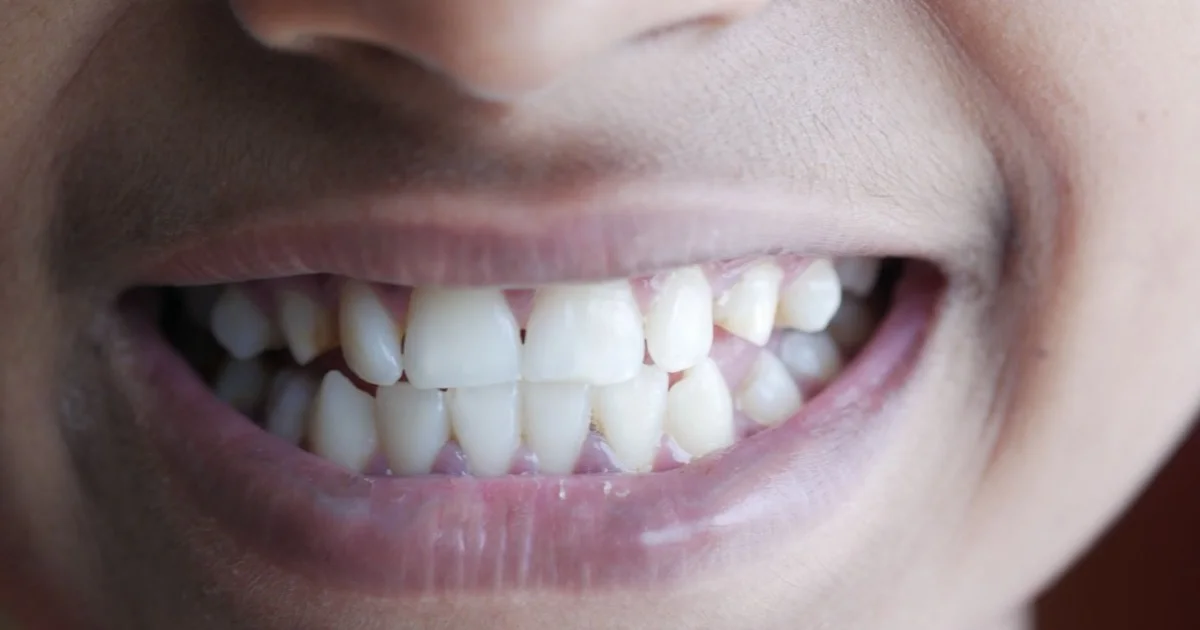
For a front tooth, it is not enough for the implant to integrate — it must be indistinguishable from the neighbouring teeth. Four factors decide this: the thickness of the labial bone in front of the implant, whether the gum is thin or thick, whether the implant sits in the correct position, and the shaping of the gum with the temporary crown placed on it. In the final stage, the abutment material (the connecting part between the implant and the crown) and the way the crown emerges from the gum complete the result. Each of these factors must be considered at the planning stage; correcting them later is difficult.
Key points
- In the aesthetic zone, the success of an implant is measured not by bone, but by whether the gum covering that bone stays in place over the years.
- According to the ITI consensus, when the bone wall in front of the implant is thinner than 1.5 mm, long-term outcomes are poorer; many authors aim for 2 mm or more.
- A thin gum biotype is a risk factor; in such cases a soft tissue graft may become part of the plan.
- A temporary crown does not simply cover the gap — it moulds the future shape of the gum.
- The abutment material and the emergence profile of the crown directly change the colour and contour of the gum.
Why is a front tooth different from a back tooth?
In a back tooth, the function of the implant is what matters most: it should hold firmly and chew. In a front tooth, however, the gum margin, the triangle between the teeth (the papilla) and the colour of the crown are visible with every smile. The answer to the question what is a dental implant is the same in both cases; the difference lies in how forgiving the surrounding tissue is.
In the front region the labial (lip-side) bone wall is often thin, sometimes less than 1 mm. After a tooth is extracted, this wall tends to resorb. As early as 2004, Buser and colleagues identified the two main causes of aesthetic failure: insufficient bone and incorrect implant position. These two causes have not changed today.
Factor 1: labial bone — why do the millimetres matter so much?
After an implant is placed, the bone in front of it thins somewhat. According to the report of the 2023 Lisbon ITI Consensus Conference, in implants placed into healed bone the labial bone wall thins by 0.3–1.8 mm over follow-up of up to 72 months (a review of 11 prospective clinical studies). The same report notes that if the labial bone is thinner than 1.5 mm at the time of implant placement, vertical bone loss increases during the initial healing period and clinical and radiographic outcomes are poorer.
What does this mean for the patient?
- When the bone wall resorbs, the gum recedes along with it. The result: the implant crown looks longer than the neighbouring tooth, and sometimes the grey edge of the abutment shows through the gum.
- For this reason, the diameter of the implant is chosen in advance according to the bone during planning; the approach that a bigger implant is better does not work in the front zone.
- If the bone is thin, bone grafting (guided bone regeneration) or a soft tissue graft is planned in the same session. The ITI consensus states that simultaneous bone grafting in implants with a labial defect gives better results compared with leaving it untreated.
An ordinary X-ray does not show the real thickness of the bone — 3D CBCT (cone-beam computed tomography) is needed for this. We have discussed this in detail in the article why CBCT is important for implants.
Factor 2: gum biotype — thin or thick?
The thickness of the gum is called the biotype or phenotype. A thick gum is more resilient: it hides the abutment beneath it and tolerates minor bone loss. A thin gum, on the other hand, is translucent — the titanium underneath can show as a grey shadow, and it is more prone to recession.
The 2023 ITI report states that in such cases a soft tissue graft (usually connective tissue taken from the palate) keeps the position of the gum margin and the width of the keratinised (firm, pale pink) gum stable over 1–5 years of follow-up, whereas recession is greater in sites without a graft. With a thin biotype this step is not an extra — it is part of the plan. We have covered this topic separately in the article on gum aesthetics around implants.
Factor 3: implant position — in brief
In the aesthetic zone the implant must be placed at a certain distance from the neighbouring teeth, slightly towards the palate from the emergence point of the future crown, and slightly deeper than the gum margin. An implant placed too far towards the lip thins the bone wall; an implant placed too deep creates a long, dark tunnel. For the measurements behind these rules and the logic of planning backwards from the restoration, see the article on the 3D position of the implant. One sentence is enough here: an error in position cannot be corrected later by any crown.
Same day as the extraction, or wait?
For a front tooth, a same-day implant after extraction sounds appealing — one surgery, going home with a temporary tooth. According to the ITI selection criteria of 2023, this protocol is recommended only when the labial bone wall is intact or minimally damaged, when at least 2 mm of space remains between the implant and the labial bone (this space is filled with graft material), and when the implant achieves primary stability. With a thin gum or labial bone thinner than 1 mm the protocol remains possible, but a soft tissue graft is added and the risk increases.
If the conditions are not suitable, an implant placed after healing is the more predictable route in the front zone. We have written in detail about the protocols themselves in the article on immediate implant placement.
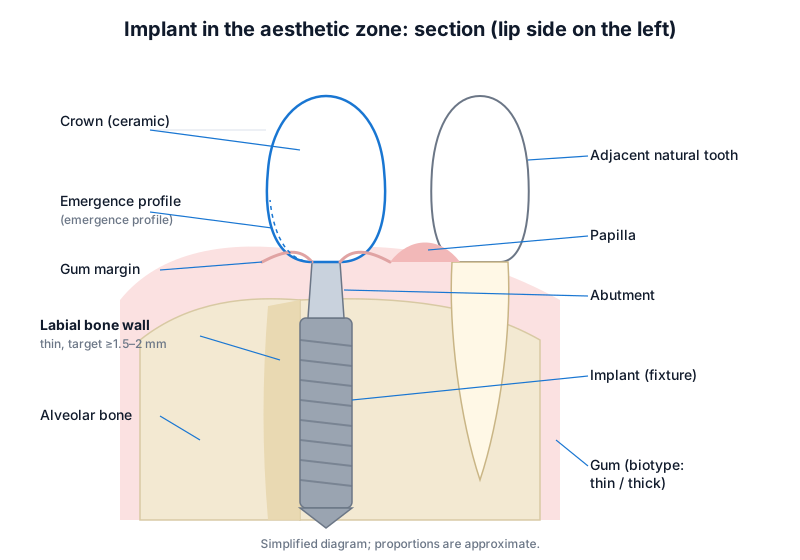 In the front zone, the labial bone in front of the implant and the gum covering it determine the result; the way the crown emerges from the gum supports this tissue.
Factor 4: how does a temporary crown shape the gum?
Once the implant has healed (or immediately, in an immediate protocol), a temporary composite/PMMA crown is placed on it. Its purpose is not only appearance. The gum takes on the shape of the part of the temporary crown that lies beneath it. The dentist changes this part step by step over several weeks:
- Initial shape — narrow, with no pressure; it allows the gum to heal.
- Adding contour — the neck of the crown is gradually widened with composite so that the gum margin comes to the same level as the neighbouring tooth and there is room for the papilla.
- Stabilisation — if the gum does not change for 2–3 weeks, this shape is transferred to the permanent crown.
When this stage is skipped, the permanent crown sits on a flat gum, the papilla is left empty and black triangles appear. Working with a temporary crown sometimes takes 2–4 months; in the front zone it is worth the time.
The prosthetic stage: abutment and crown aesthetics
This section is the most often forgotten part, and yet it is exactly what the patient sees.
Abutment material
The abutment can be titanium or zirconia (zirconium dioxide). With a thin gum, the grey shadow of titanium can show through. In a randomised study published in the Journal of Prosthetic Dentistry (26 single implant crowns in 14 patients, with at least 7 years of follow-up), the pink aesthetic score (PES) averaged 8.25 for zirconia abutments and 7.44 for titanium abutments; the authors note that the difference was particularly significant with a thin biotype. This is a small study and it does not mean zirconia for everyone: with a thick gum and a high chewing load, a titanium-based hybrid abutment (titanium base + zirconia top) is often the wiser choice.
Emergence profile
The part of the crown that emerges from beneath the gum should imitate the root shape of a natural tooth: neither too convex (which compresses the gum and leads to recession) nor too concave (which leaves the gum unsupported). This shape is transferred from the temporary crown to the permanent crown using a custom impression — this is called a customised impression.
Crown fixation and material
In a front tooth the crown is usually all-ceramic: lithium disilicate or layered zirconia. Whether it is screw-retained or cement-retained is a separate topic for gum health — cement left beneath the gum can cause inflammation. We have compared this choice in the article on screw-retained or cement-retained implant restorations.
Colour and shape in relation to the neighbouring tooth
A single front tooth implant is one of the most demanding aesthetic tasks, because the object of comparison — the neighbouring natural tooth — is always right beside it. The colour, translucency and surface texture of the crown are matched to the neighbouring tooth. If several front teeth are being restored, the target shape is determined in advance with digital smile design, and the position of the implant is chosen according to this design.
How can the risks be assessed in advance?
At the consultation, the dentist usually looks at the following:
| Factor | Low risk | High risk |
|---|---|---|
| Gum biotype | thick, flat | thin, scalloped |
| Labial bone | intact, 1.5–2 mm or more | thin, fractured or absent |
| Smile line | gum not visible | a lot of gum visible when smiling |
| Neighbouring teeth | healthy, unrestored | crowned or with bone loss |
| Edentulous area | single tooth | two or more adjacent teeth |
High risk does not mean an implant is impossible. It simply means the plan takes longer: a bone or gum graft, a longer temporary stage, sometimes a staged approach. These steps should be set out in advance in the dental implantation plan so that expectations are realistic.
Frequently asked questions
Why can an implant crown look longer than the neighbouring tooth? The cause is usually resorption of the bone in front of the implant and recession of the gum along with it. Thin bone, a thin gum and an implant placed too far towards the lip increase this risk.
Is a gum graft always needed with a front tooth implant? No. With a thick biotype and intact bone it is often not necessary. With a thin biotype, however, studies show that a graft keeps the gum margin more stable.
How long does one need to wear a temporary crown? Until the gum stabilises — usually from a few weeks to a few months. After each change, the reaction of the gum is assessed.
Can a titanium abutment show through? With a thin gum, yes, as a grey shadow. In such cases a zirconia or titanium-based hybrid abutment is considered.
Why is it more difficult when two adjacent front teeth are lost? Maintaining the papilla between two implants is harder than between an implant and a natural tooth; more of the bone crest is lost. Sometimes one implant with a pontic is planned instead of two implants.
Conclusion
In the aesthetic zone, the result of an implant is decided not by the titanium screw but by the bone and gum surrounding it. Labial bone thickness, gum biotype, position and shaping with a temporary crown — these four factors are considered together during planning, while the abutment and crown complete the work. A consultation and 3D examination are the first step in assessing your individual situation.
Sources
- Influence of Buccal Bone Wall Thickness on the Peri-Implant Hard and Soft Tissue Dimensional Changes — Consensus Statements — ITI Consensus Conference, Lisbon 2023
- Group 1 ITI Consensus Report: The role of bone dimensions and soft tissue augmentation procedures on the stability of clinical, radiographic, and patient-reported outcomes of implant treatment — Clinical Oral Implants Research, 2023
- Optimizing esthetics for implant restorations in the anterior maxilla: anatomic and surgical considerations — International Journal of Oral and Maxillofacial Implants, 2004
- Selection Criteria for Immediate Implant Placement and Immediate Loading for Single Tooth Replacement in the Maxillary Esthetic Zone — ITI Consensus Conference, Lisbon 2023
- Evaluation of the peri-implant tissues in the esthetic zone with prefabricated titanium or zirconia abutments: A randomized controlled clinical trial with a minimum follow-up of 7 years — Journal of Prosthetic Dentistry, 2023
This article is for general information only and does not replace an individual diagnosis, examination or treatment. Consult a doctor for a decision about your case.