

How to choose an implantologist? Key criteria for patients

When choosing an implantologist, look past the advertising and focus on things you can actually verify: systematic education and continuing training in implantology; planning based on 3D imaging; a written, understandable treatment plan and transparent pricing; the sterilisation protocol and the team; clarity about who will carry out the prosthetic stage; and a follow-up schedule after treatment. If your questions are answered calmly at the consultation and alternative options are explained as well, that is a sign of a trustworthy approach.
Key points
- Implant treatment is not a single operation — it is a process made up of diagnostics, surgery, prosthetics and years of follow-up. Your choice of dentist has to cover all of these stages.
- A diploma and certificates are only the starting point; professional organisations also consider mentoring after training and workplace-based assessment to be essential.
- The quality of the plan directly affects the outcome. A guarantee offered without 3D CBCT (a three-dimensional X-ray of the jaw) and a digital plan is an empty promise.
- Transparency is a good sign: a written plan, the stages, which implant system is used, what the price includes, the follow-up schedule — all of this should be clear from the outset.
- An approach that does not explain the alternatives (a bridge, a denture, or even postponing treatment for a while) and pushes only one option is a reason to be cautious.
Who is a good dentist in implant treatment?
In many countries, implantology is not a separate official speciality. It may be practised by a periodontist, a surgeon, a prosthodontist or a general dentist with broad experience. In other words, a title or job description alone does not indicate the level of skill — the path taken says far more.
Implant treatment rests on three pillars:
- The right choice. Is an implant genuinely the right option for you, or would another solution be more appropriate?
- The right surgical work. The position, angle and depth of the implant must match the position of the future crown (the prosthetic part).
- The right prosthetics and follow-up. The precision of the restoration on top of the implant and monitoring over the years determine the long-term outcome.
When choosing a dentist, ask who is responsible for each of these three stages. To arrive at your consultation prepared, it helps to first read the article on what a dental implant is.
Education and continuing training: what can you ask?
Professional organisations see training in implantology not as a one-off course but as a staged process. The College of General Dentistry in the United Kingdom has published separate guidance on mentoring in implantology. The document states that after a training course is completed, mentoring is needed for safe practice; which skills the mentor and mentee should have; and how workplace-based assessment is carried out — clinical case discussion, direct observation of the procedure, clinical evaluation.
The variety of training pathways is also discussed in the professional literature — for example, the British Dental Journal has published an opinion article devoted to this topic. For you, the conclusion is simple: what matters is not the name of the certificate, but the structure behind it.
At the consultation you can ask:
- Which implantology programme did you complete, and how long did it last?
- Which training courses have you attended in recent years?
- How do you approach complex cases — insufficient bone, the smile zone, complete tooth loss — and who do you work with when needed?
The last question is particularly important. A dentist who knows their limits and refers the patient to another specialist when necessary is a more reliable choice; referral-based practice is a normal part of the professional environment. At our clinic, too, complex cases are discussed as a team and, when needed, managed together with colleagues from the relevant field. You can read about our founding implantologist's professional path on Dr. Bakhtiyar Aliyev's profile.
Planning: an examination without 3D imaging is not complete
The position of an implant depends on the volume and shape of the bone and on the location of the sinus cavity and the nerve in the lower jaw. An ordinary panoramic X-ray does not show all of this. That is why 3D imaging — CBCT — is a standard part of modern implant planning.
Signs of good planning:
- The images are reviewed on screen together with you and explained.
- The implant position is planned according to the position of the future tooth — working from the prosthesis towards the surgery, not the other way round.
- If there is insufficient bone, this is discussed at the planning stage, not on the day of surgery.
- Digital tools (an intraoral scanner, CAD/CAM and, where needed, a surgical guide) improve the accuracy of the plan.
We have written about the technical side separately: CBCT and digital planning before an implant.
A transparent treatment plan and pricing
A written plan is your main protection. It should include at least the following: the diagnosis; the proposed options and the advantages and disadvantages of each; the stages and approximate timing; which implant system will be used; the type of prosthesis; what the price includes (surgery, abutment, crown, temporary prosthesis, follow-up appointments) and what it does not.
At our clinic, the systems and prices are open: NeoBiotech — 500 AZN, Megagen AnyRidge — 800 AZN, Straumann BLT — 1700 AZN. Choosing a system is a separate conversation — you can read about the criteria in the article on how to choose an implant system. What matters is not the price itself, but whether the reasoning behind it can be explained.
Do watch out for: agreements made verbally only; a package price whose contents are not clear; a request for a deposit before the plan is ready; pressure to make an immediate decision at the first consultation.
The team, the clinic and hygiene protocols
An implant is teamwork: the surgical stage, the prosthetic stage, hygienist support and radiological assessment all complement one another. When choosing a clinic, look at:
- Is the sterilisation process explained, and is there a separate area for processing instruments?
- Are the images taken at the clinic, or are old images considered sufficient?
- Who will carry out the prosthetic stage, and how is the work with the laboratory organised?
- Who will you call if you have a question about swelling, pain or your stitches?
If there are clear answers to these questions, the clinic has documented its processes.
Assessing individual risks
A good consultation is not just about looking inside your mouth. You should be asked about your general health, the medicines you take (especially those that affect bone), how well your diabetes is controlled, smoking, your history of gum disease and night-time clenching. We have written about the effects of these factors separately: smoking, diabetes and implant outcomes.
A dentist who does not take a medical history or ask for your list of medicines is building the plan on incomplete information.
Follow-up and long-term monitoring
The work does not end once the crown is fitted. Maintaining the result over the years depends on daily hygiene and regular check-ups — patient information pages from university hospitals also state that an implant requires ongoing care. So do ask: how often will follow-up appointments take place, when will a follow-up X-ray be taken, who will carry out the professional cleaning, and what steps will be taken if a problem arises.
8 questions you can ask at your consultation
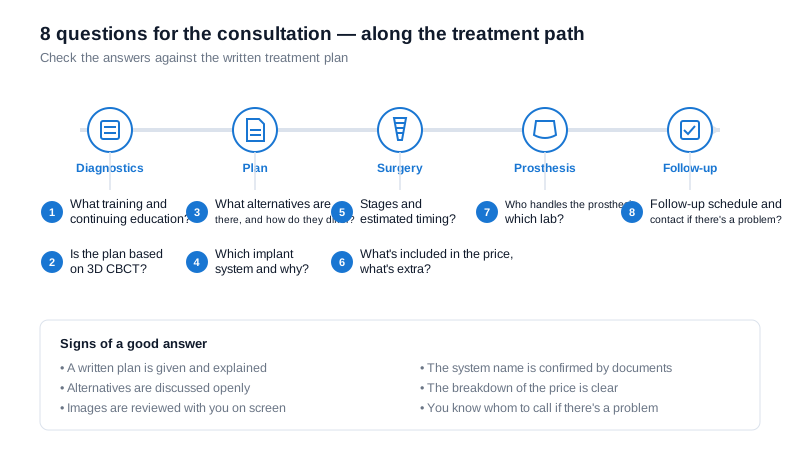 The questions are arranged by treatment stage — compare the answers with the written plan.
Comparing the answers with the written plan helps you assess the offers of two clinics objectively. And getting a second opinion is your natural right; it should not stand in the way of a professional relationship.
Warning signs
These do not necessarily mean a bad dentist, but they are grounds for asking further questions:
- A definitive price and plan given over the phone or from a photograph, without imaging and an examination.
- A promise of a guaranteed outcome — in biological treatment, the result depends on individual factors.
- Alternative options not being discussed at all.
- A discount that is only valid if you decide today.
- The name of the implant system not being stated, or not being confirmed in writing.
- A question about the follow-up schedule being left unanswered.
Frequently asked questions
How many years of experience should an implantologist have? There is no single figure; the number of years alone is not an indicator. A more useful question is: how has practice been structured after training, is there mentor or team support in complex cases, and is the plan documented?
Is it right to get a second opinion? Yes. Especially with large plans such as multiple implants, bone grafting or full-jaw restoration. Taking your CBCT images and the written plan with you is enough.
Where does the difference between cheap and expensive offers come from? Usually from the extent of the diagnostics, the implant system and its components, the prosthetic material and the laboratory, and the follow-up stages included in the price. So compare what the plans contain, not the prices.
Should the same dentist carry out both the surgery and the prosthetics? Both models exist. What matters is that the stages are coordinated with one another and that responsibility is clear: the implant position must be planned according to the future prosthesis, and both sides must be working to the same plan.
What should I bring to the consultation? Any existing X-rays and CBCT images (in digital form, if available), a list of the medicines you take, information about any general health conditions, and notes about previous dental treatment.
Conclusion
Choosing an implantologist is really about choosing a process: how the diagnostics are carried out, how the plan is documented, whether alternatives are explained and how follow-up is organised. If you can check these four points, your decision is based on information rather than on advertising. To have your situation assessed individually, all of these questions can be discussed at a dental implantation consultation.
Sources
- College publishes new national guidelines on implant dentistry mentoring — College of General Dentistry (UK), 2022
- Taking stock of training in implant dentistry — British Dental Journal, 2016
- Dental implants — patient information — Guy's and St Thomas' NHS Foundation Trust
This article is for general information only and does not replace an individual diagnosis, examination or treatment. Consult a doctor for a decision about your case.