

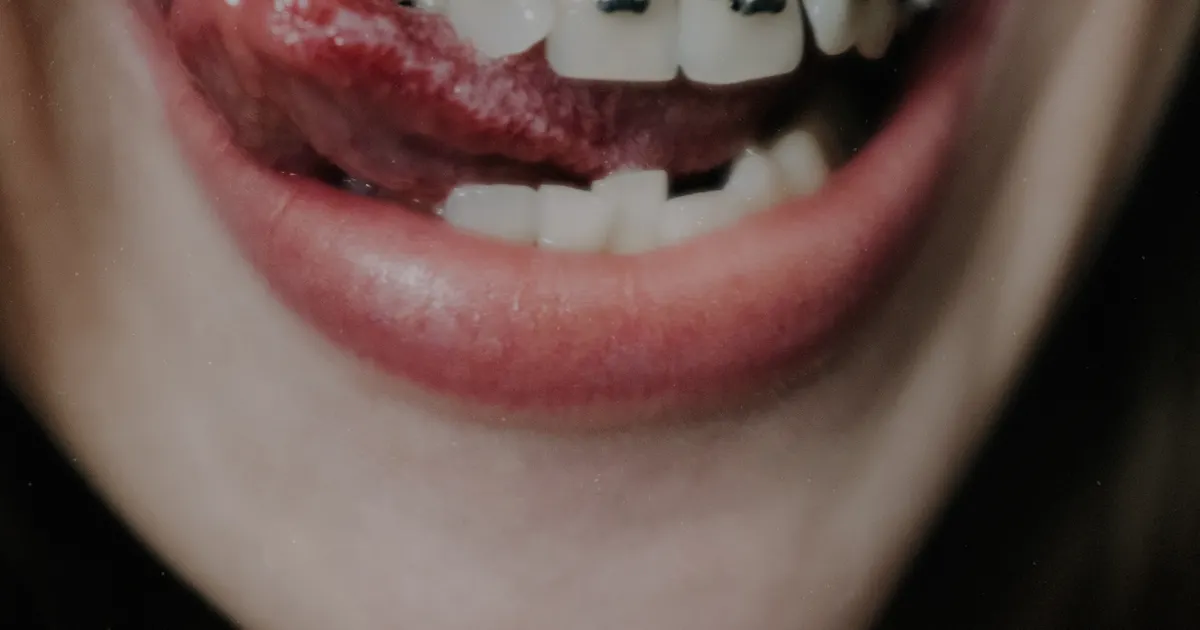
Wisdom teeth can affect braces treatment — but this effect is often far smaller than people imagine. During orthodontic treatment, wisdom teeth can influence planning (space, anchorage, extraction decisions). After treatment, the idea that wisdom teeth push the front teeth and cause them to shift (relapse) is widespread; however, scientific research shows that this effect is either very weak or entirely absent. The bottom line: the decision is always made individually and should be assessed with a panoramic X-ray.
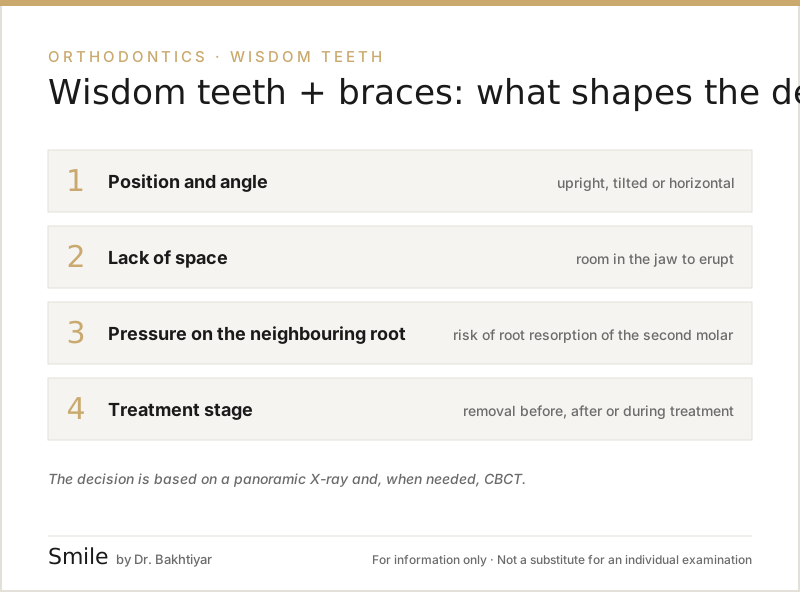
The position of the wisdom teeth is assessed on a panoramic X-ray when orthodontic treatment is being planned.
The short answer
- Before treatment: if a wisdom tooth is present, its position is assessed. In some cases it is extracted before or during treatment — particularly when it is impacted or angled.
- Relapse after treatment: research does not clearly confirm the idea that wisdom teeth push the front teeth. Not wearing a retainer is a much stronger cause of relapse.
- There is no routine extraction recommendation: the ADA and the AAO (American Association of Orthodontists) recommend removal only when there is an indication.
What are wisdom teeth?
Wisdom teeth (third molars) are the last teeth to come through in the jaw. They usually erupt between the ages of 17 and 25. However, in many patients they:
- remain impacted because there is not enough space
- erupt at an angle
- erupt only partially (creating a risk of pericoronitis)
- never develop at all (agenesis)
More about wisdom teeth: wisdom tooth extraction.
The idea that wisdom teeth push the front teeth — how true is it?
This idea has been widespread for decades. The reason: in many patients, crowding and relapse are seen in the lower incisors after orthodontic treatment, and at the same age the wisdom teeth are also trying to erupt. A cause-and-effect link is frequently drawn incorrectly.
What the scientific literature says:
- A systematic review published in 2007 in the American Journal of Orthodontics and Dentofacial Orthopedics (Sharpe et al.) and a 2015 Cochrane Review — the effect of wisdom teeth on front tooth crowding, if it exists at all, is very limited (at a level considered clinically insignificant).
- Crowding of the lower incisors also occurs in patients without wisdom teeth — it is part of the natural ageing process (physiological arch shortening).
- The main cause of relapse: not wearing the retainer properly.
For this reason, modern orthodontic literature does not accept as a standard recommendation the idea of preventive wisdom tooth extraction to avoid post-treatment relapse.
But — in which cases is a wisdom tooth extracted?
These are the confirmed indications:
1. Pericoronitis (recurrent inflammation)
If inflammation keeps recurring around a partially erupted wisdom tooth — extraction is the main option.
2. Tooth decay (caries)
If there is decay in the wisdom tooth, or on the back surface of the neighbouring second molar caused by it — extraction is usually appropriate.
3. Cyst or pathological increase in size
If a dentigerous cyst is visible on a panoramic X-ray or CBCT — removal is recommended.
4. Space for the orthodontic plan
Some orthodontic plans require the back teeth to be moved backwards (distalisation). If a wisdom tooth is in the way, this movement is not possible — extraction becomes part of the plan.
5. Orthognathic surgery plan
If surgery on the lower jaw is planned (BSSO — bilateral sagittal split osteotomy), the wisdom teeth are extracted 6 months before the operation so that the cut line passes through clean bone.
6. A tooth that is symptomatic or causes recurring problems
Wisdom teeth that are difficult to clean, that cause the gums to recede, or that trap food are candidates for extraction.
Assessment before treatment
When the orthodontic plan is drawn up, the orthodontist assesses the wisdom teeth on a panoramic X-ray:
- Position: in place, angled, horizontal, inverted
- Whether it is covered by bone: fully impacted, partially erupted, fully erupted
- Root formation: not yet formed, fully formed
- Relationship with the second molar: pressure, decay, root resorption
If the wisdom tooth is impacted and horizontal, the decision is made during orthodontic planning: extraction, monitoring, or orthodontic uprighting into position (in rare cases).
Timing of extraction during orthodontic treatment
Standard recommendations:
- Extraction before treatment: if there is a distalisation plan, if there is an orthognathic surgery plan, if there is active inflammation
- Extraction during treatment: to create space, to open a path for the teeth
- Extraction after treatment: if symptoms arise or pathology develops
Professional advice: extracting a wisdom tooth purely so that relapse does not happen in the future is not accepted as preventive practice by international standards. This decision must be made separately for each patient.
Retention — the more important factor
Relapse after orthodontic treatment is the main source of concern. However, the scientific literature clearly shows that proper use of a retainer sharply reduces the risk of relapse. These are:
- fixed retainer — a thin wire bonded to the back surface of the lower or upper incisors
- removable retainer — Essix or Hawley type appliances
Modern orthodontic protocols recommend retention for life (or for at least several years). Whether or not you have wisdom teeth is not the main factor for relapse — the retention regimen is.
A special note for child and teenage patients
In teenagers, the wisdom teeth have not yet fully formed. At this age:
- the wisdom tooth is easy to monitor on a panoramic X-ray
- because the root has not yet fully formed, extraction is technically easier
- an early decision is made in line with the orthodontic plan
More on this: which X-ray do you need for braces?.
When is CBCT needed?
Usually a panoramic X-ray is enough to assess a wisdom tooth. However, CBCT is needed in these cases:
- if the root of the wisdom tooth appears very close to the nerve canal in the lower jaw (risk of paraesthesia)
- if there is a cyst or a large pathology
- if the operation is complex
- if there is an orthognathic surgery plan
More detail: what is CBCT (3D imaging)?.
A joint decision by the orthodontist and the surgeon
The decision about a wisdom tooth is made jointly by the orthodontist and the surgeon. The orthodontist determines the need in line with the treatment plan, and the surgeon (or oral and maxillofacial surgeon) assesses the technical risks of the operation. The patient makes an informed choice with the opinion of both specialists.
Practical recommendations
- If you are considering braces or clear aligners: the condition of your wisdom teeth should be explained to you in full during the first panoramic X-ray and consultation
- If your wisdom tooth is not causing symptoms: routine extraction is not obligatory
- Wearing your retainer: this is the most important step for preventing relapse
- Follow-up X-ray: repeating the panoramic X-ray periodically over the years after treatment is useful for monitoring the wisdom teeth
Orthodontics and wisdom tooth assessment in Baku
At the Smile by Dr. Bakhtiyar clinic, a full assessment of the wisdom teeth on a panoramic X-ray is standard for every orthodontic patient. When surgery is needed, the decision is made jointly by the orthodontist and the surgeon. And the professional recommendation is always an individual assessment, not extraction just in case.
FAQ — frequently asked questions
1. Do I need to have my wisdom tooth extracted before getting braces? Only if there is an indication. If the wisdom tooth is angled, impacted, or there is a cyst — yes. Simply to avoid problems in the future — not always. The decision is based on the dentist's assessment.
2. What happens if a wisdom tooth pushes the front teeth after braces? The scientific literature shows that this effect is clinically insignificant. Crowding of the lower front teeth happens more often because the retainer is not being worn.
3. Is it safe to extract a wisdom tooth during treatment? Yes — when the surgeon and the orthodontist have planned it, it is completely safe. In some cases extraction in the middle of treatment is recommended.
4. How many years do I need to wear my retainer? The orthodontist gives an individual plan at the end of treatment. The general recommendation: a fixed retainer for many years and even for life; a removable retainer for long-term use at night.
5. Will my face change if I have my wisdom tooth extracted? No. The aesthetic effect of wisdom teeth on the facial contour is insignificant. This is a widespread myth.
Next step
If you are considering treatment with braces or clear aligners and you want to know how your wisdom teeth affect the plan, book an appointment for a full assessment. At the Smile by Dr. Bakhtiyar clinic, an individual plan is prepared using a panoramic X-ray, a lateral cephalometric X-ray and, where necessary, CBCT.
Related reading: wisdom tooth extraction · orthodontics — braces and clear aligners · which X-ray do you need for braces?.
Author: Dr. Bakhtiyar Aliyev — dentist, head of the Smile by Dr. Bakhtiyar clinic. Reviewed by a dentist: Dr. Bakhtiyar Aliyev, last review date: 6 July 2026.
Note: This article is for educational purposes and does not replace a consultation with a dentist. For an accurate diagnosis and treatment, please contact Dr. Bakhtiyar.
This article is for general information only and does not replace an individual diagnosis, examination or treatment. Consult a doctor for a decision about your case.