

Wisdom Tooth Extraction: When Is It Needed and How Does Healing Go?
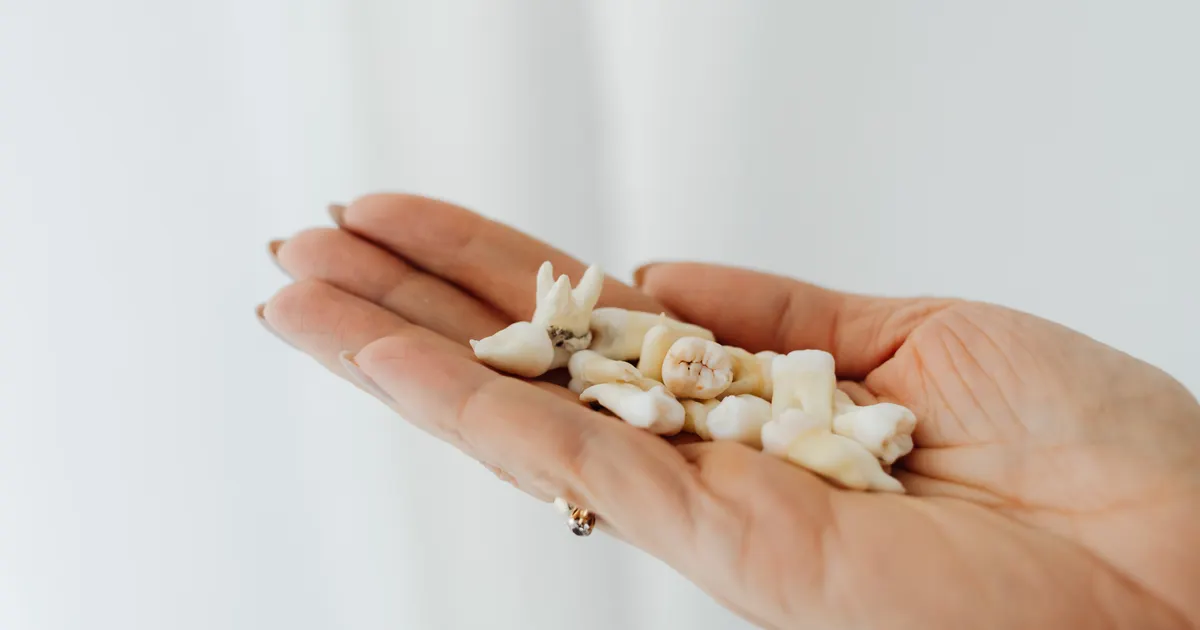
A wisdom tooth (third molar) is not always removed: extraction is recommended when there is recurrent gum inflammation (pericoronitis), decay that cannot be cleaned, pressure on the neighbouring tooth or root resorption, or problems related to cysts and impaction. A Cochrane review (2020) comparing preventive removal of asymptomatic, disease-free impacted wisdom teeth with retaining and monitoring them did not find sufficient evidence to support either approach — the decision is made through an individual risk assessment. The procedure is carried out under local anaesthesia; the most important risks are dry socket, infection and nerve injury in the lower jaw (most often temporary); when proximity to the nerve is suspected, a 3D CBCT can change the plan.
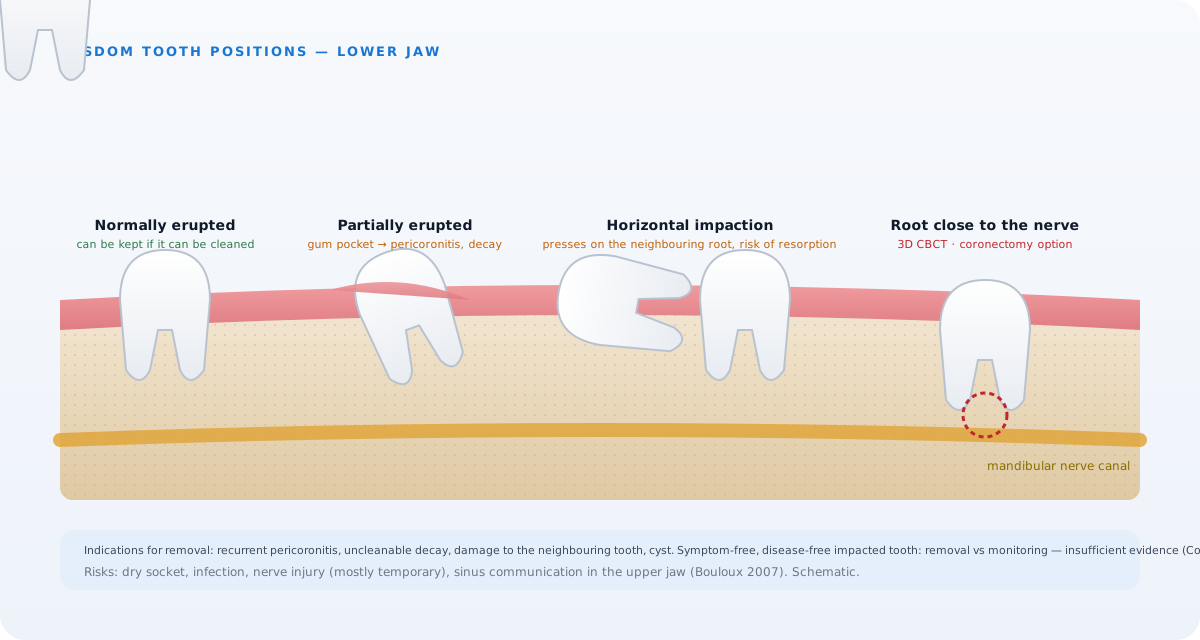 The decision to extract is based on the position of the tooth, the symptoms and its proximity to the nerve. The diagram is schematic.
What is a wisdom tooth?
Wisdom teeth are the third molars at the very back of the jaw and they usually erupt between the ages of 17 and 25. When there is enough room in the jaw they can erupt normally; however, there is often not enough space, so they come through at an angle, only partly erupt (partial impaction) or stay completely beneath the gum or bone (full impaction).
When does it need to be removed?
Extraction of a wisdom tooth is usually considered in the following situations:
- Recurrent pain or infection — gum inflammation around a partially erupted tooth (pericoronitis).
- Crowding and pressure on the neighbouring tooth — a risk of damage to the root or enamel of the adjacent tooth.
- Decay or an area that cannot be cleaned — because of its position at the back, brushing is difficult.
- A cyst or bone damage — around an impacted tooth.
- Orthodontic treatment plan — in some cases, to manage space.
A wisdom tooth that causes no symptoms, has erupted correctly and can be cleaned does not always need to be removed — monitoring is also an option. For asymptomatic, disease-free impacted teeth, the Cochrane review (2020) found no high-quality evidence showing whether removal or monitoring is better; in such cases the decision is made together, taking into account age, the position of the tooth, the ability to keep it clean and the patient's preference, and monitoring involves periodic check-ups and X-rays when needed.
How is the decision made?
The right decision is reached through examination and imaging. A panoramic X-ray shows the position of the tooth and whether it overlaps with the nerve canal; if the panoramic image shows signs of proximity, a 3D CBCT clarifies the true distance between the root and the lower jaw nerve, as well as the relationship with the sinus in the upper jaw — this can change the approach (complete removal, sectioning the tooth or coronectomy). What each X-ray shows: which X-ray shows the position of a wisdom tooth, when is a CBCT needed.
How does the procedure go?
The extraction is usually carried out under local anaesthesia; if you feel anxious or the case is complex, the option of additional sedation can be discussed. In simple cases the tooth is removed directly; with impacted teeth the gum is opened and the tooth may be divided into sections and removed. Stitches may be placed. The procedure often takes a short time, but this depends on the condition of the tooth.
How does healing progress?
- The first 24 hours: protecting the blood clot is important — no spitting, vigorous rinsing or poking at the site. A cold compress applied externally helps with swelling.
- 2–3 days: swelling and discomfort usually peak, then start to subside.
- 1 week: most people feel that the main symptoms have improved; stitches are checked or removed during this period.
- Complete bone healing: takes longer, but a return to daily life is usually possible within a few days.
Soft foods, avoiding hot drinks and smoking, and following your dentist's instructions all make healing easier.
Possible complications
The complications of third molar surgery are well described in the literature (Bouloux et al., 2007): the most common is dry socket (alveolitis) — pain that increases on days 2–4 as the clot is lost; infection and prolonged swelling; bleeding; in the lower jaw, injury to the lingual or inferior alveolar nerve — numbness in the lip, chin or tongue; in most cases this resolves over weeks to months, and in rare cases it can be permanent; the risk increases with the proximity of the root to the nerve canal, which is why 3D planning and, in some cases, coronectomy (leaving the root in place) are chosen. In the upper jaw, communication with the sinus is possible. These risks are individual and should be explained during the consultation using your own X-ray; more on dry socket: dry socket (alveolitis).
When should you contact your dentist?
- Pain that intensifies and does not ease after 2–3 days (this may be a sign of dry socket)
- Increasing swelling, fever or purulent discharge
- Bleeding that does not stop
- Persistent difficulty opening your mouth
If you notice these signs, contact your dentist without waiting.
Points to keep in mind
- Not every wisdom tooth is removed — the decision is individual and based on an examination.
- 3D imaging helps to assess how close the root is to the nerve and to reduce the risk — it does not eliminate it.
- Healing is individual; following the instructions prevents complications.
- The information here is general in nature; the right plan is drawn up after an examination.
Questions and Answers (FAQ)
Does every wisdom tooth have to be removed? No. A wisdom tooth that has erupted correctly, causes no symptoms and can be cleaned may be kept. Extraction is usually recommended in cases of pain, infection, crowding, a cyst or impaction. The decision is made individually, based on examination and X-rays.
Is wisdom tooth extraction painful? The procedure is carried out under local anaesthesia, so no pain is expected during the operation; you may feel pressure and hear sounds. Discomfort and swelling in the following days vary from person to person; they are usually managed with painkillers and a cold compress and ease within a few days. Pain that increases instead of easing should be checked.
How long does healing take? Initial improvement is often felt within a week, while a return to daily activities is usually possible within a few days. Complete healing of the bone takes longer. The speed of healing depends on the condition of the tooth and on individual factors.
What should you pay attention to after the extraction? On the first day, protect the blood clot: avoid vigorous rinsing, spitting and smoking. Eat soft foods, apply a cold compress and follow your dentist's instructions. If pain or swelling increases, contact your dentist.
Clinical note: This article is for general information only and does not replace individual advice from your dentist. To discuss your wisdom tooth, pain or an extraction plan, book an appointment.
Sources
- Surgical removal versus retention for the management of asymptomatic disease-free impacted wisdom teeth — Cochrane Database of Systematic Reviews, 2020
- Complications of third molar surgery — Oral and Maxillofacial Surgery Clinics of North America, 2007
- E.A.O. guidelines for the use of diagnostic imaging in implant dentistry 2011. A consensus workshop organized by the European Association for Osseointegration — Clinical Oral Implants Research, 2012
This article is for general information only and does not replace an individual diagnosis, examination or treatment. Consult a doctor for a decision about your case.