

Dry Socket (Alveolar Osteitis) After Tooth Extraction: How to Recognise It?

Dry socket (alveolar osteitis) is a painful condition in which the blood clot in the socket is lost or breaks down too early after a tooth extraction, leaving the bone exposed: pain that begins 1–3 days after the extraction, grows stronger instead of easing and radiates to the ear and temple, a socket that looks empty, and a bad taste. It is relatively rare after routine extractions, but considerably more common after surgical removal of lower wisdom teeth (Blum, 2002); smoking, a difficult extraction and oral hormonal contraceptives increase the risk. This is not an infection but a disruption of healing — antibiotics are not routinely needed; the dentist rinses the socket and places a soothing dressing, and the pain usually eases quickly. If in doubt, contact the clinic without waiting.
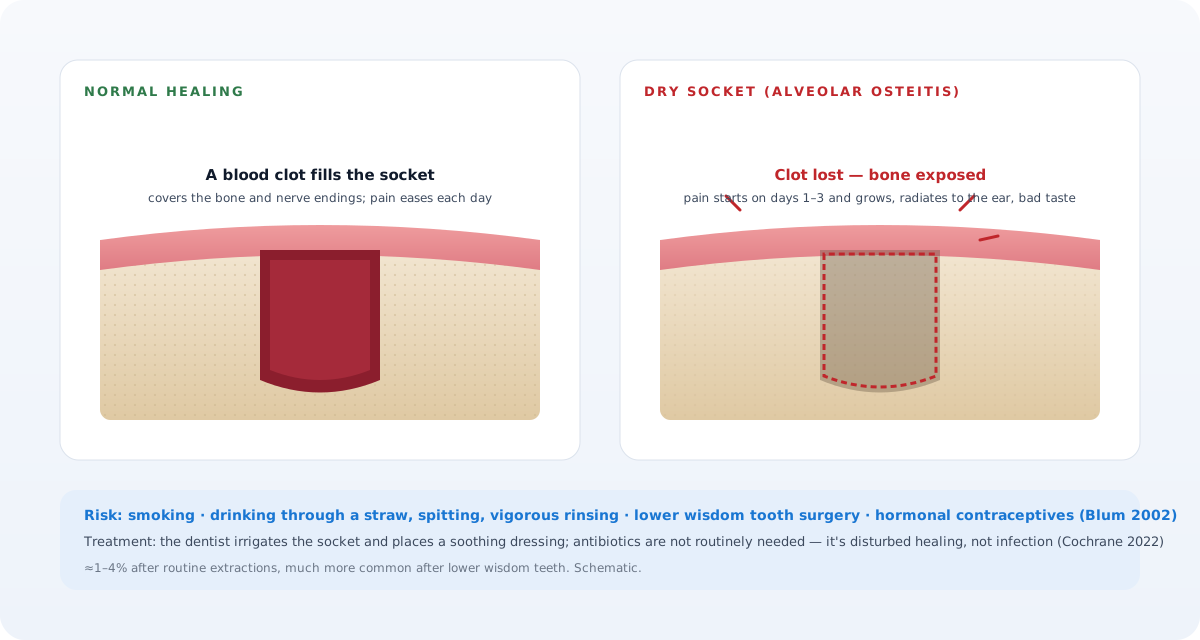 The difference between a normally healing socket and a dry socket lies in the clot. The diagram is schematic.
What is dry socket (alveolar osteitis)?
After a tooth is extracted, a blood clot forms in the empty socket. This clot is the foundation of healing: it protects the underlying bone and the nerve endings. When the clot is dislodged or breaks down too early, the bone is left exposed — this condition is called dry socket, and it is painful.
How to recognise the signs
Dry socket may be suspected when the following signs are present:
- Pain that begins 2–4 days after the extraction and becomes stronger.
- Pain radiating to the ear, jaw or temple.
- No visible blood clot in the socket (an empty, 'dry' appearance).
- An unpleasant taste or bad breath.
- The feeling of exposed bone in the socket.
Pain after an ordinary extraction usually eases as the days pass; with dry socket, on the contrary, the pain grows stronger. This difference is an important indicator.
Risk factors
- Smoking — the sucking action and the tobacco itself interfere with the formation and retention of the clot; it is one of the most consistent risk factors in the literature.
- Vigorous rinsing, spitting or drinking through a straw after the extraction (these dislodge the clot).
- Complex, surgical extractions such as lower wisdom teeth — according to Blum's review, dry socket occurs in roughly 1–4% of cases after routine extractions, and far more often after lower third molars.
- Poor oral hygiene, existing pericoronitis or infection.
- Oral hormonal contraceptives and certain phases of the menstrual cycle (Blum, 2002).
- A previous history of dry socket.
Prevention
During the first 24–72 hours after the extraction:
- Avoid smoking — this is one of the most important factors.
- Avoid vigorous rinsing and spitting on the first day; once your dentist allows it, rinse gently with salt water.
- Do not drink through a straw.
- Eat soft food and avoid irritating the side where the tooth was removed.
- Follow your dentist's post-operative instructions precisely.
These steps help the clot stay in place and support normal healing.
Treatment and when to see a dentist
Dry socket cannot be fully treated at home — the dentist rinses the socket with a warm solution, places a soothing dressing (for example, a eugenol-based one) and gives advice on managing the pain; the dressing may be renewed every few days. The Cochrane review (2022) shows that chlorhexidine gel or rinse reduces the risk of dry socket as a preventive measure, while dressings relieve the pain as treatment, although the evidence is limited. Antibiotics are not routinely needed for dry socket — it is not an infection; the dentist decides on them only if there are signs of infection. Seek help without waiting in the following situations:
- If the pain after the extraction grows stronger instead of easing.
- If there is a high temperature, swelling or pus.
- If the pain cannot be managed with home measures.
Treatment usually brings rapid relief; over 1–2 weeks the socket gradually fills with granulation tissue and closes. For healing and complications after wisdom tooth removal, see: wisdom tooth extraction; the rules after implant surgery are similar: the first days after an implant.
Questions and answers (FAQ)
How soon does dry socket develop? It usually appears 2–4 days after the tooth extraction. During this period, pain that grows stronger instead of easing is the main warning sign.
Does dry socket go away on its own? Although the condition may improve with time, cleaning and a dressing carried out by a dentist reduce the discomfort considerably. With severe pain, professional treatment is recommended.
How can dry socket be prevented? Avoiding smoking during the first days, refraining from vigorous rinsing and sucking, eating soft food and following your dentist's instructions all reduce the risk.
Does dry socket happen after every tooth extraction? No. It occurs in roughly 1–4% of cases after routine extractions, and considerably more often after surgical removal of lower wisdom teeth (Blum, 2002); most extractions heal without complications. Smoking, a difficult extraction and hormonal contraceptives increase the risk.
Clinical note: This article is for general information and does not replace individual advice from your dentist. If you are experiencing pain that is getting worse after an extraction, book an appointment or contact your dentist.
Sources
- Local interventions for the management of alveolar osteitis (dry socket) — Cochrane Database of Systematic Reviews, 2022
- Contemporary views on dry socket (alveolar osteitis): a clinical appraisal of standardization, aetiopathogenesis and management: a critical review — International Journal of Oral and Maxillofacial Surgery, 2002
- Complications of third molar surgery — Oral and Maxillofacial Surgery Clinics of North America, 2007
This article is for general information only and does not replace an individual diagnosis, examination or treatment. Consult a doctor for a decision about your case.