

The first days after implant surgery: what to expect and what to do
In the first 24 hours after implant surgery, a small amount of blood-tinged saliva, discomfort once the anaesthetic wears off, and swelling that increases over the first 2–3 days and then subsides are all expected reactions. The main rules are simple: on the first day, do not touch the site, do not spit and do not rinse; eat soft, lukewarm food; take the medicines your dentist has prescribed exactly as directed; avoid smoking; keep your other teeth clean. Increasing pain, bleeding that does not stop, fever, pus or a feeling that the implant is moving, on the other hand, are reasons to contact the clinic without waiting. This article covers the period from the first 24 hours to the first 7–14 days; care over the months and years that follow is in a separate article.
Individual instructions always come from the dentist who performed your surgery — what follows explains the typical course, it is not a prescription. For the treatment itself and its stages: dental implant treatment.
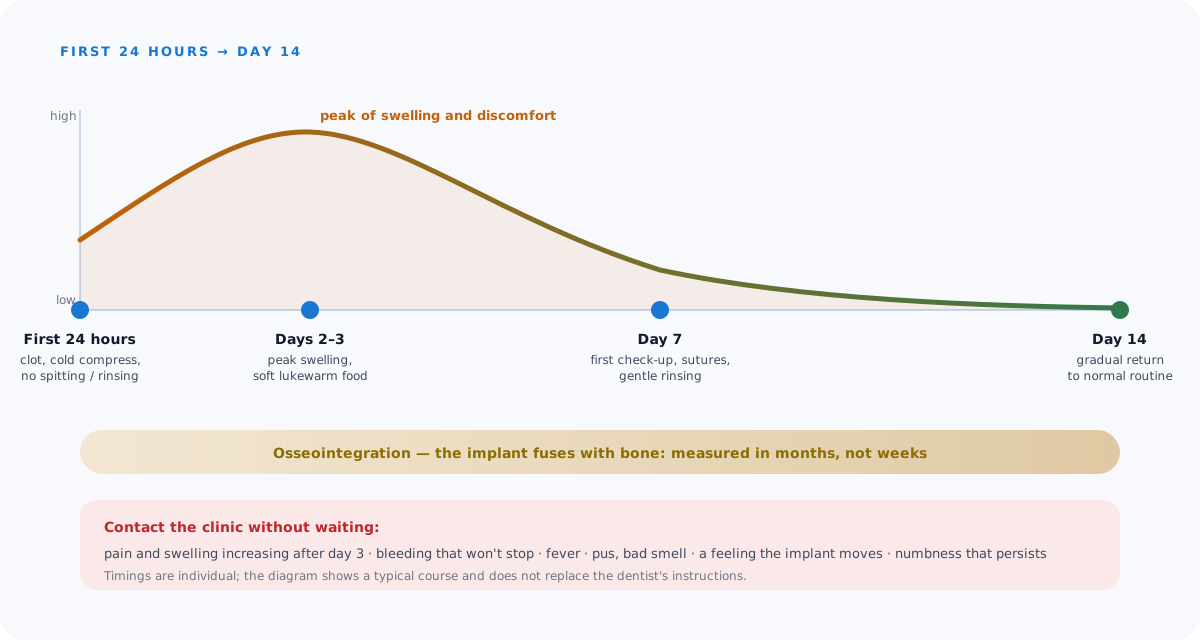 Swelling and discomfort usually peak on days 2–3 and subside towards the end of the first week. Timings vary from person to person.
What to expect in the first 24 hours
- A small amount of blood-tinged saliva — this is normal; in the first few hours, gently biting on a gauze pad is enough to allow the clot that covers the wound to form.
- Discomfort once the anaesthetic wears off — it begins a few hours later; the painkiller prescribed by your dentist is easier to manage if it is taken before the anaesthetic has fully worn off.
- Numbness — it may last for a few hours in the anaesthetised area; during this time, take care not to bite your lip or cheek.
What not to do on the first day: touching the site with your finger or tongue, spitting, rinsing vigorously, drinking through a straw, hot drinks and heavy physical exertion — all of these can dislodge the clot and increase bleeding. If the implant was placed on the day of the extraction, the same rules matter even more (immediate implant placement).
How much swelling and discomfort is normal?
Swelling usually increases after surgery, peaks on days 2–3 and subsides towards the end of the first week; slight bruising on the cheek is also possible and resolves on its own. On the first day, a cold compress on the outside of the face (15 minutes on, 15 minutes off) and keeping your head slightly raised when lying down help to reduce swelling. Discomfort varies from person to person: a study following 41 patients who received 131 implants showed that pain decreased rapidly after the first day, while swelling lasted for several days; the number of implants and additional procedures (bone grafting, sinus lift) increase the reaction. Expectations about pain during and after surgery are covered in a separate article: is implant placement painful.
Not normal: pain and swelling that increase after day 3, fever, pus — these belong to the section on when to seek help below.
What can you eat?
In the first few days, soft and lukewarm food: purées, warm soup, yoghurt, omelette, soft cooked vegetables, banana. Avoid: hot, hard and small grainy foods (sesame, nuts), spicy and acidic foods; for the first 24 hours, also hot drinks and alcohol. As far as possible, chew on the side that was not operated on. The return to your usual diet is normally gradual over about a week; if a temporary tooth or denture has been fitted, your dentist will give you a separate routine to match. Eating well and drinking water help healing — going hungry is not helpful.
How should you clean your teeth?
Keeping the mouth clean is essential for healing, but the surgical site is treated with care:
- On the first day — brush your other teeth as usual without touching the surgical site; no rinsing.
- From the second day — if your dentist has recommended it, gently rinse with lukewarm salt water or the prescribed antiseptic solution (without vigorous swishing or spitting); the site itself is approached with a soft brush from the time your dentist indicates.
- Sutures — they may be the self-dissolving type or removed on days 7–14; take care not to catch the sutures while brushing.
- An electric brush, a water flosser (irrigator) and dental floss are used at the site only once your dentist gives permission.
Smoking and alcohol
Smoking slows healing and increases the risk of losing the implant: a 2015 meta-analysis found that implant loss and bone loss were significantly higher in smokers than in non-smokers. It is recommended to avoid smoking at least during the first weeks after surgery — ideally throughout the whole osseointegration period; this includes waterpipe and e-cigarettes. Alcohol can increase bleeding in the first few days and may interact with prescribed medicines (particularly antibiotics and painkillers). For the effect of smoking and general health conditions on the outcome: how smoking and diabetes affect the outcome of an implant.
Physical activity
For the first 2–3 days, heavy physical exertion, sport, bending over to work and hot baths or saunas are not recommended — a rise in blood pressure can increase bleeding and swelling. Light walking is fine. Returning to sport is usually possible after the first week, agreed with your dentist; if bone grafting or a sinus lift was carried out, the restrictions may last longer (do not blow your nose forcefully, keep your mouth open when you sneeze).
Medicines
Painkillers, antibiotics where needed and antiseptic solution are taken at the dose and for the duration prescribed by your dentist; if an antibiotic has been prescribed, the course is not stopped halfway. Your dentist is already aware of the medicines you take regularly (particularly blood thinners and diabetes medicines) and gives instructions accordingly — do not change them on your own. This article does not recommend any specific medicine or dose.
Which signs mean you should contact the clinic?
The following do not always mean there is a serious problem, but they do need to be assessed by your dentist — do not wait for your next scheduled visit:
- Increasing pain — pain that grows stronger instead of easing after day 3 and is not relieved by painkillers;
- Persistent bleeding — bleeding that does not stop within 30–60 minutes of biting on a gauze pad, or that starts again after the second day;
- High temperature, chills, general weakness;
- Pus, a bad taste or odour, increasing swelling, redness of the skin;
- A feeling that the implant or the temporary tooth is moving, the cover screw becoming visible or falling out;
- Numbness in the lip or chin that does not resolve after the anaesthetic has worn off (in the lower jaw).
The signs of early and late complications are covered in a separate article: signs of implant failure.
When is the first check-up?
At our clinic, the first check-up visit is usually scheduled within the first week or two after surgery: healing of the wound is checked, sutures are removed (if they are not the dissolving type) and the hygiene routine is adjusted. Further check-ups continue during the osseointegration period — until the implant integrates with the bone — at the intervals set by your dentist. This integration is measured in months rather than weeks, and the permanent prosthesis is planned only after that; in suitable cases (sufficient initial stability) a temporary tooth can be fitted earlier — the literature shows that immediately loaded implants give results comparable to the conventional protocol in properly selected cases, but this is decided by the dentist on the basis of measurements. The months and years that follow — hygiene, professional cleaning, follow-up X-rays — are explained in the article on long-term care.
Frequently asked questions
How long does swelling last after an implant? It usually peaks on days 2–3 and subsides towards the end of the first week. Swelling that increases, or that continues beyond a week, needs to be checked by a dentist.
When can I eat normally again? Soft and lukewarm food for the first few days; the return to a normal diet is usually gradual over about a week, and according to your dentist's routine if you have a temporary tooth.
When can I brush around the implant? Your other teeth from the first day; the surgical site only from the time your dentist indicates, and with a soft brush.
Can I go to work after surgery? Many patients return to light work the next day; swelling and comfort vary from person to person, and heavy physical work is not recommended in the first few days.
Are antibiotics always necessary? Not always — this is a decision your dentist makes based on the extent of the surgery and your own situation. If they have been prescribed, take the full course.
Sources
- Pain and inflammation in 41 patients following the placement of 131 dental implants — Medicina Oral, Patología Oral y Cirugía Bucal, 2005
- Smoking and dental implants: A systematic review and meta-analysis — Journal of Dentistry, 2015
- Success of immediate loading implants compared to conventionally-loaded implants: a literature review — Journal of Investigative and Clinical Dentistry, 2016
- Long-term (10-year) dental implant survival: A systematic review and sensitivity meta-analysis — Journal of Dentistry, 2019
This article is for general information only and does not replace an individual diagnosis, examination or treatment. Consult a doctor for a decision about your case.