

Dental Abscess (Infection): Emergency Signs and What to Do

A dental abscess is a collection of pus caused by a bacterial infection at the tip of a tooth root (periapical) or in a gum pocket (periodontal); it shows up as throbbing pain, tenderness on biting, swelling and sometimes fever, and it does not clear up on its own. The main treatment is removing the source — root canal treatment, draining the pus, cleaning the gum pocket or extracting the tooth. According to a Cochrane review (2024), systemic antibiotics added to local treatment do not reduce pain and are not routinely indicated when there are no signs of spread (facial swelling, fever, feeling unwell). Rapid swelling of the face and neck, or difficulty swallowing or breathing, requires emergency medical care.
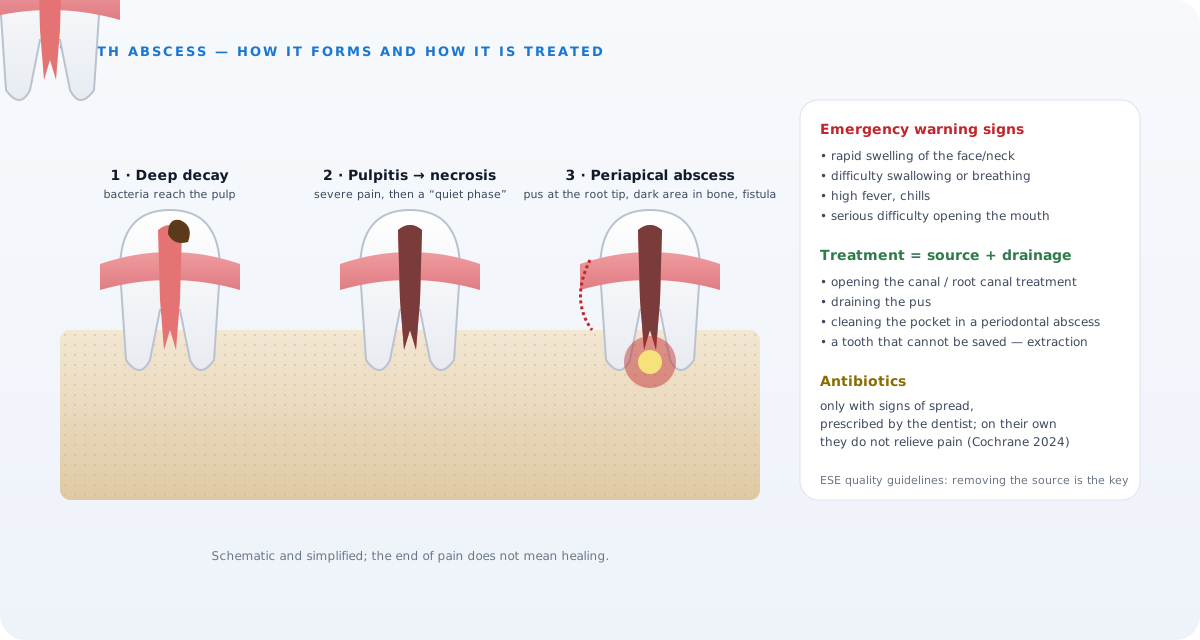 An abscess is the result of infection spreading from the pulp into the bone; treatment targets the source. The diagram is schematic.
What is a dental abscess and why does it happen?
An abscess usually develops as a result of untreated deep tooth decay, a cracked tooth, an old root canal treatment that has failed, or advanced gum disease. When bacteria reach the soft tissue inside the tooth (the pulp) or get beneath the gum, an infection begins and the body responds by forming a collection of pus. There are two main types: a periapical abscess (at the tip of the tooth root) and a periodontal abscess (in the gum, beside the tooth). Both need professional treatment.
Emergency signs — what to look out for
The following signs may point to an abscess:
- Severe, throbbing (pulsating) pain — often spreading to the ear, jaw or neck.
- Swelling — in the gum, the face or the jaw.
- Sensitivity to hot and cold, as well as to chewing.
- A bad taste or bad smell in the mouth — when the abscess drains.
- A pus-filled lump on the gum (sinus tract) — sometimes the pain eases temporarily.
- Fever, generally feeling unwell, swollen lymph nodes.
When to seek emergency care IMMEDIATELY
Some signs indicate that the infection is spreading and require emergency medical care without delay:
- Rapidly increasing swelling of the face or neck.
- Difficulty swallowing or breathing.
- Serious difficulty opening the mouth.
- High fever, shivering and severe general weakness.
These situations are rare, but they can be dangerous — seek emergency medical care without losing time.
What you can do at home until you see the dentist (temporary)
These are not treatment; they are only for comfort until you see the dentist:
- You may take a painkiller as advised by your doctor.
- Gentle rinsing with warm salt water may bring some relief.
- Avoid hard foods and anything very hot or very cold.
Important: Do not try to lance the abscess yourself, and do not take antibiotics on your own initiative. According to a Cochrane review (2024), systemic antibiotics added to local treatment (drainage, opening the canal) do not further reduce pain and swelling; antibiotics are indicated only when there are signs that the infection is spreading or when you are generally unwell — and that is for the dentist to decide. Antibiotics do not remove the cause of the abscess (the infected tooth).
How is it treated?
Treatment depends on the cause and severity of the abscess; according to the ESE quality guidelines, the main principle is to remove the source of infection and drain the pus. The options are: root canal treatment to save the tooth (opening the canal itself provides drainage), cleaning the gum pocket in the case of a periodontal abscess, releasing pus collected in the soft tissue through an incision, and extraction when the tooth cannot be saved. If there are signs of spread, antibiotics are added, but they do not replace treating the tooth. For how an abscess looks on an X-ray: can a jaw infection be seen on an X-ray. The exact plan is decided after an examination and X-rays.
How to prevent it
- Brushing twice a day and cleaning between the teeth (plaque and tartar).
- Regular dental check-ups and professional cleaning.
- Treating decay or gum problems early — not letting a small problem turn into an abscess.
Points to keep in mind
- A dental abscess is a collection of pus caused by a bacterial infection, and it does not clear up on its own.
- Throbbing pain, swelling and fever are the main signs — see a dentist promptly.
- Rapid swelling of the face and difficulty breathing or swallowing require immediate emergency care.
- Antibiotics alone are not a treatment; the tooth causing the problem must be treated.
Questions and Answers (FAQ)
Does a dental abscess go away on its own? No. Sometimes the pain eases temporarily when the abscess drains, but that does not mean the infection has gone. If the tooth causing it is not treated, the infection continues and can spread. An abscess always requires professional treatment.
The abscess pain has stopped — do I still need to see a dentist? Yes, definitely. Pain stopping usually means the abscess has drained or the nerve has been damaged, not that it has healed. The infection carries on underneath. See a dentist even when there is no pain.
Do antibiotics cure a dental abscess? On their own — no. According to a Cochrane review (2024), antibiotics added to local treatment do not reduce pain and are not indicated when there are no signs of spread; for full healing, the infection must be drained and the tooth treated (with root canal treatment or extraction). Antibiotics are prescribed only by a dentist, and only when there are signs of spread.
Is an abscess an emergency? In most cases it is an urgent situation that needs treatment soon. If there is rapid swelling of the face, difficulty breathing or swallowing, or a high fever — that is a situation requiring immediate emergency medical care.
Clinical note: This article is for general information and does not replace individual advice from your dentist. If you suspect an abscess, book an appointment without delay or seek emergency care.
Sources
- Systemic antibiotics for symptomatic apical periodontitis and acute apical abscess in adults — Cochrane Database of Systematic Reviews, 2024
- Quality guidelines for endodontic treatment: consensus report of the European Society of Endodontology — International Endodontic Journal, 2006 (ESE)
- Outcome measures to assess the effectiveness of endodontic treatment for pulpitis and apical periodontitis for use in the development of European Society of Endodontology S3-level clinical practice guidelines — International Endodontic Journal, 2021 (ESE)
This article is for general information only and does not replace an individual diagnosis, examination or treatment. Consult a doctor for a decision about your case.