
Orthodontics
Straight teeth and a comfortable bite: in Baku we use braces and clear aligners, and plan the result in 3D beforehand.
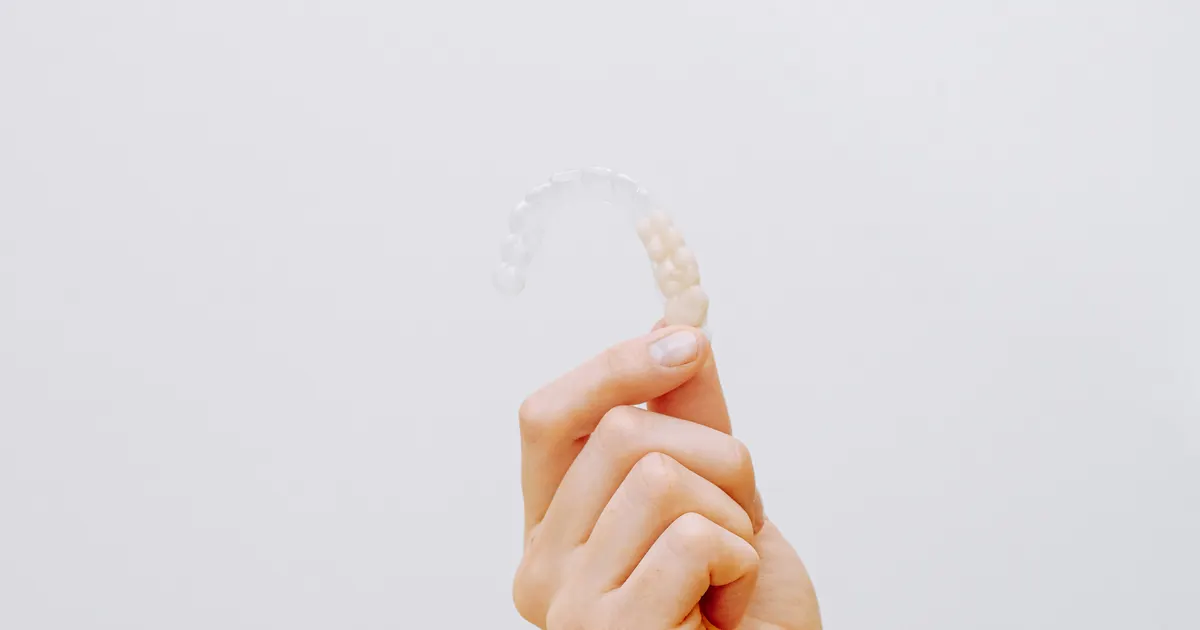
Orthodontic treatment in Baku is carried out at Smile by Dr. Bakhtiyar with digital planning. Orthodontics means correcting the position of the teeth and the bite (how the upper and lower jaws meet). Our clinic offers metal braces and almost invisible clear aligners (thin plastic trays). Treatment is led by orthodontist and gnathologist Dr. Maharram Mammadov.
An orthodontic check-up helps when teeth are crowded, when there are gaps between them, or when one tooth sticks out or sits back. It is also useful if the jaws do not close properly, chewing feels uncomfortable, or you chew only on one side. Crooked teeth are harder to clean, so decay and gum inflammation appear sooner. Teenagers and adults are both welcome.
At the first visit the orthodontist examines you (30 AZN); if needed, a panoramic X-ray (30 AZN) or a 3D scan (100 AZN) is taken. Then we take a digital impression — an intraoral scan — and show the expected result on a 3D model. Once you approve the plan, braces are bonded or aligner sets are produced. Short control visits follow every few weeks.
In the first days light pressure and an unusual feeling are normal and usually pass within a few days. With braces, avoid very hard and sticky food, brush after every meal and use an interdental brush. Aligners must be worn many hours a day. When treatment is finished, you receive a retainer — a device that keeps the new position stable.
Prices depend on the plan: metal ligature braces from 1750 AZN, metal self-ligating braces from 2500 AZN per jaw, aligner (1 step) 200 AZN, and a simple expansion plate for children 400 AZN. Treatment time is different for every person and is given only after the examination and the 3D plan. You always receive a clear plan and estimate in advance.
What is orthodontics?
Orthodontics is the branch of dentistry that corrects the position of the teeth and the bite — how the upper and lower jaws meet. The aim is not only a straight row: comfortable chewing, teeth that can be cleaned, healthy gums and a stable result. The clinic uses two main systems — fixed braces and clear aligners; which one suits is decided by the diagnosis. Jaw-joint complaints are assessed separately, gnathologically.
Who may need orthodontic treatment?
There is no age limit — adults can be treated with healthy gums and bone; in children some problems are easier to solve during growth.
- Crowding — the spaces between teeth cannot be cleaned, raising the risk of decay and gum inflammation
- Spaced teeth (diastema, gaps)
- Deep, open or cross bite; a mismatch in how the jaws close
- Protruding front teeth (trauma risk) or a tooth set back
- One-sided chewing, uneven tooth wear
- Preparation for prosthetics or implants — creating space, uprighting abutment teeth
- In children — guiding jaw growth (expansion plate)
How is the diagnosis made?
An orthodontic plan is built on records, not estimation: a clinical examination (teeth, gums, bite, jaw joint, facial profile), facial, smile and intraoral photographs, an intraoral scan (digital model) and, when needed, panoramic and cephalometric X-rays. A systematic review found limited high-level evidence on which records are “mandatory” in every case — so X-rays are taken on indication, not routinely. Cephalometry is a standard indication for growth assessment, extraction decisions and skeletal discrepancies; for impacted teeth and root relationships 3D CBCT may be chosen.
Braces versus aligners
Fixed braces work through brackets bonded to the teeth and an archwire; they apply continuous force under the dentist's control, do not depend on compliance and are more predictable for complex movements (large root movements, extrusion, severe rotation, extraction cases). Clear aligners are removable trays made from a digital plan; they are invisible and easy to clean, but must be worn 20–22 hours a day and their effect depends on the patient's discipline. According to a 2018 systematic review, aligners are effective in mild to moderate crowding, while some movements (for example rotation of back teeth, extrusion) are less predictable. The clinic uses ligated and self-ligating metal braces as well as an aligner system.
Which system suits whom?
There is no “best system” — the system is chosen for the diagnosis, the type of movement and the patient's lifestyle; the decision is discussed together with the result shown in the digital plan.
- Mild–moderate crowding, aesthetic demand, high compliance → aligners
- Complex movement, extraction plan, skeletal component → fixed braces
- Teenager with uncertain compliance → braces are more reliable
- Periodontal problems in adults → gum treatment first, then a plan with light forces
- Narrow jaws in children → an expansion-plate stage
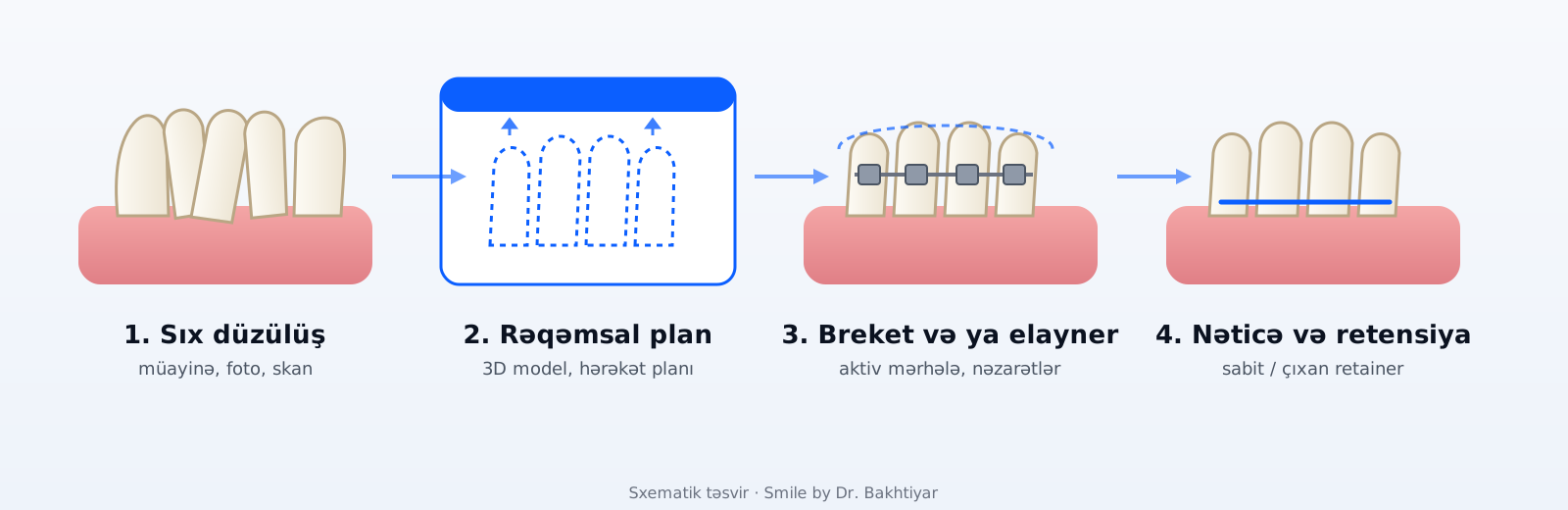
Treatment stages
- 1
Orthodontic examination
Complaint and expectations; the teeth, gums, bite, jaw joint and facial profile are assessed; the feasibility and initial direction of treatment are defined.
- 2
Records: photos, scan, X-rays
Intraoral and facial photographs, a digital scan; panoramic and cephalometric X-rays on indication, 3D CBCT when needed.
- 3
Diagnosis and digital plan
Analysis of crowding, bite and skeleton; the movement plan is built on a 3D model, the expected result and duration are explained; the system is chosen.
- 4
Preparation
Decay and gum treatment, professional hygiene; extraction or space creation when needed; a gnathological assessment for jaw-joint complaints.
- 5
Fitting the appliance
Bonding the brackets and placing the wire, or issuing the first set of aligners; instructions on use and hygiene.
- 6
Active phase and reviews
Adjustments every 4–8 weeks with braces; changing sets and reviews every 6–10 weeks with aligners; monitoring hygiene and white-spot risk.
- 7
Finishing and removal
Refining the bite (finishing), removing the brackets and polishing the enamel; final photographs and scan.
- 8
Retention
A fixed (bonded behind the teeth) and/or removable retainer; the wearing schedule and review visits — the stage that keeps the result.
How long does treatment take?
According to a 2016 systematic review the average treatment time with fixed appliances was about 20 months, ranging individually from 12 to 30 months. Factors that extend it: extraction plans, skeletal discrepancy, slower movement in adults, missed visits and broken brackets; with aligners, not meeting the wear time. Simple aligner cases can finish in a few months. General promises such as “straight teeth in 6 months” are not made — the duration is explained individually at the planning stage.
Why is retention needed?
After teeth have moved they tend to return to their previous position until the surrounding fibres and bone remodel — relapse. The Cochrane review (2023) shows that both fixed and removable retainers hold the position, while evidence on which is superior is limited. The clinic most often recommends a combination of a fixed retainer behind the front teeth and a removable retainer worn at night; the duration is individual and can be long-term. Retention is not an “add-on” but the final stage of treatment.
Hygiene and reviews
Plaque collects easily around brackets: brushing after every meal, interdental brushes and floss; fluoride toothpaste; avoiding hard and sticky food. According to the Cochrane review (2019), fluoride varnish and high-fluoride toothpaste reduce early demineralisation during brace treatment. With aligners the teeth are brushed after every meal before the tray goes back in. Professional hygiene every 3–6 months is part of the plan; if hygiene is poor, treatment may be paused — white spots and decay matter more than straight teeth.
Risks and limitations
- White spots (demineralisation) — reported in a substantial share of fixed-appliance patients; reduced by hygiene and fluoride
- Root resorption — slight shortening of the root tip; usually clinically insignificant, little difference between aligners and braces; long treatment and large movements raise the risk
- Gum reaction — gingivitis, recession in adults; managed with periodontal preparation and monitoring
- Relapse — without retention; a long-term retainer is needed
- Compliance with aligners — the plan fails if worn less than 20–22 hours
- A broken bracket or poking wire — needs a review visit
- Jaw joint — orthodontics neither causes nor treats joint complaints; a gnathological assessment is needed if present
Orthodontics and the jaw joint
Systematic reviews have not found a consistent cause-and-effect relationship between occlusal features and temporomandibular disorders; orthodontics is therefore not recommended as a treatment for joint pain, and no promise of “straighten the teeth and the joint will settle” is made. In the clinic orthodontics is carried out by an orthodontist-gnathologist: in patients with joint complaints the jaw joint is assessed first, a splint stage is completed when needed, and only then is the orthodontic plan built. This is explained on a separate service page.
What affects the price?
The prices below come from the same source as the site's Prices section. The total depends on the system (ligated/self-ligating braces, number of aligner sets, expansion plate), treatment of one or both jaws, the duration and number of reviews, preparatory treatment (hygiene, decay, extraction) and the type of retainer. Aligner pricing is calculated per step and finalised after planning; a written plan is given by stage.
| Orthodontist examination | $20 |
| Panoramic X-ray | $20 |
| 3D tomography (CBCT) | $60 |
| Metal ligature braces (1 jaw) | $1,030 |
| Metal self-ligating braces (1 jaw) | $1,470 |
| Aligner (1 step) | $120 |
| Expansion plate (simple) | $235 |
Prices are set in Azerbaijani manat (AZN); US dollar amounts are approximate, converted at the exchange rate of 2026-10-27. The AZN amount is what is charged. Prices come from the same source as the Prices page; the final amount is set after your examination. Orthodontics prices →
Doctor and clinic
At Smile by Dr. Bakhtiyar (Baku, Babek Avenue 1131) orthodontic treatment is carried out by orthodontist-gnathologist Dr. Maharram Mammadov — the author of the site's articles on orthodontics, occlusion and the jaw joint. The digital scan, planning and reviews take place in one clinic; where prosthetic or implant preparation is required, the plan is built together with Dr. Bakhtiyar Aliyev.
Sources
- Retention procedures for stabilising tooth position after treatment with orthodontic braces — Cochrane Database of Systematic Reviews, 2023
- Fluorides for preventing early tooth decay (demineralised lesions) during fixed brace treatment — Cochrane Database of Systematic Reviews, 2019
- How long does treatment with fixed orthodontic appliances last? A systematic review — American Journal of Orthodontics and Dentofacial Orthopedics, 2016
- Clinical effectiveness of Invisalign® orthodontic treatment: a systematic review — Progress in Orthodontics, 2018
- External Apical Root Resorption Following Orthodontic Treatment with Clear Aligners Versus Fixed Appliances: A Systematic Review — Dentistry Journal, 2025
- Prevalence, Incidence and Risk Factors of White Spot Lesions Associated With Orthodontic Treatment — A Systematic Review — Orthodontics & Craniofacial Research, 2025
If this sounds familiar
If you have one of these complaints, this service may be right for you:
- “my teeth are crowded and overlapping”
- “there is a gap between my front teeth”
- “my upper front teeth stick out”
- “my bite does not close properly”
- “I chew only on one side”
- “I feel shy about my crooked smile”
- “my child's teeth are coming in crooked”
- “I had braces before and my teeth moved back”
Frequently asked questions
Who needs orthodontic treatment?
When teeth are crowded or spaced, one tooth sticks out or sits back, the jaws do not close correctly (deep, open or cross bite), chewing is one-sided, or the spaces between teeth cannot be cleaned. The decision follows an orthodontic examination, photographs and X-rays when needed.
Braces or clear aligners — which is better?
There is no universal answer. Systematic reviews show aligners are effective in mild to moderate crowding, while complex movements (large root movements, extrusion, severe rotation) are more predictable with fixed braces. The choice depends on the diagnosis, age and compliance (aligners are worn 20–22 hours a day).
How long does treatment take?
A systematic review found an average of about 20 months with fixed appliances, ranging individually from 12 to 30 months; simple aligner cases are shorter, extraction and skeletal cases longer. An exact forecast is given in writing after planning.
Can teeth be straightened as an adult?
Yes — with healthy gums and bone there is no age limit; movement is somewhat slower in adults and the periodontal condition is assessed beforehand. Because growth is complete, skeletal discrepancies are compensated with the teeth or treated surgically.
Do braces hurt?
Pressure and tenderness for 2–4 days after bonding and after each adjustment are normal and usually managed with a simple painkiller; with aligners each new set feels similar but milder. Persistent sharp pain is not expected — a review is needed in that case.
Can the teeth move back after treatment?
Yes, relapse is common without retention. According to the Cochrane review both fixed (bonded behind the teeth) and removable retainers hold the position; the duration is individual and long-term night-time wear is usually recommended.
Why do white spots appear with braces?
When plaque collects around a bracket the enamel demineralises — a white spot forms; reviews report this in a substantial share of fixed-appliance patients. Fluoride toothpaste, varnish and correct brushing reduce the risk, which is why hygiene control is part of the plan.
Does orthodontics cause root resorption?
A small shortening of the root tip is a known side effect of orthodontic movement; in most cases it is clinically insignificant. Systematic reviews find little difference between aligners and braces; long treatment, large movements and individual susceptibility raise the risk — it is monitored with X-rays.
Does orthodontics treat jaw-joint problems?
No — systematic reviews have not found a consistent causal link between bite changes and temporomandibular disorders. Patients with joint complaints first have a gnathological assessment; orthodontics is not recommended as pain treatment.