

Braces or clear aligners: which option suits which case?
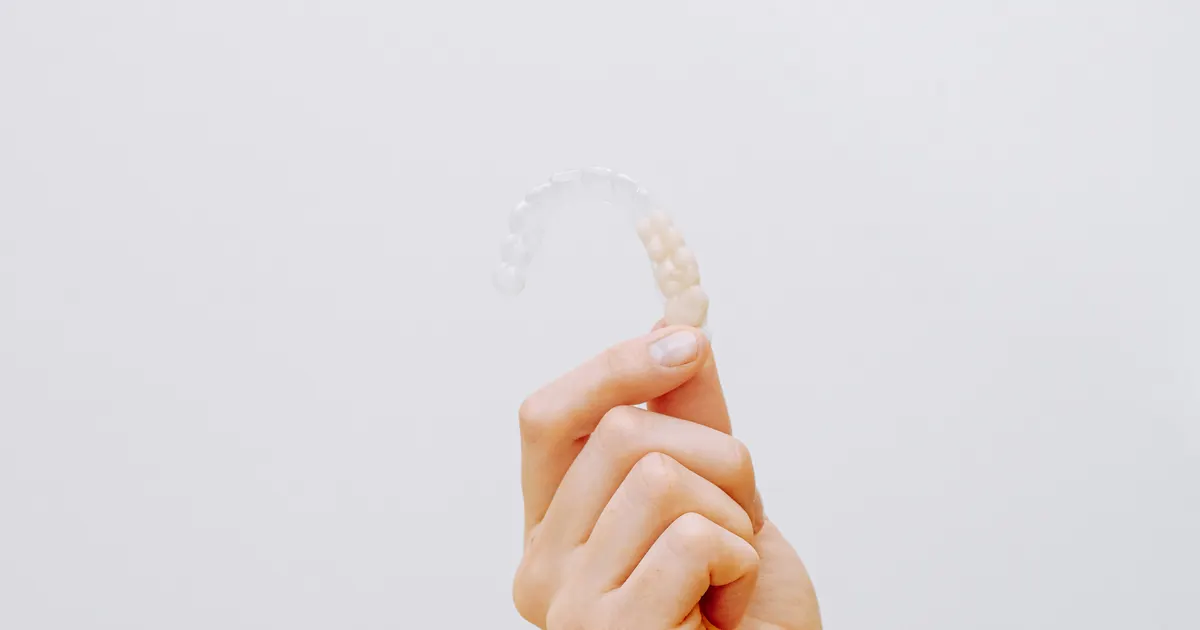
Both methods move teeth, but in different ways: braces are a system of attachments bonded to the teeth plus a wire, they are not removable and the dentist controls the movement; clear aligners are a series of custom-made removable plastic trays, and the result depends on wearing them 20–22 hours a day. The evidence does not offer a simple formula: in mild to moderate crowding, aligners can be superior in terms of comfort and aesthetics; for complex movements such as root angulation (torque), large rotations, extrusion of a tooth and arch expansion, braces give more predictable control. The choice depends on the type of malocclusion, the complexity of the movement, age and growth, hygiene and discipline; the final decision is made after an orthodontic examination and X-ray analysis.
The stages of treatment, the types of appliance and our clinic's workflow are described on the orthodontics service page; which X-rays are taken before treatment is covered in a separate article.
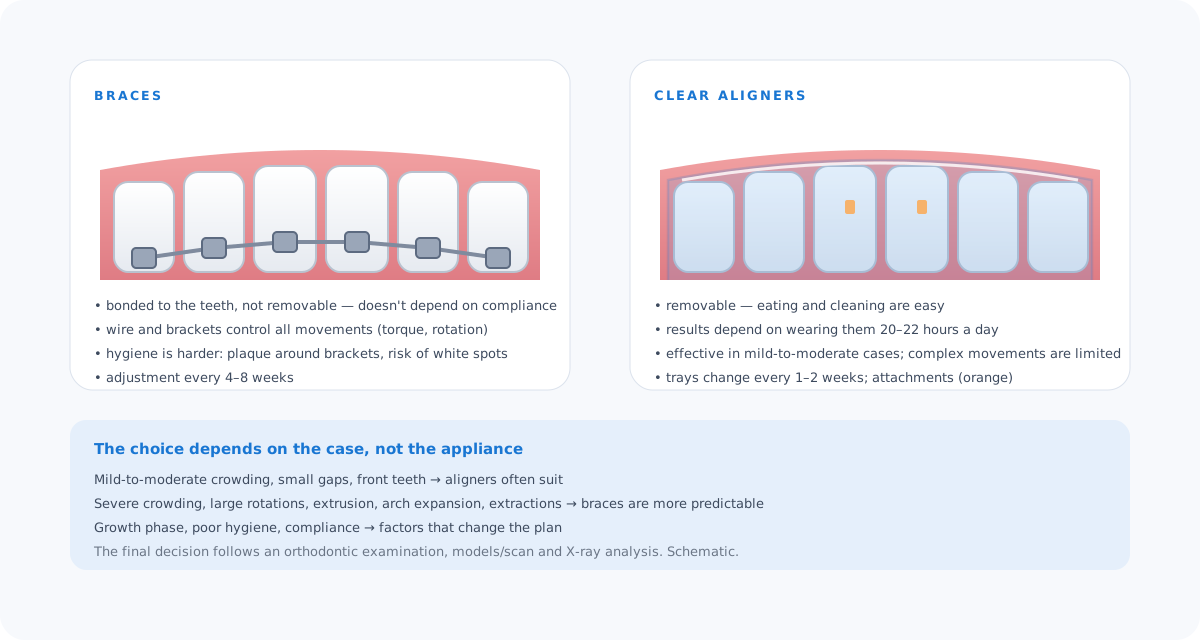 Braces are fixed to the teeth and work through the wire; an aligner is a removable tray that covers the teeth. The diagram is schematic.
How do braces work?
Braces are bonded to each tooth, and the wire running through them draws the teeth into the planned position with gentle, continuous force. The types are: metal (the most durable and the most affordable), ceramic (close to the tooth colour, less visible, slightly more brittle), self-ligating (where the wire is held by a small clip) and lingual braces bonded to the tongue side (invisible, harder to get used to). Braces are permanently on the teeth — the result does not depend on the patient's wear discipline, and the dentist changes the wire and the force at each visit. This is an advantage for complex movements and in cases where discipline is hard to rely on.
How do clear aligners work?
Aligners are clear trays made on the basis of a digital plan (intraoral scan → virtual movement → series); each tray moves the teeth by a small step and is replaced by the next one every 1–2 weeks. For some movements, small composite ‘attachments’ are bonded to the teeth. Aligners are taken out for eating and cleaning the teeth — this is both the greatest convenience and the greatest source of risk: if they are worn less than 20–22 hours a day, the plan is disrupted, treatment takes longer, or the result is not fully achieved.
Comparison table
| Criterion | Braces | Clear aligners |
|---|---|---|
| Appearance | Visible (ceramic and lingual less so) | Almost invisible |
| Removability | No — fixed | Yes — for eating and cleaning |
| Hygiene | Difficult: plaque around the braces, risk of white spots; a special brush and floss are needed | Easy: the teeth are brushed as usual; but the teeth must be clean before the tray goes in |
| Patient discipline | Less dependent — the appliance works on its own | Highly dependent — 20–22 hours/day |
| Tooth movements | Predictable control for all types of movement: torque, large rotations, extrusion, arch expansion | Mild to moderate crowding, small gaps, straightening the front teeth; complex movements are limited or require attachments/additional aids |
| Check-up process | A visit every 4–8 weeks: wire change, activation | A visit every 6–10 weeks; trays are changed at home; a lost tray means an extra stage |
| Eating | Hard and sticky foods are restricted; a bracket can come off | No restrictions — the tray is removed; while it is in, water only |
| Comfort | The wire and brackets can irritate the cheek; sensitivity for 2–3 days after activation | The edges are smooth; pressure for 1–2 days with each new tray |
| Emergencies | A loose bracket, a poking wire | A lost or cracked tray |
| Price | Varies by type (metal → ceramic → lingual) | Usually higher than metal braces; depends on the number of trays |
What does the evidence say?
- A 2015 systematic review (Angle Orthodontist) showed that aligners are effective at aligning teeth and closing small gaps in mild to moderate cases, but that control is limited for movements such as rotation (especially in teeth with round roots), root angulation (torque) and extrusion of a tooth.
- A 2019 review (BMC Oral Health, 8 studies) noted that aligners may not be as effective as braces in terms of occlusal contacts, torque, arch expansion and retention, while no statistically significant difference was found in the overall outcome measure.
- A 2024 meta-analysis (European Journal of Orthodontics, randomised trials) emphasises that the occlusal outcome depends more on case selection and planning than on the type of appliance.
The conclusion: ‘aligners are always better’ or ‘braces are stronger’ — both are oversimplifications. The right question is not ‘which appliance?’ but ‘which movements does this case require, and which appliance delivers them predictably?’
Which option suits which case?
- Mild to moderate crowding, small gaps, straightening the front teeth, relapse after orthodontic treatment — aligners are often suitable and comfortable.
- Severe crowding, large rotations, a plan requiring tooth extraction, extrusion of a tooth, correction of root angulation, a deep or open bite, arch expansion — braces are usually the more predictable choice; in some cases a combination is planned (braces first, then aligners).
- Children and teenagers during growth — the growth factor changes the plan; braces and functional appliances are used more often for unerupted teeth and jaw relationships; aligners are possible in selected cases.
- Patients with poor hygiene and a high risk of tooth decay — the risk of white spots and decay around braces increases; aligners are easier in terms of hygiene, but drinking sweet drinks with the tray in has the opposite effect.
- Patients for whom discipline is hard to rely on — braces, because the appliance works regardless of the patient.
- Adults and professions where appearance is critical — aligners or ceramic/lingual braces.
The final decision is made on the basis of a clinical examination, models or an intraoral scan, and panoramic and lateral cephalometric X-rays (what is a lateral cephalometric X-ray); the state of the wisdom teeth can also change the plan (do wisdom teeth affect braces treatment).
Points common to both options
- Hygiene — with braces, a special brush, interdental brushes and floss; with aligners, brushing the teeth before the tray goes in and cleaning the tray every day. On plaque and tartar: the difference between tartar and plaque.
- Duration — with both methods it depends on the complexity of the case; aligners are not ‘faster’, and can take longer when discipline slips.
- Retention — after treatment, a retainer is needed in both cases; without one, teeth tend to drift back.
- Check-up visits — these are essential in both cases; the attitude of ‘I wear the trays at home, I do not need the dentist’ puts the result at risk.
Frequently asked questions
Are clear aligners faster than braces? No, not necessarily. The duration depends on the complexity of the case and, with aligners, on wear discipline; for complex movements braces can be more effective.
Can everyone use aligners? No. They are suitable in mild to moderate cases; for severe crowding, large rotations and movements such as extrusion of a tooth, braces or a combination are planned.
Is orthodontic treatment painful? Pressure and sensitivity for 1–3 days after a wire change or a new tray is normal; if the pain is severe and persistent, see your dentist.
Can you eat with aligners in? No — the tray is taken out for eating and for any drink other than water, after which the teeth are cleaned and the tray is put back in.
Can teeth become crooked again after treatment? Yes, if a retainer is not used. After both methods, a retainer is part of the plan.
Sources
- Efficacy of clear aligners in controlling orthodontic tooth movement: a systematic review — The Angle Orthodontist, 2015
- A comparison of treatment effectiveness between clear aligner and fixed appliance therapies — BMC Oral Health, 2019
- Occlusal outcome of orthodontic treatment: a systematic review with meta-analyses of randomized trials — European Journal of Orthodontics, 2024
This article is for general information only and does not replace an individual diagnosis, examination or treatment. Consult a doctor for a decision about your case.