

Bite and the jaw joint: can a bad bite cause TMJ problems?
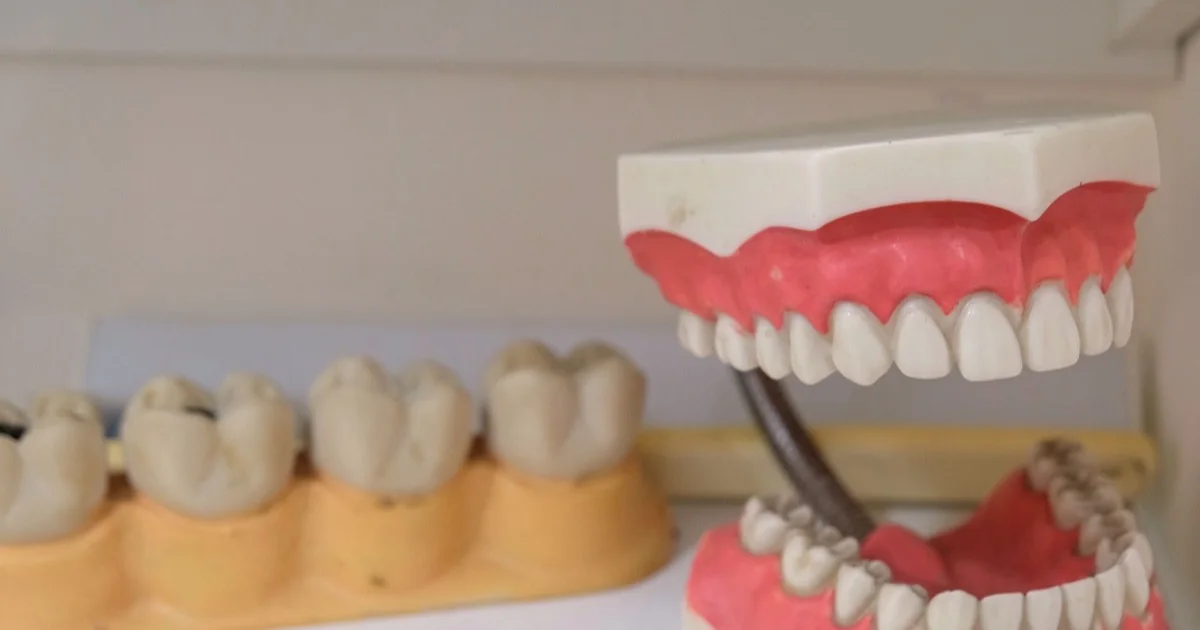
Your bite (occlusion) describes how your lower and upper teeth meet. For many years it was believed that a wrong bite was the main cause of jaw joint pain. Today the research speaks more cautiously: some associations are found between bite features and jaw joint problems (TMD), but a direct cause-and-effect relationship has not been proven. A jaw joint problem is a multifactorial condition — muscles, stress, clenching, joint structure and the bite all play a part together. That is why the bite should not be treated as the sole culprit, yet it should not be left out of the assessment either.
Key points
- Occlusion means the contact between the teeth when they close and slide against each other; it is divided into a static and a dynamic part.
- According to systematic reviews, out of nearly forty bite features only one or two are consistently associated with TMD, and even then as a co-occurring factor rather than a cause.
- TMD symptoms are reported more often in cases such as deep bite, crossbite and loss of back teeth, but these are observational studies and do not show causation.
- If there is pain, the first step is not to grind down teeth or replace a prosthesis — it is a standard clinical assessment such as DC/TMD.
- Treatment of the bite (orthodontics, prosthodontic work) is carried out only when there is a genuine bite problem, and in a planned way.
What is occlusion — in plain language
When you close your mouth, your teeth meet in a particular position. This is static occlusion. When you chew, or move your jaw forwards or sideways, the teeth glide over one another — this is called dynamic occlusion. Both are connected to the jaw joint, because the jaw is suspended at the joint on one side and rests on the teeth on the other.
Let us define a few terms in advance:
- Normal bite — the upper front teeth slightly overlap the lower front teeth, and the back teeth are in even contact.
- Deep bite — the upper front teeth overlap the lower teeth excessively.
- Crossbite — one or more upper teeth sit inside the lower teeth (the other way round).
- Open bite — when the teeth close, a gap remains between the front teeth.
- Premature contact — one tooth touches before the others and makes the jaw slide.
- Interference — the obstructing contact of a back tooth when the jaw moves sideways.
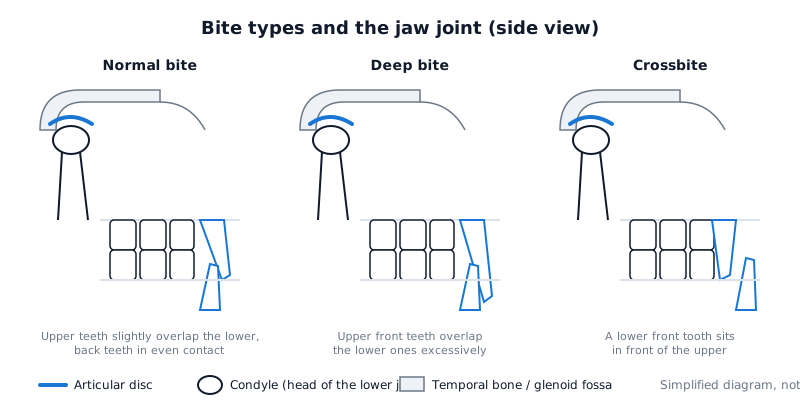 A simplified diagram of the three bite types; the joint (condyle, disc, fossa) is in the same place in each case — the difference lies in how the teeth meet.
What is a jaw joint problem (TMD)?
TMD is the general term for pain and functional disorders of the temporomandibular joint and the chewing muscles. Symptoms may include jaw pain, limited opening, sounds from the joint, and pain around the temple and ear. The international DC/TMD (Diagnostic Criteria for Temporomandibular Disorders) system assesses the problem along two axes: the first axis is the physical diagnosis (muscle pain — myalgia, joint pain — arthralgia, disc displacement), while the second axis measures the impact of pain on a person's life, along with stress and behavioural factors. In other words, the modern approach views TMD not only as a mechanical condition but also as a biopsychosocial one.
If you would like to learn about the symptoms in detail, see our article on the signs of a jaw joint problem; here the focus is only on the bite–joint relationship.
Does a bad bite cause TMD? What the research says
The answer to this question is not yes or no, but it depends. Let us look at the scientific picture from both sides.
The first side: evidence saying the link is weak
In 2017 Manfredini and colleagues published a systematic review bringing together 25 clinical studies. They examined nearly forty different bite features. The result: only two of these features — the slide from centric relation to maximum intercuspation (CR–MI slide) and mediotrusive interference (the obstructing contact of a back tooth when the jaw moves sideways) — differed in patients with TMD in the majority of single-variable analyses. In multivariable analyses, only mediotrusive interference remained. The authors particularly emphasise that this association does not mean cause and effect, and may even work the other way round — interference may be a consequence of TMD (changes in the muscles and joint subsequently alter how the teeth meet) rather than its cause. They recommend moving away from the old gnathological paradigm.
The second side: evidence saying there is a link, but not causation
A scoping review published in 2025 (29 studies) shows that TMD symptoms are reported more often in people with Class II and Class III bite anomalies, deep bite and crossbite. Loss of back teeth and a reduction in bite height (vertical dimension) also accompany the severity of TMD, particularly in older people. Yet the same authors write plainly: because most of these studies are observational, causation cannot be proven.
Another systematic review published in 2024 (21 studies) reaches a similar conclusion: different bite classes are related to joint morphology, tooth loss influences the frequency of TMD, and there is a correlation between bruxism (clenching/grinding) and TMD symptoms. At the same time, the authors note that psychological, behavioural and neurological factors are at least as important as the bite.
How can these two sides be reconciled?
A simple analogy: the bite is the quality of the road, while the muscles and the joint are the car. A small pothole in the road does not put every car out of action. But if the car is already under strain (stress, night-time clenching, inflammation, previous injury to the joint), that pothole makes itself felt far more. That is why:
- Many people with a bad bite never experience joint pain.
- Many people with joint pain have a textbook normal bite.
- In some people, though, the bite does play a part as one of a number of factors — especially when back support is lost, or when the jaw is forced to slide off a single tooth every time.
This balance has a practical consequence: grinding down healthy teeth or carrying out extensive prosthodontic work in order to fix pain attributed to the bite is not an evidence-based approach. But if the bite really is disturbed (for example, the back teeth have been lost and the jaw slides sideways at every closure), correcting this in a planned way can improve function.
Where does bruxism fit in?
Clenching and grinding are often confused with the question of the bite. In fact bruxism is muscle activity — it occurs during sleep or in the daytime and places a load on the chewing muscles, the teeth and the joint. In research, the correlation between bruxism and TMD symptoms is reported more consistently than that of bite anomalies. We have a separate article on the types, signs and management of bruxism: bruxism and teeth clenching. Here let us say only this: in a person with bruxism, fixing the bite contacts does not stop the clenching.
How does the dentist assess the bite and the joint?
In the clinic, assessment proceeds step by step. Not every patient needs every step.
- Conversation and history. Where the pain is, when it increases, whether the jaw feels tired in the morning, whether there is clenching, the level of stress, previous orthodontic and prosthodontic treatment.
- Clinical examination under DC/TMD. Measuring mouth opening, observing jaw movements, palpation (examination by hand) of the muscles and the joint, recording sounds from the joint. This makes it possible to reach a real diagnosis before saying the bite is wrong.
- Examination of the bite. Static contacts, premature contact, interference in lateral movement, whether back support is present, signs of wear on the teeth. Where necessary, digital scans and models mounted on an articulator.
- Functional recording. In some cases it is useful to record the path of condylar movement with a device — this is called axiography and is used particularly when planning extensive prosthodontic work.
- Imaging — only when indicated. CBCT if a structural change in the joint (arthritis, deformity) is suspected, MRI if a disc problem is suspected. We have explained when it is needed in our article on when a TMJ X-ray is needed.
This order matters because changes to the bite can be irreversible. Diagnosis first, then — if necessary — treatment.
What is done when there is a bite problem?
The approach depends on the type of problem:
| Situation | General approach |
|---|---|
| There is a bad bite but no joint pain | Treatment only for an aesthetic/functional indication; not in the name of TMD prevention |
| There is joint/muscle pain and the bite is normal | Conservative TMD treatment: information, exercises, and an occlusal splint if needed |
| Both pain and a genuine bite problem (loss of back support, deep bite) | Settle the pain first, then planned orthodontic or prosthodontic correction |
| Wear of multiple teeth, reduced vertical dimension | A staged full mouth plan; the bite is tested with a temporary restoration |
The cases in the last row are the subject of full mouth rehabilitation — there the bite is built at a new level and first tested with temporary crowns.
A note on orthodontic treatment: straightening the teeth sometimes distributes the bite load more evenly and makes chewing more comfortable. But orthodontics is planned in order to correct the bite, not to treat TMD. If there is pain, the pain is managed first. At our clinic this assessment is carried out by an orthodontist-gnathologist — the course of treatment is described on our TMJ and gnathology service page.
Practical conclusions for patients
- If a dentist tells you your bite is wrong and that is why your jaw hurts, ask two questions: how was this diagnosed, and is the treatment reversible?
- If grinding down healthy teeth (occlusal adjustment) is recommended as a treatment for pain, it is worth getting a second opinion.
- If your back teeth were extracted long ago and you feel jaw fatigue and wear on your front teeth, this is a case that deserves a proper assessment of the bite.
- If there is tension in the jaw muscles in the morning, the issue is most probably night-time clenching rather than the bite.
Frequently asked questions
If jaw pain develops after orthodontic treatment, is it due to the change in the bite? Because the teeth are moving during treatment, temporary changes in contact occur and the muscles may react to them. But if the pain persists, an examination under DC/TMD is needed — the cause may be stress, clenching or the condition of the joint itself.
If my bite is normal, can I still have jaw joint pain? Yes, and this is a common situation. Research does not find a specific bite anomaly in most people with TMD. Muscle load, night-time clenching, inflammation in the joint or the condition of the disc are more common sources of pain.
I have a deep bite — must it definitely be treated? If there is no pain, no functional disturbance, no wear of the front teeth and no damage to the gums, a deep bite on its own does not require treatment. The decision is made according to the symptoms and individual risks.
If one tooth touches before another (premature contact), does it need to be ground down? Sometimes a small correction reduces the discomfort — for example when a new filling or crown is left high. But extensive grinding for the purpose of treating pain is not supported by the evidence.
What examinations are there for assessing the bite? Clinical examination, checking the contacts with articulating paper, digital scanning, models on an articulator and, where necessary, recording condylar movements (axiography). Imaging shows the structure of the joint, not the bite.
Conclusion
There is a link between the bite and the jaw joint, but that link is not as simple as a bad bite equals joint pain. The scientific evidence recommends seeing the bite as one of many factors, finding the cause of the pain through a standard clinical assessment, and not rushing into irreversible treatment. A consultation with an orthodontist-gnathologist is the right first step for assessing your individual situation.
Sources
- Temporomandibular disorders and dental occlusion. A systematic review of association studies: end of an era? — Journal of Oral Rehabilitation, 2017 (Manfredini, Lombardo, Siciliani)
- Occlusion and Temporomandibular Disorders: A Scoping Review — Medicina (Kaunas), 2025 (Pascu et al.)
- Relationship Between Occlusal Factors and Temporomandibular Disorders: A Systematic Literature Review — Cureus, 2024 (Lekaviciute, Kriauciunas)
- Diagnostic Criteria for Temporomandibular Disorders (DC/TMD) for Clinical and Research Applications — Journal of Oral & Facial Pain and Headache, 2014 (Schiffman et al.)
This article is for general information only and does not replace an individual diagnosis, examination or treatment. Consult a doctor for a decision about your case.