

What is Air Flow cleaning and how does it differ from ordinary tartar removal?
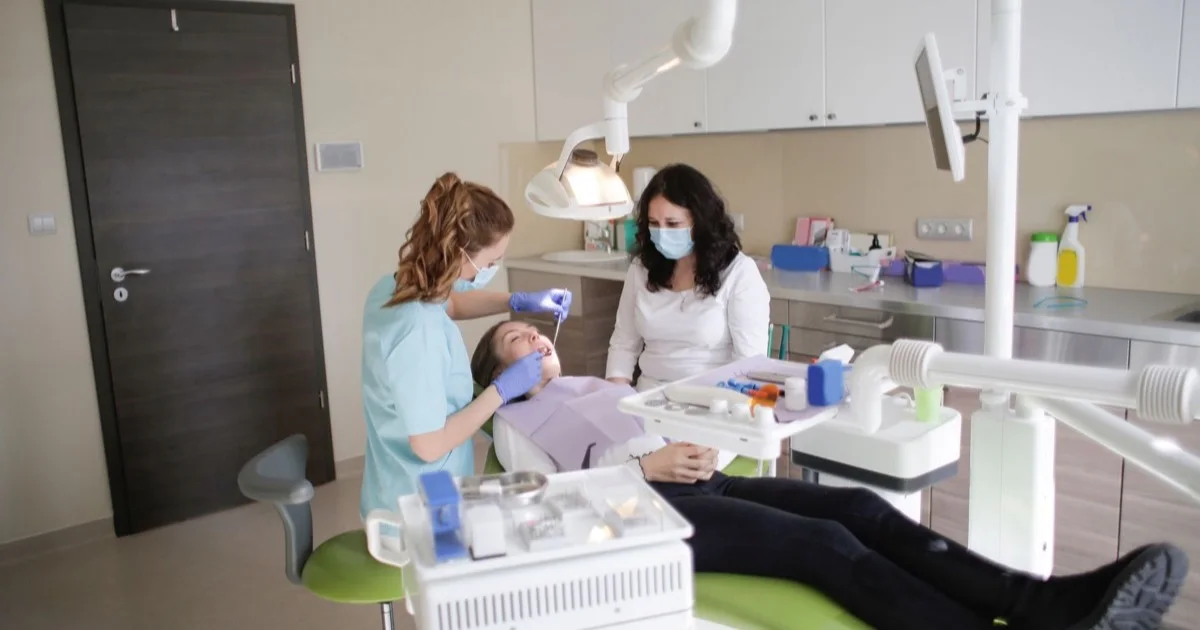
Air Flow is the removal of surface deposits and colour stains from the teeth using a controlled jet of air, water and very fine powder: tea, coffee and smoking marks are lifted off without any drilling of the enamel. It is not a method that dissolves tartar — hardened calculus is removed with an ultrasonic instrument, while Air Flow cleans soft deposits, pigment and hard-to-reach areas. In professional cleaning, these two steps usually work together.
How does Air Flow work?
Microscopic powder particles are sprayed onto the tooth surface from a special tip together with an air-and-water mixture. The jet detaches the pigment deposits and bacterial coating from the surface, while the water rinses the area at the same time. Modern systems use very fine, low-abrasive powders such as erythritol and glycine — these allow a gentler approach to the gum margin and even inside the pocket (in subgingival mode).
How does it differ from ultrasonic cleaning?
| Criterion | Ultrasonic cleaning | Air Flow |
|---|---|---|
| Target | Hardened tartar | Soft deposits, pigment stains, biofilm |
| Principle | Detaching calculus by vibration | Cleaning the surface with an air-water-powder jet |
| Contact | The instrument touches the surface | Contact-free jet |
| Typical area | Areas where calculus builds up | Colour stains, between the teeth, around braces/implants |
The two are not rivals — they are complementary steps of comprehensive professional cleaning: first the calculus is removed, then the surface is cleaned and polished with Air Flow.
Does it damage the enamel?
With the right choice of powder and technique — no. Studies show that air polishing performed with fine erythritol/glycine powders is less abrasive to enamel than classic polishing pastes and coarse powders; reviews examining its effect on restorations (fillings, crowns) also consider the method acceptable when used correctly. Coarse powder, a wrong angle or excessively long application can, however, leave a mark, as with any mechanical method — which is why the procedure is carried out by a professional.
Who benefits from it most?
- Patients with tea, coffee or smoking stains;
- People wearing braces — to clean the areas a toothbrush cannot reach;
- In care around implants — with gentle settings that do not scratch the metal surface;
- Those with gum sensitivity — a contact-free jet is often more comfortable.
Please note: Air Flow is not a whitening procedure — it restores the tooth's own colour (removes stains), it does not lighten the shade of the enamel. For those who want to change the colour itself, there is a separate teeth whitening service.
How is Air Flow used at Smile by Dr. Bakhtiyar?
At our clinic in Baku, Air Flow is a standard step of comprehensive professional oral hygiene: after ultrasonic tartar removal, the surfaces are treated with the air-powder jet and polished. The procedure is performed by the dentists responsible for the hygiene department; the price of comprehensive cleaning is 160 AZN. Together with our other equipment: Technology page.
Frequently asked questions
Is Air Flow painful? Usually not — the jet is contact-free. Brief sensations are possible in sensitive neck areas of the teeth; in that case the settings are adjusted.
How long does the procedure take? As part of comprehensive cleaning, the Air Flow stage usually adds 10–20 minutes; the overall session depends on the amount of work.
How often can it be done? Usually every 6 months, together with professional cleaning. For those who smoke or drink a lot of tea and coffee, the dentist may suggest an individual interval.
Does Air Flow remove my tartar? No, hardened calculus is removed with an ultrasonic instrument. Air Flow is for soft deposits and stains — the two steps together give the complete result.
Is it harmful to fillings and crowns? With the right powder and technique it is an acceptable method for restorations; because coarse settings can dull the surface, the procedure is carried out under professional supervision.
Clinical note: This article is for general information only and does not replace individual advice from your dentist. To arrange professional cleaning, book an appointment.
Sources
- Clinical effects of erythritol, glycine and trehalose as subgingival air-polishing powders on non-surgical periodontal therapy — Frontiers in Physiology, 2025
- Do ultrasonic instrumentation and air polishing procedures adversely affect dental restorations? — Evidence-Based Dentistry, 2025
- The Effect of Mechanical Instrumentation on Dental Hard Tissue In Vitro: A Systematic Review — International Journal of Dental Hygiene, 2026
This article is for general information only and does not replace an individual diagnosis, examination or treatment. Consult a doctor for a decision about your case.