

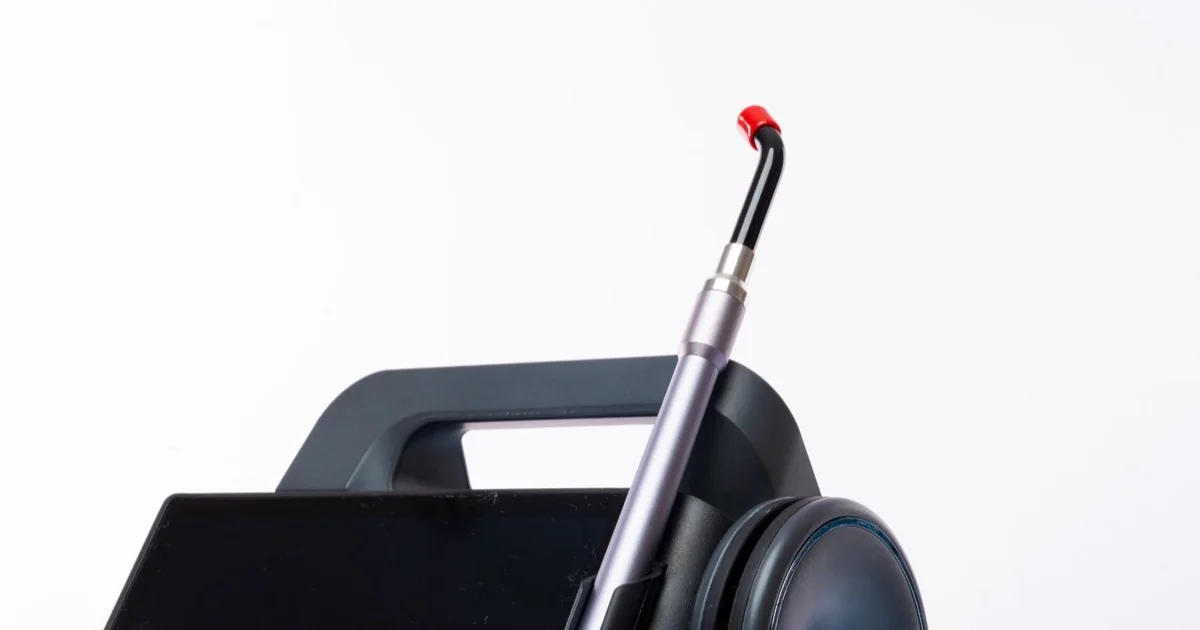
A diode laser is a dental laser that works with soft tissues: it allows gum incisions and contouring to be carried out without bleeding and often without sutures, and provides additional disinfection of gum pockets and root canals. It does not replace conventional instruments or classic treatment — it is added to them at selected stages. At the Smile by Dr. Bakhtiyar clinic we use the Lasotronix SMART M (Poland, EU) multi-wavelength diode laser.
What is a diode laser?
A diode laser is a device that produces a focused beam of light at a specific wavelength; in dental models the beam is delivered directly to the working area through a thin fibre tip. The beam is mainly absorbed by soft tissue and bacteria — this is why the main field of the diode laser is the gums and other soft tissues, while other instruments are used for enamel and bone. According to the manufacturer, the Lasotronix SMART M in our clinic works with several wavelengths in the 405–1064 nm range.
How is it used?
- In gum surgery. Small incisions, correction of the gum contour (for example, before crowns and veneers), frenulum plasty — with a laser these procedures are usually carried out without bleeding and often without sutures, because the beam seals small blood vessels where it cuts.
- For disinfecting gum pockets. In addition to professional cleaning (SRP), treating the inner surface of the pocket with the laser aims to reduce the bacterial load; more details: bleeding gums and gingivitis.
- In root canal treatment. After mechanical cleaning and irrigating solutions, laser-activated disinfection of the canal may be applied as an additional step.
- For treating aphthous ulcers and minor mucosal lesions — for symptomatic relief.
What does the scientific evidence say?
The balanced picture is as follows. A meta-analysis covering 30 randomised studies on adding a diode laser to SRP in periodontitis showed a statistically significant additional improvement in pocket depth and other clinical parameters with some usage protocols — but the effect depends on the method of use and the number of sessions, and is not the same across all protocols. In endodontics, laser-activated disinfection is being studied as one of the components of antibiotic-free treatment protocols for apical inflammation. Clinical reviews of gum correction with a diode laser in the aesthetic zone describe the indications and limitations of the method.
An honest note: the laser is not a miracle instrument. It does not take the place of an accurate diagnosis, high-quality mechanical cleaning and a good protocol — in selected cases it adds value on top of them.
What does the patient gain?
- A bleeding-free working area — small gum procedures usually no longer require sutures.
- More comfortable healing — many patients describe the area as less bothersome after laser treatment; healing time is individual.
- Disinfection without increasing the antibiotic load — local bacterial control is the goal.
- In children and sensitive patients — working without vibration makes some procedures psychologically easier.
Is it safe?
When used with the correct settings and by a trained dentist, the diode laser is an accepted instrument in everyday dental practice; protective eyewear is worn during the procedure. Like every method, it is applied according to indications — the dentist determines at which stage the laser is useful.
How is the diode laser used at Smile by Dr. Bakhtiyar?
At our clinic in Baku, the Lasotronix SMART M diode laser is used in gum treatment for pocket disinfection and minor gum corrections, in root canal treatment as an additional disinfection step, and for shaping the gum contour before prosthodontic and veneer work. The laser works within the same protocol as the dental microscope and rubber dam isolation; the full list of equipment is on the Technology page.
Frequently asked questions
Is laser treatment painful? Small procedures are often carried out with local anaesthesia or with minimal anaesthesia. The fact that the laser works without bleeding can help reduce discomfort after the procedure; sensation is individual.
Does the laser completely replace conventional surgical instruments? No. The diode laser offers advantages in part of soft tissue work; the specific clinical situation determines which instrument will be used.
My gums are bleeding — will a laser help? The cause of the bleeding must be identified first: the main treatment is professional cleaning and hygiene, while the laser is an additional step in selected cases. No decision is made without an examination.
Does the laser affect tooth enamel? The diode laser is a soft tissue laser — it is not used for preparing enamel or removing tooth decay.
Is it used in children? Yes, it can be used in selected soft tissue procedures (for example, frenulum plasty); the decision is made according to the child's condition.
Clinical note: This article is for general information and does not replace individual advice from your dentist. To discuss the place of the laser in your treatment plan, book an appointment.
Sources
- Clinical effectiveness of adjunctive diode laser on scaling and root planing in the treatment of periodontitis: is there an optimal combination of usage mode and application regimen? A systematic review and meta-analysis — Lasers in Medical Science, 2022
- Prognosis of Periapical Lesions Treated by Activated Disinfection (PUI, Laser) Without the Use of Systemic Antibiotics — Journal of Clinical Medicine, 2026
- Diode laser gingivectomy and gingivoplasty in the anterior esthetic zone: a clinical review — Quintessence International, 2026
- Lasotronix — dental diode lasers — Lasotronix (istehsalçı), Polşa
This article is for general information only and does not replace an individual diagnosis, examination or treatment. Consult a doctor for a decision about your case.