

Does tooth wear cause TMJ problems? What the evidence says
No direct cause-and-effect link between tooth wear and TMJ problems (TMD) has been proven. Systematic reviews show that in some cases wear and joint or muscle complaints occur together, but this is at the level of association: behind the two there is often a shared factor — clenching or grinding (bruxism). Wear of the front teeth has not been identified as a major risk factor for TMD. If you have worn teeth, the main task is to find the cause of the wear and monitor its progression; if you have joint complaints, a separate clinical examination is needed.
Key points
- There are three main types of wear: friction (attrition), acid (erosion) and mechanical (abrasion); they often occur together.
- Studies find a weak and inconsistent link between wear and TMD; the degree of wear does not predict joint pain.
- Bruxism is a shared factor that can contribute to both; however, wear may indicate past bruxism rather than current activity.
- A TMD diagnosis is based on pain, muscle and joint examination (DC/TMD), not on how the teeth look.
- Correcting the bite in worn teeth is not an evidence-based treatment for a joint problem; the indication for restoration is a separate matter.
What is tooth wear and what types are there?
Tooth wear is the loss of enamel and dentin without tooth decay. A certain amount of wear with age is normal — physiological wear. When it exceeds what would be expected for the person's age and function, or when it causes complaints, it is considered pathological. The European consensus statement (Loomans et al., 2017) draws exactly this distinction between the two situations and, even in severe wear, proposes diagnosis, identification of the cause and preventive measures as the first step.
There are three main mechanisms:
- Attrition — teeth rubbing against each other. Flat, shiny areas appear on the chewing surfaces and on the incisal edges of the front teeth; the worn areas on the upper and lower teeth match one another. Night-time or daytime clenching and grinding is the main cause.
- Erosion — acid dissolving the enamel. Fizzy drinks, sour fruit, reflux of stomach acid. The surfaces become pitted and the inner side of the tooth looks soft and hollowed. This is covered in detail in the article on enamel erosion.
- Abrasion — mechanical wear from a foreign object: a hard brush, abrasive toothpaste, the habit of biting nails or a pen. Notches at the necks of the teeth are typical.
In practice these overlap: acid softens the enamel, and clenching then removes the softened enamel more quickly. That is why the dentist reads the picture of the wear: which surfaces, which pattern, at what speed.
Wear and the TMJ: what evidence is there?
Most patients imagine a chain like this: the teeth wear down → the bite collapses → the joint is compressed → pain. Logical as this chain may seem, the research does not confirm it.
Review of attrition and function. A systematic review published in Clinical Oral Implants Research in 2007 (van 't Spijker et al.) analysed 33 studies from 1980–2006 on the relationship between attrition, occlusal factors and chewing function. The conclusion: although some correlations were found between attrition and the position of the front teeth, there is no sound evidence to recommend any occlusion-based treatment protocol; nor was any study found showing that the absence of posterior supporting teeth necessarily leads to increased wear.
Review of bruxism and TMD. The 2010 systematic review by Manfredini and Lobbezoo (46 studies, 1998–2008) looked at the link between bruxism and TMD. Two important conclusions: a diagnosis of bruxism based on self-report or clinical examination showed a positive association with TMD pain, but these studies carry a risk of bias; when bruxism was measured with more precise, instrumental methods (for example, sleep recording), the association became considerably weaker. And directly relevant to our question: wear of the front teeth was not found to be a major risk factor for TMD.
Diagnostic criteria. The international DC/TMD criteria (Schiffman et al., 2014) base the diagnosis of TMD on the pain history, palpation of the muscles and joint, the range of opening and joint sounds; the document states that occlusal tests contribute nothing to the accuracy of any TMD diagnosis. In other words, seeing worn teeth is not grounds for diagnosing TMD.
Putting these three sources together, the picture is clear: wear and TMD are sometimes seen together, but neither has been proven to be the cause of the other. What is more, many people with severe wear have no joint complaints at all, while those with joint pain often have completely intact teeth.
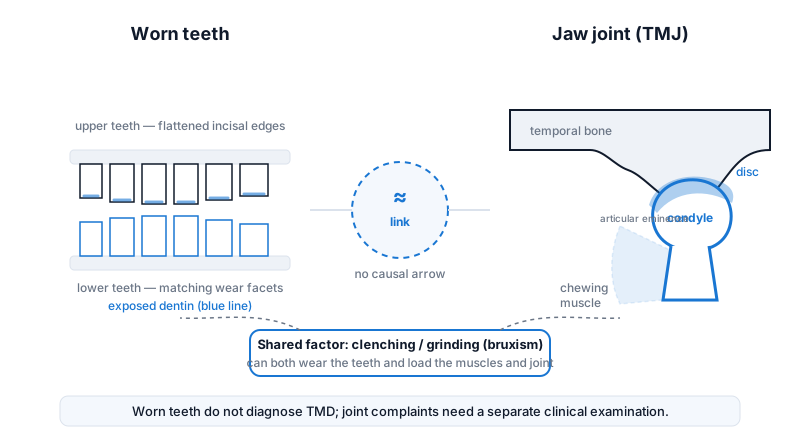 Worn teeth and the TMJ can appear in the same patient, but research does not confirm one as the cause of the other. The shared factor is often teeth clenching (bruxism) — it can both wear the teeth down and increase the load on the muscles and joint.
Bruxism: a shared factor, but not a simple one
Clenching and grinding can be the source of both wear (attrition) and muscle and joint load. It is therefore not surprising that wear and TMD are seen together — but that does not mean wear causes TMD; both are different consequences of the same behaviour.
The international bruxism consensus (Lobbezoo et al., 2018) clarifies several important points:
- In a healthy person bruxism is not a disease but a behaviour; it can be a risk factor for some outcomes and even a protective factor for others.
- The diagnosis is made in stages: possible (patient report only), probable (signs on clinical examination), definite (instrumental recording).
- Most importantly: attrition may point to bruxism (particularly sleep bruxism), but it does not rule out past bruxism — that is, the teeth may have worn down years ago and there may be no clenching now. Worn teeth do not mean you are clenching at present.
The practical conclusion: when the dentist sees wear, they investigate bruxism, but they do not tell you, based on how the teeth look, that you clench at night and that this is why your joint hurts. The types, signs and management of bruxism are explained separately in the article on bruxism and teeth clenching.
What about vertical dimension? Does wear compress the joint?
The short answer to this question: it has not been proven. When teeth wear down slowly, the jaw often compensates for the loss and facial height is preserved; and even when the height does decrease, the available reviews find no strong indication that this creates a joint problem. What vertical dimension is, how it is measured and when it is increased is explained in the article what is vertical dimension; the general relationship between occlusal features and TMD is the subject of the article bite and the TMJ. One sentence is enough here: the bite and the height matter for extensive restorative planning, but an irreversible change to the bite in order to fix joint pain is not an evidence-based treatment.
When is an assessment needed?
Since wear and the joint are two separate questions, it makes sense to seek advice for two separate reasons.
Because of wear — if these signs are present:
- The teeth have visibly shortened, the incisal edges have flattened or become translucent.
- Sensitivity to cold and heat has increased (dentin is exposed).
- Fillings stand high above the tooth — the enamel around them has worn away.
- The wear has progressed noticeably fast over the past 1–2 years (comparing with older photographs is helpful).
- There is a history of reflux, frequent vomiting or a very acidic diet.
In this case the dentist determines the type and cause of the wear, records its degree (photographs, models or a scan), prescribes preventive measures (acid control, fluoride, a night guard) and monitors progression. The European consensus recommends delaying restoration as long as possible even in severe wear, and, when it is needed, using a conservative, minimally invasive adhesive approach.
Because of the joint — if these signs are present:
- Pain in the temporomandibular joint or the chewing muscles, particularly in the morning or when chewing.
- Opening of the mouth is limited, or the jaw deviates on opening.
- Newly appearing joint sounds that are painful or accompanied by locking.
- Pain in the head, ear or temple region that increases with jaw movement.
The signs of TMD and when urgent advice is needed are listed in the article on signs of a TMJ problem. At the clinic this assessment is carried out within the TMJ and gnathology service, with a clinical examination in line with DC/TMD principles; imaging is added only when there is a clinical question.
If both are present at the same time, the order is as follows: first pain and function (reversible methods — information, exercises and, if needed, a splint), then restoration of the wear is planned once the joint is settled. Starting extensive restorative work on a painful joint is not advised, because the jaw position is not stable.
Practical advice for patients
- If your teeth have worn down, the first question should be what has caused it, not whether your joint has been damaged.
- If you have a clenching habit, a night guard protects the teeth; if you also have joint pain, that is assessed separately — a guard is not joint treatment for everyone.
- Reducing the source of acid (fizzy drinks, lemon water, treatment of reflux) is the main way to stop erosion; no restoration lasts long while the acid continues.
- The statement that worn teeth are destroying your joint and that you urgently need a full-mouth restoration should be treated with caution: the indication for restoration is based on the degree of wear, sensitivity, aesthetics and function, not on rescuing the joint.
Frequently asked questions
My teeth are very worn, but my joint does not hurt. Will I develop TMD in the future? According to the current evidence, the degree of wear does not predict future joint pain. However, identifying and controlling the cause of the wear (particularly bruxism and acid) is important in order to protect your teeth.
My joint hurts and my teeth are flat — are these connected? It may be that teeth clenching lies behind both. But the cause of the pain is found through clinical examination; flat teeth are not a diagnosis. Sometimes the pain comes from the muscles, sometimes from the joint itself, and sometimes from an entirely different cause.
If I wear a night guard, will the wear stop? For attrition (friction), a guard separates the teeth from each other and protects them. For erosion (acid), a guard alone is not enough — the source of the acid has to be removed.
If I restore my worn teeth, will my joint get better? There is no reliable evidence promising such an outcome. Restoration is carried out for the function, sensitivity and appearance of the teeth; a joint complaint requires a separate treatment plan.
Is tooth wear in children also a concern for the TMJ? A certain amount of wear on baby teeth is often seen and is usually not related to a joint problem. If there is rapid wear or signs of acid, it is worth investigating the cause with a paediatric dentist.
Conclusion
There is a link between tooth wear and TMJ problems, but it is at the level of association rather than cause and effect; the shared factor is often teeth clenching. Worn teeth neither establish a diagnosis of TMD nor predict future joint pain. With wear, the main work is to find the cause, protect and monitor; with a joint complaint, clinical examination and reversible methods come first. To have your individual situation assessed, you can ask during your consultation for both your teeth and your joint to be checked separately.
Sources
- Severe Tooth Wear: European Consensus Statement on Management Guidelines — Journal of Adhesive Dentistry, 2017 (Loomans et al.)
- Attrition, occlusion, (dys)function, and intervention: a systematic review — Clinical Oral Implants Research, 2007 (van 't Spijker, Kreulen, Creugers)
- Relationship between bruxism and temporomandibular disorders: a systematic review of literature from 1998 to 2008 — Oral Surgery, Oral Medicine, Oral Pathology, Oral Radiology and Endodontology, 2010 (Manfredini, Lobbezoo)
- International consensus on the assessment of bruxism: Report of a work in progress — Journal of Oral Rehabilitation, 2018 (Lobbezoo et al.)
- Diagnostic Criteria for Temporomandibular Disorders (DC/TMD) for Clinical and Research Applications — Journal of Oral & Facial Pain and Headache, 2014 (Schiffman et al.)
This article is for general information only and does not replace an individual diagnosis, examination or treatment. Consult a doctor for a decision about your case.