

After a Tooth Extraction: The First 24 Hours and the Risk of Dry Socket
The most important thing after a tooth extraction is protecting the blood clot that forms in the socket — the clot covers the wound, protects the bone and lays the foundation for healing. During the first 24 hours you should not spit, rinse, drink through a straw, smoke or touch the socket: these simple rules prevent the clot from being dislodged and prevent the painful complication known as dry socket. Painkillers only as prescribed by your dentist, food soft and lukewarm, and your other teeth brushed as usual from day one. Pain that increases on days 2–4, a bad taste, continuing bleeding or a fever are reasons to contact the clinic without delay.
What does the research say? The NHS healing advice recommends avoiding rinsing, spitting, hot drinks, alcohol and smoking during the first 24 hours, and from the following day rinsing gently with warm salt water — the rules in this article are based on those principles. A 2022 Cochrane review on the treatment of dry socket (alveolar osteitis) shows that the evidence for local treatments is limited — which means the best strategy is prevention. A 2017 systematic review and meta-analysis confirms that applying chlorhexidine gel to the socket after the extraction of lower wisdom teeth reduces the risk of dry socket. A 2023 evidence review once again confirms the link between smoking and dry socket: the risk is considerably higher in smokers.
Related: oral surgery · dry socket (alveolar osteitis): how to recognise it · wisdom tooth extraction
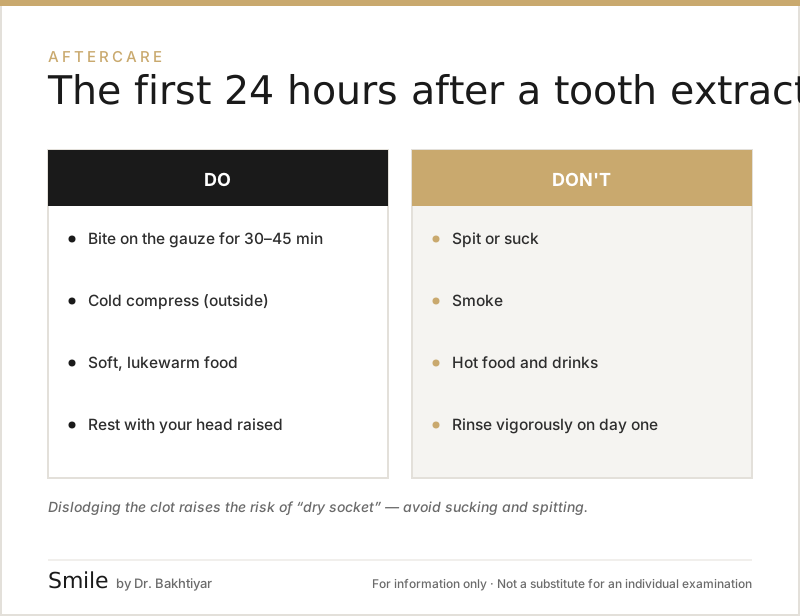
The first 24 hours after a tooth extraction: the dos and the don'ts.
The first hours: managing the bleeding
After the extraction, the dentist places a sterile gauze pad over the socket:
- Bite on the gauze with light but steady pressure for 30–45 minutes; do not talk and do not take the gauze out to check it.
- If the bleeding continues, repeat with a clean gauze pad for another 30 minutes.
- In the first few hours it is normal for your saliva to look pink — this is not bleeding, but oozing from the edge of the clot.
- Do not spit out the saliva that collects in your mouth; swallow it or let it drain gently over your lip: the negative pressure created when spitting dislodges the clot.
Managing swelling and pain
- The anaesthetic lasts 2–4 hours; during this time be careful not to bite your lip or cheek.
- Pain is easier to manage if you take the painkiller exactly as your dentist has prescribed, before the anaesthetic has fully worn off. Products containing aspirin can increase bleeding — do not use them unless your dentist tells you otherwise.
- On the first day, a cold compress on the outside of the face (15 minutes on, 15 minutes off) reduces swelling; from the second day cold is no longer needed.
- Keep your head slightly raised when lying down; avoid heavy physical exertion for 1–2 days.
Eating
- On the first day, soft and lukewarm food: purée, yoghurt, warm soup, omelette, banana.
- Avoid hot, hard, spicy, acidic and small-grained foods (sesame, nuts, strawberry seeds) — the small particles can fall into the socket.
- Chew on the opposite side; do not stop eating altogether — your body needs energy to heal.
- Do not drink through a straw and do not smoke — both dislodge the clot through the sucking action. Alcohol is not allowed for the first 24–48 hours.
Oral hygiene
- Day one: brush your other teeth gently without touching the socket; no rinsing and no mouthwash.
- From the second day: half a teaspoon of salt in a glass of warm water — move it slowly around your mouth and let it drain out without rinsing vigorously, 3–4 times a day, especially after meals. If your dentist has prescribed chlorhexidine, follow their instructions.
- From day 3–4, start cleaning the teeth next to the socket with a very soft brush.
What is dry socket (alveolar osteitis)?
Dry socket is exposure of the bone caused by the blood clot being lost too early or never forming at all. It usually begins 2–4 days after the extraction and is recognised by pain that becomes stronger at the very time it should be easing:
- A dull pain that steadily increases and spreads to the ear and temple;
- A bad taste and odour in the mouth;
- A greyish-white bone surface visible in the socket instead of a clot.
Risk factors: smoking, sucking actions, vigorous rinsing, poking at the clot, difficult extractions (especially of lower wisdom teeth), hormonal contraceptives and previous infection. Dry socket is not dangerous, but it is very painful and takes 1–2 weeks to settle on its own; once the dentist has irrigated the socket and placed a medicated dressing, the pain usually eases within a few hours. Read more: dry socket (alveolar osteitis).
What is normal, and when should you contact your dentist?
| Normal | Reason to get in touch |
|---|---|
| Pink saliva in the first few hours | Bright red active bleeding still present an hour after using gauze |
| Pain and swelling that ease over the first 2 days | Pain that increases on days 2–4, a bad taste |
| Slight bruising on the cheek | Fever, pus, a bad odour in the mouth |
| A few days of discomfort when chewing | Swelling that makes swallowing or breathing difficult (urgent) |
| Numbness for 2–4 hours after the anaesthetic | Numbness lasting more than 24 hours |
The socket takes 1–2 weeks to heal fully, and the bone takes several months to rebuild. For what to replace the extracted tooth with and when: what to put in place of an extracted tooth.
Frequently asked questions (FAQ)
When can I eat after a tooth extraction? Once the anaesthetic has worn off — soft, lukewarm food. On the first day avoid hot, hard and small-grained foods as well as straws; chew on the opposite side.
How do I prevent dry socket? During the first 24 hours do not spit, do not rinse, do not drink through a straw, do not smoke and do not touch the socket. After difficult extractions your dentist may also prescribe a chlorhexidine gel or mouthwash — research shows that this reduces the risk.
How much bleeding is normal after an extraction? Pink saliva is normal for a few hours. Bright red bleeding that does not respond to 30–45 minutes of pressure with gauze, or bleeding that starts again after 24 hours, needs to be checked by a dentist.
When can I brush my teeth? Brush your other teeth gently from day one; approach the area around the socket carefully from day 3–4. From the second day, gentle rinsing with warm salt water is recommended.
When can I smoke? The later the better — at least 72 hours. Smoking increases the risk of dry socket and slows healing; an extraction is a good opportunity to stop smoking altogether.
Sources
- Wisdom tooth removal — Recovery — NHS (UK National Health Service)
- Local interventions for the management of alveolar osteitis (dry socket) — Cochrane Database of Systematic Reviews, 2022
- The efficacy of chlorhexidine gel in the prevention of alveolar osteitis after mandibular third molar extraction: a systematic review and meta-analysis — BMC Oral Health, 2017
- Further evidence confirms the association between smoking and dry socket: a motivational opportunity for tobacco cessation — Evidence-Based Dentistry, 2023
This article is for general information only and does not replace an individual diagnosis, examination or treatment. Consult a doctor for a decision about your case.