

Denture (Removable Plate) vs Implant: Which Should You Choose?
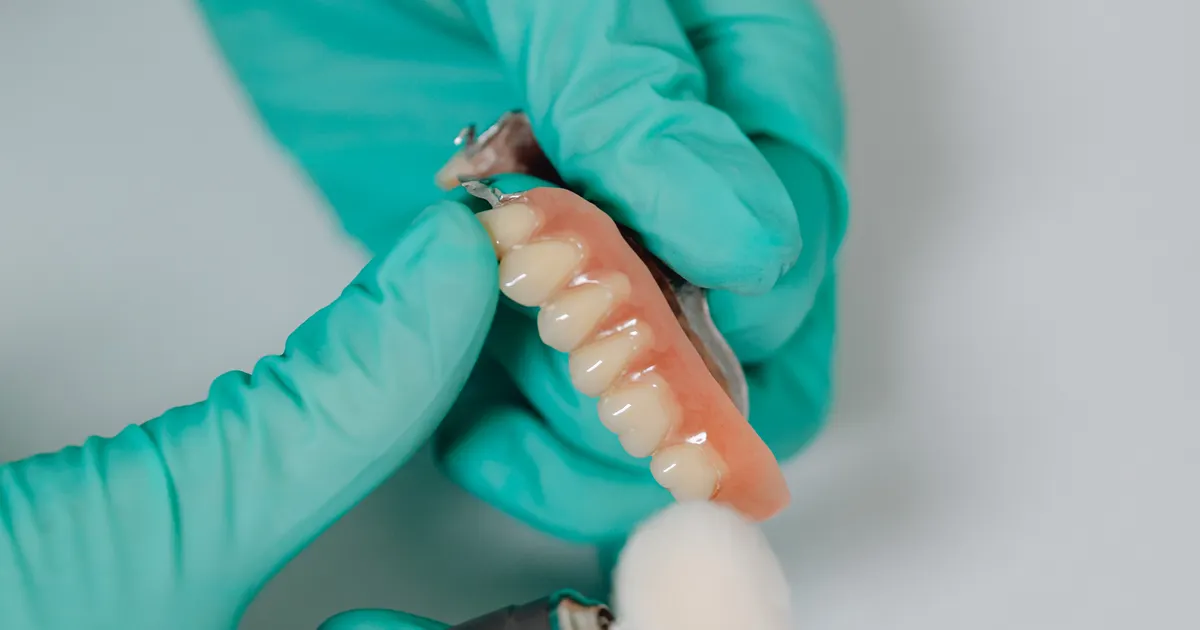
A removable denture (plate) and a dental implant are two different ways of restoring missing teeth: a denture is a removable solution that sits on the gums, while an implant is an artificial root placed into the jawbone that stays fixed in place. A denture is usually made in a shorter time and requires less surgery; an implant feels more stable and transfers load to the bone. Which one suits you depends on the condition of the bone, the number of missing teeth, general health and personal expectations.
What does the research say? For a fully edentulous lower jaw, a removable denture supported by two implants was accepted as the ‘first-choice standard’ in the 2002 McGill consensus; systematic reviews from 2025–2026 show that implant-supported dentures improve chewing comfort and patient satisfaction compared with conventional dentures, although the choice remains individual and depends on bone volume, general health and budget. It has also been documented in a systematic review that the jawbone changes most in the first months after extraction — this is the main reason not to delay a decision about a denture. Related: Prosthodontic treatment · Dental implants · What should replace an extracted tooth?.
What is a denture (plate)?
A denture is a removable appliance that replaces missing teeth by resting on the gums and the remaining teeth. A complete denture is used when all teeth have been lost, and a partial denture when some teeth remain. Dentures usually do not require surgery and are made in a relatively short time.
What is a dental implant?
An implant is a titanium-based artificial root placed into the jawbone to replace the root of a missing tooth. Once it has fused with the bone (osseointegration), a crown, bridge or fixed prosthesis is attached to it. An implant stays fixed in place, is not removed, and transfers chewing load to the bone.
Key differences
| Criterion | Denture (plate) | Implant |
|---|---|---|
| Stability | Removable | Fixed (not removed) |
| Surgery | Usually not required | It is a surgical procedure |
| Load on bone | Not transferred directly | Transferred and supported |
| Time to make | Usually shorter | Longer (time needed for integration) |
| Care | Removed and cleaned daily | Brushed like a natural tooth |
| Suitability | Possible in a wide range of cases | Sufficient bone is required |
This table is general guidance; the option suited to a specific case is determined through an individual examination.
Which should you choose?
The main factors influencing the choice:
- Number of missing teeth: a few teeth, or the whole jaw?
- Volume of jawbone: enough bone is needed for an implant; if there is not enough, bone grafting may be considered.
- General health: some conditions and smoking can affect surgical healing.
- Time and budget expectations: a denture is usually made faster and with less intervention.
- Comfort expectations: an implant may suit those who want a fixed solution, while a denture may suit those who want a flexible and less invasive one.
In some cases the two approaches are combined — for example, a denture that sits on implants (an implant-supported denture) can provide greater stability.
Points to keep in mind
- It can take time to get used to a denture, and it may need adjusting from time to time.
- An implant is a surgical procedure; suitability is determined after 3D imaging (CBCT).
- The long-term outcome of both solutions depends on proper hygiene and regular check-ups.
- No prosthodontic or surgical procedure comes with a guaranteed result.
Questions and answers (FAQ)
Is an implant always better than a denture? No. Although an implant feels more stable and transfers load to the bone, every case is different. The number of missing teeth, the condition of the bone and general health determine the choice. In some cases a denture may be more suitable.
Is it possible to move from a denture to an implant? Yes, in many cases it is possible, but this depends on bone volume. Since long-term denture use can be accompanied by bone loss, suitability is assessed with CBCT.
Are dentures comfortable? Modern dentures are functional, but as they are not a fixed solution they may require a period of adaptation at first. Careful fabrication and adjustment increase comfort.
What is an implant-supported denture? This is a type of denture fixed onto several implants, which stays more stable. It may be considered for patients with complete tooth loss who want greater stability.
Clinical note: This article is for general information and does not replace individual advice from your dentist. To discuss the options for restoring missing teeth, book an appointment.
Sources: Peer-reviewed dental literature on prosthodontics and implantology. Clinical content is based on Dr. Bakhtiyar's experience.
Sources
- The McGill consensus statement on overdentures. Mandibular two-implant overdentures as first choice standard of care for edentulous patients — International Journal of Oral & Maxillofacial Implants, 2002
- Are patient-reported outcomes improved by implant-assisted maxillary prostheses compared to conventional maxillary dentures? A systematic review — Journal of Dentistry, 2025
- Choosing Between Fixed and Removable Prosthetic Modalities for Completely Edentulous Patients: A Systematic Review — Cureus, 2026
- A systematic review of post-extractional alveolar hard and soft tissue dimensional changes in humans — Clinical Oral Implants Research, 2012
This article is for general information only and does not replace an individual diagnosis, examination or treatment. Consult a doctor for a decision about your case.