

SDI Jaw Tracker: why is a digital recording of jaw movement needed?
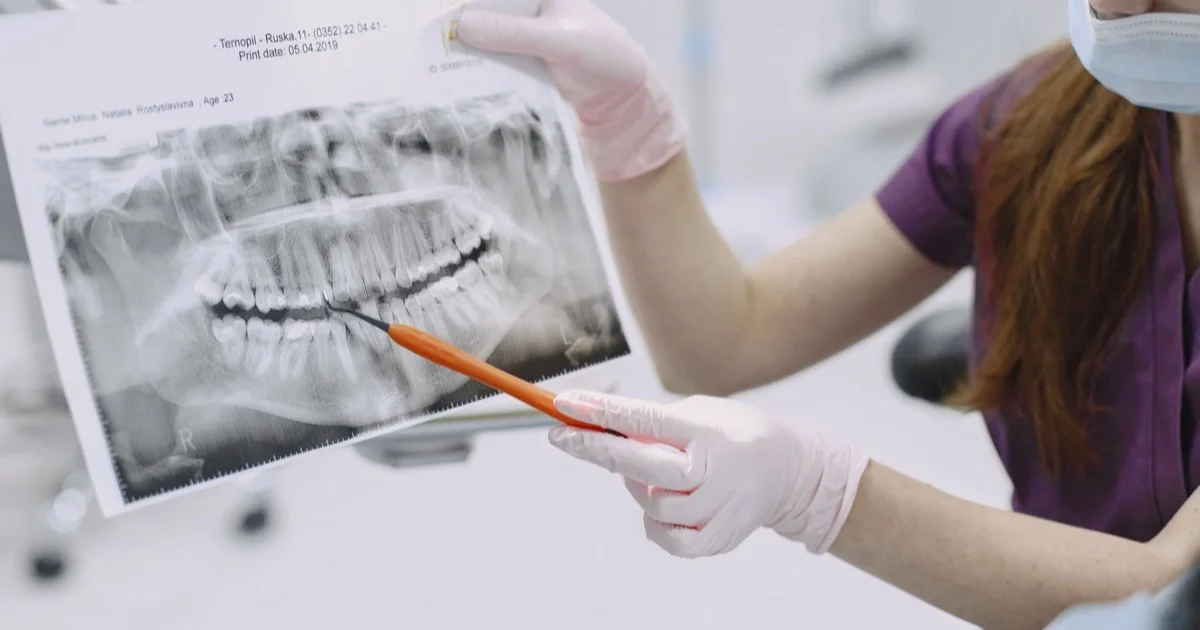
SDI Jaw Tracker is a measuring device that digitally records the movement path of the lower jaw: it shows the real path of the jaw on a computer during opening and closing of the mouth, as well as during forward and side movements. These recordings are used as a source of individual parameters in the planning of occlusal splints, prostheses and the bite. The device involves no radiation and does not replace a clinical examination — it complements it with measurable data.
What is SDI Jaw Tracker?
This is the movement-recording module of the functional diagnostic ecosystem developed by the Swiss company SDI Matrix. According to the manufacturer, the system records the dynamic parameters of the lower jaw and transfers this data to the planning software (SDI Studio) and to the laboratory. Put simply: just as a scan shows the static shape of the teeth, the Jaw Tracker shows the movement of the jaw.
In the scientific literature, this class of device is called jaw motion tracking; current reviews describe their supporting role in prosthodontic, occlusal and functional assessment work.
What does it measure and how is it carried out?
The procedure is painless and involves no radiation. Small recording elements are attached to the patient, and then, following the dentist's instructions, ordinary movements are performed: opening the mouth, a chewing movement, and moving the jaw forward and to the sides. During this, the system stores as a digital record:
- the opening-closing trajectory and its symmetry;
- the path of condylar (joint head) movement;
- the amplitude of the movements and any possible deviations
The result appears on the screen in the form of curves and is archived for before/after comparison during treatment.
What is this data useful for?
- Assessment of TMJ problems — a measurable movement record is added to the clinical examination of complaints (sounds, clicking, limited opening).
- Planning and monitoring of splint treatment — the effect of the appliance can also be assessed by comparing recordings, not just by how it feels.
- Setting up the bite — centric relation and individual movement parameters are transferred to the design of prostheses and full-mouth rehabilitation; the virtual articulator can work with the recordings of your own jaw rather than standard average figures.
- Restoration planning in cases of bruxism and wear — when the movement paths are known, the shape of new restorations is adapted to function.
We have written separately about the classic on paper method of recording movement: what is axiography? — SDI Jaw Tracker is the digital continuation of that same principle.
What it does NOT do: honest limits
It is important to state this openly:
- It does not make a diagnosis. According to the international DC/TMD criteria, the diagnosis of temporomandibular disorders (TMD) is based first of all on the clinical examination — history, palpation, movement tests — and, where necessary, on imaging. A movement record adds information to this process; it does not replace it.
- It does not detect pathology with a guarantee. A deviation in the recordings does not always mean disease; normal individual variation also exists. The dentist interprets the results in the clinical context.
- It is not a treatment. The device only measures; treatment decisions are built on all of the examination data.
Is it safe?
Yes. The recording is carried out on a mechanical-optical principle, there is no X-ray radiation, and the procedure is painless. When the structure of the joint needs to be seen, separate imaging methods are used — see: when is a TMJ X-ray needed?
How is it used at Smile by Dr. Bakhtiyar?
Our clinic in Baku uses the SDI Jaw Tracker module of the SDI Matrix ecosystem. It is used to obtain individual movement parameters in the functional assessment of patients with TMJ complaints, in occlusal splint planning, and in large prosthodontic cases where the bite is changed. The recordings are a supporting source alongside the clinical examination and other diagnostic data; the full list of technologies is on the Technology page.
Frequently asked questions
How long does the procedure take and is it painful? Usually within a single session, approximately 15–30 minutes. It is painless — you are only asked to make ordinary jaw movements.
Does the device produce radiation? No. This is not an X-ray — it is a movement-recording device. Radiation applies only to imaging methods.
I have TMJ pain — will this device find the cause? Not on its own. The cause is assessed together with the clinical examination, the history and, where necessary, imaging; the movement record adds a measurable detail to this picture.
In which cases might it be suggested to me? In cases such as splint planning, prosthodontic/restorative work where the bite is changed, and the objective monitoring of restricted movement and asymmetry — the dentist decides whether it is needed.
Will I be able to see the results myself? Yes, the recordings are shown on the screen in the form of curves and are kept for comparison during the course of treatment.
Clinical note: This article is for general information and does not replace individual advice from a dentist. To have your TMJ complaints assessed, book an appointment.
Sources
- SDI Matrix — digital ecosystem for diagnostic and planning dental treatment — SDI Matrix (istehsalçı), İsveçrə
- Technological Evolution and Clinical Applications of Jaw Motion Tracking: A Scoping Review — Journal of Dentistry, 2026
- Optical Mandibular Movement Tracking Devices, Clinical Uses and Indications — Australian Dental Journal, 2025
- Diagnostic Criteria for Temporomandibular Disorders (DC/TMD) for Clinical and Research Applications — Journal of Oral & Facial Pain and Headache, 2014 (Schiffman et al.)
This article is for general information only and does not replace an individual diagnosis, examination or treatment. Consult a doctor for a decision about your case.