

3Shape TRIOS intraoral scanner: how does a digital dental impression work?
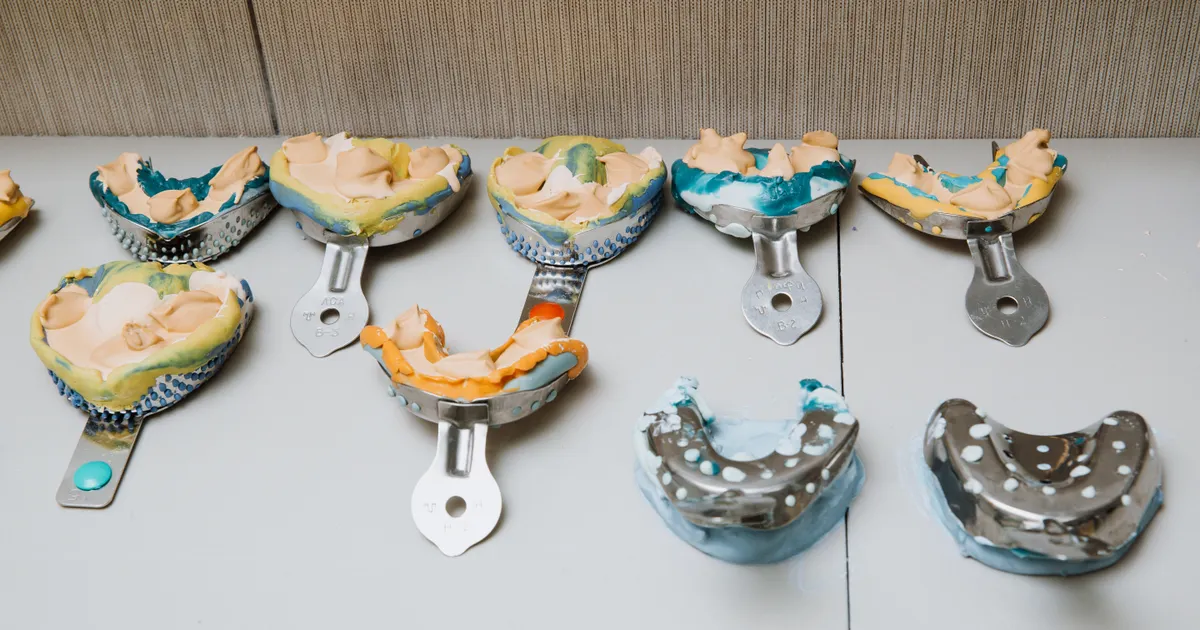
3Shape TRIOS is a small optical camera used inside the mouth: it produces a precise, colour 3D model of the teeth and gums in just a few minutes, with no impression paste placed in the mouth. The model appears on the screen straight away and is sent from there directly to the laboratory, to the CAD/CAM design software and into the treatment plan. The digital workflow for veneers, crowns, implant-supported prostheses and clear aligners begins with exactly this scan. At the Smile by Dr. Bakhtiyar clinic (Baku), the 3Shape TRIOS scanner is used for digital impressions.
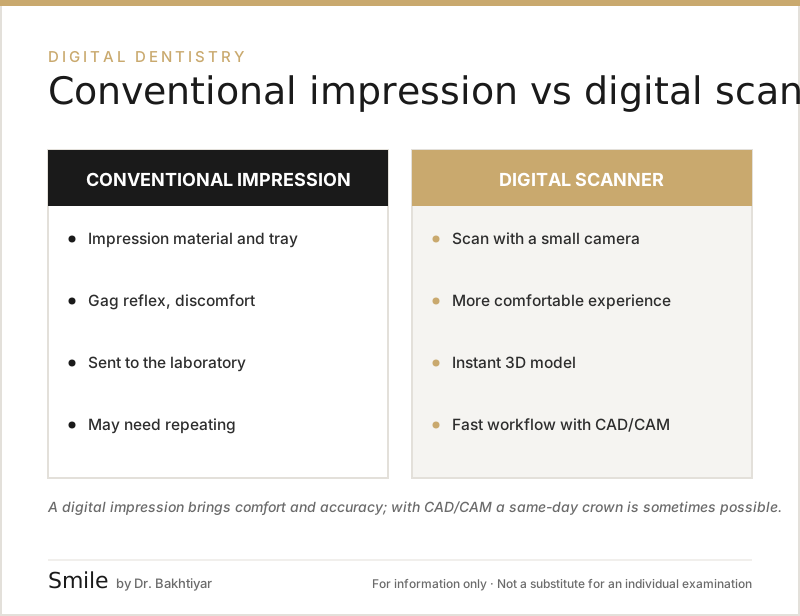
Traditional impression and digital scanner: a comparison.
What is 3Shape TRIOS?
TRIOS is an intraoral scanner made by 3Shape, a company based in Copenhagen, Denmark, and it is one of the most widely used scanner brands in the world: according to 3Shape, TRIOS has received the Cellerant Best of Class award 12 times, and in 2024 alone 26.6 million patients worldwide were scanned with TRIOS.
The device consists of a pen-like wand and the software connected to it. As the wand is moved over the teeth, the camera takes many images per second, and the software stitches these images into a single three-dimensional model in real time. The result is a digital file that replaces the plaster model — and it also carries the natural colour of the teeth.
How it works: step by step
- Preparation. No special preparation is required; the teeth are dried and a single-use hygienic sleeve is fitted to the wand.
- Scanning. The dentist moves the wand over the upper and lower arches. The image is built live on the screen — if an area is missing, only that part is rescanned.
- Recording the bite. With the jaws closed, a short scan records how the teeth meet each other.
- Checking and sending. The model is magnified and checked, then transferred digitally to the laboratory or to the CAD design software. No courier, no plaster and no waiting.
The whole procedure usually takes 5–15 minutes; for a single tooth it is shorter.
Which treatments do we use it for?
- Veneers and aesthetic restorations — the design is built on the scan and combined with the smile design file.
- Prosthodontic treatment — the digital workflow for crowns, bridges and implant-supported prostheses; more detail here: what is digital prosthodontic treatment.
- Orthodontics — the starting model for planning clear aligners.
- Comparison and archiving — before and after models are stored, so changes can be tracked objectively.
What does the patient gain?
- Comfort — no impression material and no gag reflex; this is a noticeable difference, especially for sensitive patients and children.
- Time — the model is ready immediately and delivery to the laboratory is instant; if the impression needs to be repeated, only the problem area is rescanned.
- Transparency — you see your own teeth in 3D on the screen and discuss the plan together with your dentist.
- Precise collaboration — the laboratory works with a digital file rather than a physical mould that can distort.
Is it better than a traditional impression?
The scientific literature gives a balanced answer here. According to summaries of systematic reviews, for single crowns and short bridges the accuracy of digital and traditional impressions is clinically comparable — both methods give reliable results when applied correctly. For full-arch (whole dental arch) impressions, however, a meta-analysis of in vivo studies shows that the classic impression is still somewhat superior, because small errors can accumulate along a long scan; for such cases the dentist assesses the choice of method individually.
| Criterion | Traditional paste impression | 3Shape TRIOS scan |
|---|---|---|
| Sensation | Impression material + possible gag reflex | Contact-free optical scanning |
| Seeing the result | Only at the laboratory | Immediately on the screen |
| If a repeat is needed | The whole impression again | Only that area |
| Storage | Physical mould | Digital archive |
| Single crown / small bridge | Reliable | Reliable |
| Full-arch impression | Currently somewhat superior | Assessed individually |
Is it safe?
Yes. An intraoral scanner is an optical camera working with ordinary light — there is no X-ray radiation. Radiation applies only to imaging methods such as X-rays and CBCT (3D imaging). A hygienic sleeve for the wand and a disinfection protocol are applied for every patient.
How is TRIOS used at Smile by Dr. Bakhtiyar?
At our clinic in Baku, 3Shape TRIOS is the first link in the digital workflow: scan → design → manufacture → try-in in the mouth. In veneer and prosthetic work the scan is combined in the same file with the digital smile design, while for implant-supported prostheses all exchange with the laboratory is digital. Digital planning is carried out by Dr. Bakhtiyar Aliyev — specialist courses in digital implantology and aesthetic restoration are part of his training record. You can read about the scanner’s place in the clinic, along with our other equipment, on the Technology page.
Frequently asked questions
Is scanning painful? No. The wand is brought gently close to the teeth and the scanning is a contact-free optical process; it is noticeably more comfortable than a paste impression.
How long does it take? A few minutes for a single tooth, and usually 5–15 minutes for a full arch. The time depends on the size of the area.
Is there any radiation? There is none. The scanner is an optical device; X-rays are used only in radiography and tomography.
What is the digital model useful for? For veneers, crowns, bridges, implant-supported prostheses and clear aligner planning; and also for a before-and-after comparison archive.
Does the scan completely replace the plaster impression? For most everyday work, yes. In some cases, such as full-arch dentures, the dentist may prefer the classic or a combined method — this is an individual clinical decision.
Clinical note: This article is for general information and does not replace individual advice from your dentist. An examination determines which impression method is right for your case — book an appointment.
Sources
- TRIOS intraoral scanners — 3Shape A/S (istehsalçı), Kopenhagen
- Digital scans versus conventional impressions in fixed prosthodontics: An overview of systematic reviews — The Journal of Prosthetic Dentistry, 2025
- Digital versus conventional full-arch impressions in linear and 3D accuracy: a systematic review and meta-analysis of in vivo studies — Clinical Oral Investigations, 2022
This article is for general information only and does not replace an individual diagnosis, examination or treatment. Consult a doctor for a decision about your case.